Smart glasses have been “almost here” for more than a decade. Google Glass landed with hype and left as a cautionary tale. Snap’s Spectacles, Ray-Ban Meta, and a parade of startups have tried to make glasses that do more than correct vision—and most have stalled at niche or flop. Why do smart glasses keep failing, and what might actually change the game?
The Form Factor Problem
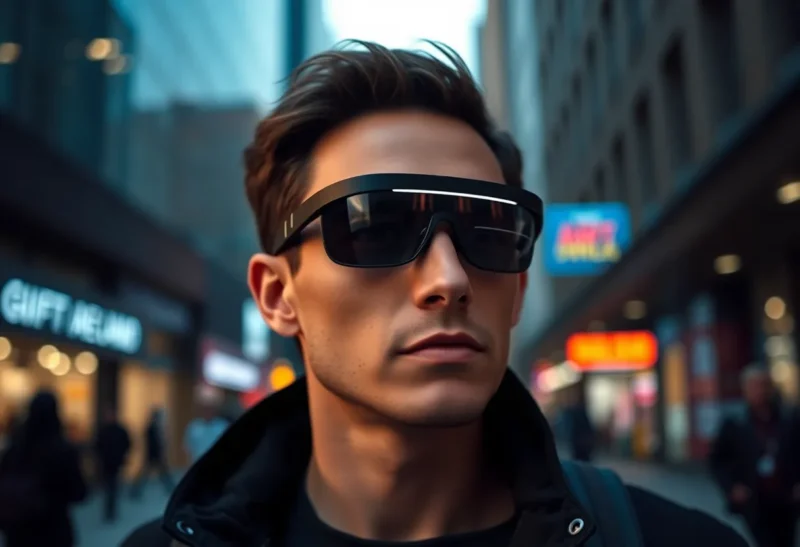
Glasses sit on your face all day. They’re one of the most personal and visible things you wear. That makes them a terrible place to put something bulky, ugly, or obviously “tech.” Google Glass looked like a cyborg accessory; the camera and prism made wearers conspicuous and triggered “Glasshole” backlash. Later attempts have tried to look more like normal glasses—Ray-Ban Meta, for example, offers frames that pass for regular sunglasses. But the moment you add batteries, processors, displays, and antennas, weight and size creep up. Consumers have been trained to accept that glasses are light and forgettable. Smart glasses that feel like smart glasses have repeatedly failed the “would I wear these in public?” test. The form factor has to disappear before the category can win.
What Are They For?
Smart glasses have suffered from unclear use cases. Google Glass was pitched as a general-purpose AR assistant—directions, messages, search—but the experience was underwhelming and the price was high. Camera glasses (Spectacles, Ray-Ban Meta) found a narrow audience: creators and people who want first-person video without holding a phone. But “glasses that record video” isn’t a mass market yet; it’s a feature, not a platform. For AR—overlaying information on the real world—the tech isn’t there at a consumer price. Displays are either too dim, too small, or too power-hungry. So we’re left with a category that’s either too limited (camera-only) or too ambitious (full AR) with nothing that’s clearly “everyday useful” in the middle. Until there’s a killer app that only glasses can do well, adoption will stay niche.
Battery and Thermals
Glasses have almost no room for a battery. You can’t hang a 50 g pack on the temple without ruining comfort. So smart glasses are stuck with tiny cells that might last a few hours of active use. That limits what you can run: a camera and Bluetooth for a couple of hours, or a micro-display and processor for even less. Thermals are another constraint. Put a chip that does real compute or runs a display, and heat has to go somewhere—usually near the skin. Nobody wants warm glasses. So the hardware is perpetually underpowered compared to what would make AR or AI features feel magical. Progress in low-power chips and better batteries could loosen this bottleneck, but we’re not there yet.
Privacy and Social Acceptance
Smart glasses with cameras trigger a visceral reaction: “Are you recording me?” Google Glass ran into this early; wearers were banned from bars and confronted by strangers. The same concern applies to any glasses with a lens. Even if the camera is off by default, the possibility changes how people behave around you. Social acceptance is a non-trivial barrier. It may shift over time—phones with cameras were once seen as weird—but for now, camera glasses are still in the “creepy or cool depending on who you ask” zone. Audio-only or display-only glasses avoid the camera problem but then have to justify themselves without the most obvious sensor.
What Might Change
A few things could break the logjam. First, displays that are good enough and cheap enough: microLED or waveguide tech that puts useful AR in a normal-looking frame at a consumer price. We’re getting closer; Apple’s long-rumored glasses and continued R&D from Meta and others could push the bar. Second, a use case that doesn’t require full AR: e.g., real-time translation subtitles in your field of view, or navigation cues that don’t require looking at a phone. Narrow, valuable applications might bootstrap the category before “everything in AR” arrives. Third, fashion and distribution: if a major eyewear brand (think Luxottica-level) ships smart glasses as a standard product line with normal retail distribution, the “weird tech” stigma could fade. Fourth, regulation and norms: clear rules about when recording is allowed, and broader familiarity with wearable cameras, could reduce the privacy panic.
Apple’s long-rumored AR/VR headset and possible future glasses will set a reference point for the industry—for better or worse. If they ship something that looks like normal glasses and does one or two things brilliantly, the bar moves. If they ship another heavy, expensive headset, the “glasses” category stays in limbo. Meanwhile, enterprise and vertical use cases—warehouse pickers, field technicians, medical—continue to adopt AR glasses where the ROI is clear. Consumer smart glasses may follow the path of VR: niche for years, then a gradual break when tech and use case finally align. The question is when, not if, the form factor and the value proposition will line up. Until then, smart glasses keep failing in the mainstream—but the attempts are getting closer.
Smart glasses keep failing because the product is hard: form factor, battery, use case, and social acceptance all have to align. The next wave might get closer if displays improve, use cases narrow to what’s actually useful today, and the design finally disappears into something people would wear anyway. Until then, smart glasses will stay in the “almost” category—with a chance that the next iteration is the one that finally sticks.