Why Smart Bulbs Became the Gateway to the Rest of Your Smart Home

Drew Morrison
March 7, 2026

Smart bulbs were the first smart home device for millions of people. Not thermostats, not security cameras, not door locks—bulbs. They’re cheap, easy to install, and instantly satisfying. Change the colour from your phone. Dim the lights without getting up. Set a schedule. That low bar made them the entry point for everything that followed.
Here’s why smart bulbs became the gateway—and what that means for how the rest of your smart home grew.
Low friction, high impact
You don’t need an electrician. You don’t need to replace wiring. You screw in a bulb and pair it with an app. Ten minutes later, you’re controlling your lights from your phone. The installation barrier is almost zero.
Price helped too. A single smart bulb cost $15 to $30 when Hue launched. A starter kit with a bridge and a few bulbs ran $200. That’s a lot for a bulb, but far less than rewiring a house or replacing a thermostat. It felt like a low-risk experiment. If you didn’t like it, you’d only lost a bulb.
Compare that to a smart thermostat, which often requires shutting off power and wiring terminals. Or a smart lock, which means replacing hardware and possibly rekeying. Or a security camera, which needs mounting and power. Bulbs are plug-and-play. They work with your existing fixtures. If you move, you take them with you.
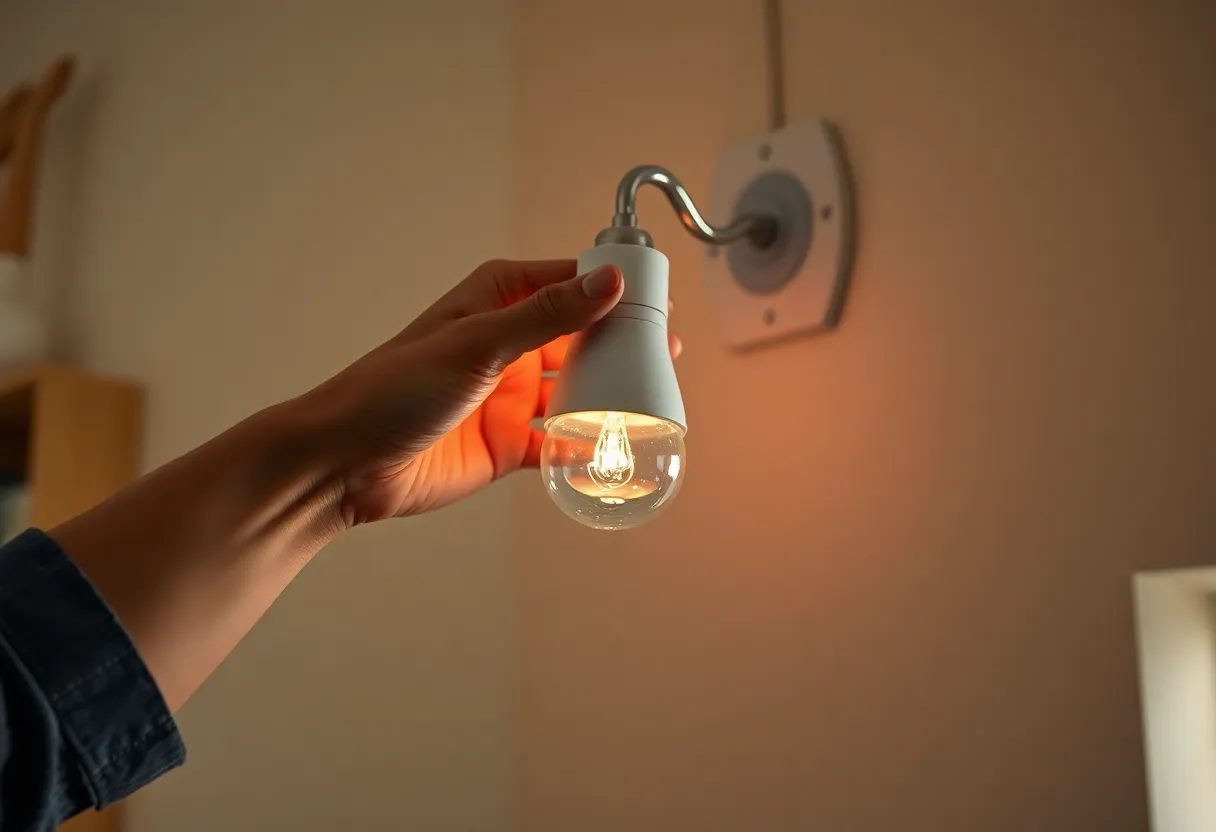
The impact is immediate. Coloured bulbs feel like magic—change the whole room from warm white to cool blue with a tap. Dimming without a dimmer switch is convenient. Schedules and automation (turn on at sunset, off at bedtime) add value right away. The payoff is obvious.
Why bulbs led to more
Once you have smart bulbs, you notice the gaps. The bulbs work with voice—Alexa, Google, Siri—so you get a speaker or display. The bulbs need a hub or bridge for some systems, so you buy one. The bulbs integrate with IFTTT or Home Assistant, so you start exploring automations. Before long, you’re thinking about thermostats, sensors, and locks.
The smart bulb ecosystem taught people the vocabulary: hubs, scenes, routines, voice control. It normalized the idea that home devices could be networked and controlled remotely. It also created a baseline expectation: if bulbs can do this, why can’t everything else?
Voice assistants arrived at the right moment. Alexa and Google Home made smart bulbs feel effortless: “Turn off the lights” instead of opening an app. That lowered the friction further and made bulbs feel like a natural starting point. If you could control your lights with your voice, why stop there?
Manufacturers noticed. Philips Hue, LIFX, and others expanded from bulbs to light strips, fixtures, and switches. Amazon and Google pushed Echo and Nest devices as control points. The smart home industry leaned into bulbs as the first touchpoint because they work—they convert casual curiosity into committed users.
The downside of starting with bulbs
Smart bulbs create a dependency. When the power flickers, bulbs reset. When the internet drops, cloud-dependent bulbs go dumb. When you flip the wall switch off, the bulb loses power and can’t respond to voice or app. New users learn these limits the hard way.
Bulbs also lock you into ecosystems. Hue uses a bridge; LIFX is Wi-Fi. Switching brands means replacing hardware. That’s less true now—Matter and Thread are improving interoperability—but early adopters often ended up with multiple apps and incompatible devices.
Still, the trade-off was worth it for most people. The convenience outweighed the quirks. And once you’re invested, you’re more likely to add more devices from the same ecosystem.
What comes next
Smart bulbs normalized the smart home. They proved that connected devices could be easy, useful, and fun. They created a path: bulbs first, then speakers, then thermostats and sensors. The industry built on that path.
If you’re starting a smart home today, bulbs are still a logical entry point. They’re cheaper than ever, more reliable, and better integrated. The gateway is still open—and it still leads to the rest of the house.