Why Commercial Space Stations Are the Next Big Bet

Robin Hayes
February 25, 2026
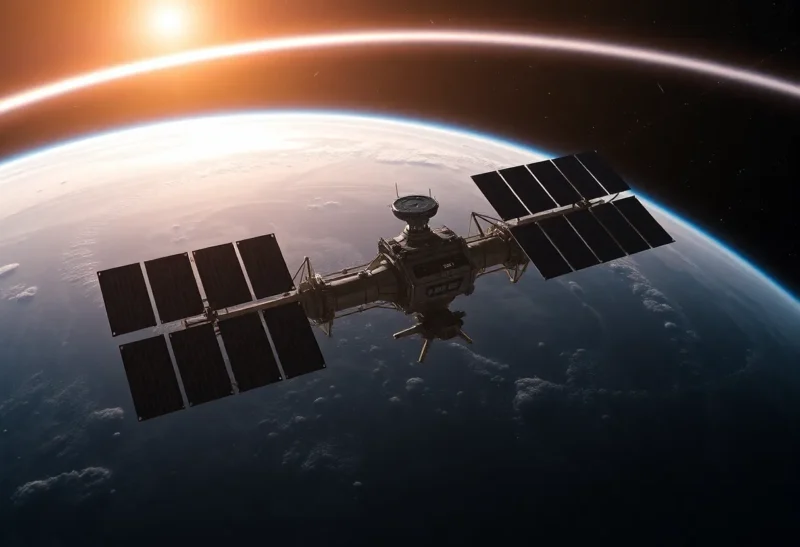
The International Space Station has been humanity’s only permanent outpost in orbit for more than two decades. It’s also aging, expensive, and politically tied to a specific era of space cooperation. What comes next isn’t just a replacement—it’s a shift to commercial stations: owned and operated by companies, with NASA and other agencies as anchor tenants and customers. That shift is already underway, and it’s one of the biggest bets in space right now.
Why the ISS Can’t Last Forever
The ISS is a marvel of engineering and diplomacy, but it wasn’t designed to fly forever. Hardware degrades; modules have a finite design life; and the cost of keeping it running—billions per year—is hard to justify when the same money could fund new capabilities. NASA has set a target of transitioning to commercial destinations in low Earth orbit (LEO) by the end of the decade, with the ISS eventually retired. That creates a clear deadline and a clear opportunity: whoever builds the next generation of stations will define how we use LEO for the next 20 or 30 years.
Commercial stations aren’t just “ISS 2.0.” They’re designed from the start to serve multiple customers: NASA and other space agencies, researchers, manufacturers, and eventually tourists or even long-duration crews. That multi-tenant, multi-use model is what makes them a bet—and what could make them profitable. The idea is that demand for microgravity research, in-space manufacturing, and human presence will grow enough to support one or more privately operated stations, with government as a major but not sole customer.
Who’s Building What
Several companies are in the race. Axiom Space is building modules that will first attach to the ISS, then eventually detach and form a free-flying station. That approach de-risks the initial phase by using the existing ISS infrastructure for power and crew support. Blue Origin and Sierra Space are leading Orbital Reef, a mixed-use station concept aimed at research, manufacturing, and tourism. Vast is pursuing a simpler, single-module station with a focus on speed and cost. Northrop Grumman is designing a station that could leverage its Cygnus cargo vehicle experience. NASA has already awarded contracts to support development of these designs; the next step is moving from design to hardware and from hardware to orbit.

Each approach has trade-offs. Attaching to the ISS first (like Axiom) reduces risk but ties the schedule to ISS retirement and political decisions. Building from scratch (like Vast or Orbital Reef) is harder up front but allows a clean-sheet design. The market will decide which model works—or whether multiple models coexist, with different stations serving different customer segments.
Why It’s a Bet
The bet is that demand will materialize. Today, most LEO demand is from governments: NASA, ESA, JAXA, and a handful of others. Commercial demand exists—research, materials science, biotech, a growing number of private astronauts—but it’s still a fraction of what would be needed to sustain a station purely on commercial revenue. So the near-term business case depends heavily on NASA and other agencies as anchor tenants, paying for crew time, research slots, and logistics. Over time, the hope is that new applications (in-space manufacturing, better research throughput, tourism) grow the pie so that commercial revenue becomes a larger share.
That’s why it’s a bet: nobody knows for sure how fast demand will grow or which use cases will scale. What we do know is that the ISS has demonstrated sustained demand for microgravity research and human presence, and that the cost of launch and in-space operations is trending down thanks to reusable rockets and more competition. So the logic is: if costs keep falling and demand keeps growing, commercial stations can eventually stand on their own. If not, they’ll remain government-dependent for longer, and some designs may never reach orbit.
Economics and Anchor Tenants
NASA’s Commercial LEO Destinations (CLD) program is structured to pay for development and early operations, not to own the stations. The agency wants to buy services—crew time, research capacity, logistics—the same way it now buys cargo and crew flights from SpaceX and others. That model gives companies an incentive to build something that can serve multiple customers and eventually stand on its own. It also means that the first stations will be heavily dependent on NASA as the anchor tenant. Other agencies—ESA, JAXA, the Canadian Space Agency—may join as partners or customers, but the U.S. government will be the dominant buyer for the foreseeable future. The bet is that over a decade or two, commercial and international demand grows enough to diversify revenue and reduce that dependence.
Technical and Operational Challenges
Building and operating a space station is hard. You need reliable life support, power, thermal control, docking systems, and redundancy for critical systems. You also need a way to get crew and cargo there—today that means coordinating with SpaceX (Dragon) and eventually Boeing (Starliner) and others. The companies in the race have different levels of in-house experience: some have built flight hardware before; others are newer. All of them face the same physics: orbit is unforgiving, and failures can be catastrophic. The good news is that the ISS has validated decades of lessons about how to keep humans alive and productive in LEO; the new stations will inherit that knowledge and, in many cases, similar technology. The challenge is doing it at a cost that allows a sustainable business.
What Success Looks Like
Success means at least one commercial station in orbit, operational and serving multiple customers, with a path to profitability or at least to reduced reliance on government funding. It would prove that LEO can be a place where private enterprise operates at scale—not just launch providers, but destination operators. That would set the stage for everything that comes after: deeper space exploration, lunar bases, and eventually Mars, all supported by a robust LEO economy.
Failure would look like delays, cost overruns, or a lack of demand that forces NASA to extend the ISS again or accept a gap in U.S. presence in LEO. Neither outcome is guaranteed. The next few years—design maturation, funding rounds, and the first hardware in space—will determine whether commercial space stations are the next big bet that pays off or the next big bet that doesn’t.
The International Picture
China has its own space station, Tiangong, and is building it out with a different political and economic model. Other nations are weighing whether to partner with NASA-backed commercial stations, build their own capabilities, or buy services as customers. The shift to commercial LEO doesn’t happen in a vacuum—it affects who has access to microgravity research, who sets standards for docking and operations, and how the next chapter of human presence in space is written. Commercial stations, if they succeed, could make LEO more accessible to more countries and more industries, not just those with a seat at the ISS table. That’s part of the bet too: that the market will be broader and more diverse than the current government-led model.
For now, the momentum is real. Money is flowing, contracts are signed, and the technical path is clear. The question is whether the market will be there when the stations are. That’s the bet—and it’s one worth watching.