Why AI in Robotics Is Moving Faster Than Self-Driving Cars

Derek Chen
March 7, 2026
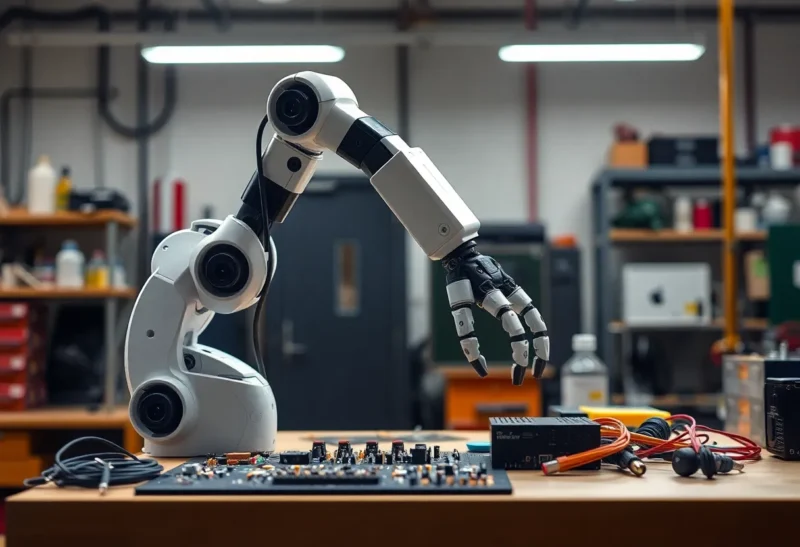
Self-driving cars have been “five years away” for over a decade. Robotaxis still run in a handful of cities under heavy scrutiny. The dream of hands-free highway cruising is real, but deployment at scale keeps slipping. Meanwhile, AI-powered robots are picking items in warehouses, folding laundry in labs, and learning to manipulate objects with human-like dexterity—often in environments that didn’t exist a few years ago.
The contrast is stark. Why is AI in robotics advancing faster than autonomy on the road? The answer has less to do with the underlying AI and more with the problem structure: constrained environments, clearer success metrics, and a lower bar for “good enough.” Understanding that gap explains a lot about where robotics is headed—and why self-driving remains stuck.
Environment: Constrained vs Unbounded
Self-driving cars operate in the open world. Every street, every intersection, every pedestrian, cyclist, and driver behaves differently. Weather changes. Construction appears. A child runs into the road. The state space is effectively infinite. You can’t simulate every scenario; you can’t collect enough data to cover the long tail. Edge cases are the product.
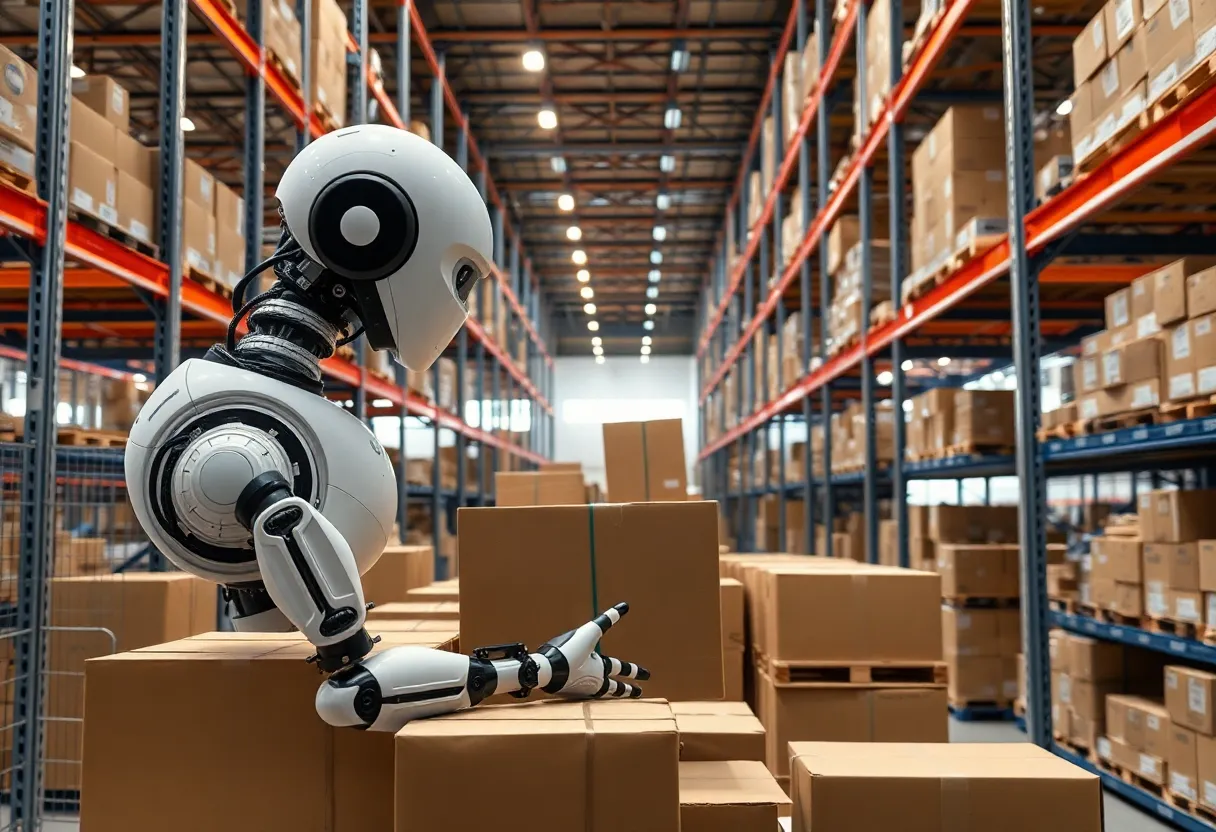
Robots in warehouses, factories, and homes work in bounded environments. The layout is known. Lighting is controlled (or at least predictable). Objects are cataloged. The distribution of “what might happen” is narrower. You’re not trying to handle every possible world—you’re handling a subset that’s tractable. That makes learning faster, testing cheaper, and deployment safer.
Even “general purpose” humanoid robots from Figure, Tesla, and Boston Dynamics are initially targeting structured settings: factories, warehouses, logistics hubs. They’re not being asked to navigate Manhattan at rush hour. The environment is still constrained compared to the open road.
Failure Mode: Contained vs Catastrophic
When a warehouse robot drops a package, you lose a box. When a robot arm misaligns a part, you scrap a component. Annoying, but bounded. When a car crashes at 60 mph, people can die. The stakes are different.
That difference changes everything. Robotics companies can iterate quickly—ship a product, watch it fail, fix it, ship again. Self-driving companies face regulatory scrutiny, lawsuits, and public backlash for every incident. The bar for “safe enough to deploy” is orders of magnitude higher. Progress looks slower because the margin for error is so thin.
That’s why you see AI robots in production environments today—Amazon’s fulfillment centers, Ocado’s automated warehouses, lab demos from Covariant and Figure—while robotaxis remain in limited pilots. The cost of being wrong is lower. The speed of iteration is higher.
Simulation and Transfer: Easier in Robotics
You can simulate a warehouse. Physics engines like Isaac Sim and MuJoCo model robot arms, grippers, and objects with enough fidelity that policies trained in simulation often transfer to the real world. Domain randomization—varying lighting, friction, object positions—helps bridge the sim-to-real gap. It’s not perfect, but it works well enough to accelerate development by orders of magnitude.
Simulating driving is harder. You need to model other drivers, pedestrians, weather, road conditions, and the infinite variety of human behavior. Simulation helps with testing, but the sim-to-real gap for driving is wider. Real-world miles still matter enormously. That makes scaling slower and more expensive.
What “Success” Means
In robotics, success is often binary and measurable. Did the robot pick the right item? Did it place it correctly? Did it complete the task without breaking? You can run thousands of trials, log success rates, and optimize. The feedback loop is tight.
In self-driving, success is “no incidents over millions of miles.” That’s a rare-event problem. You can’t easily sample failure modes. You’re optimizing for something that almost never happens—until it does. That makes progress harder to measure and harder to achieve.
The Implication for the Future
AI in robotics will keep outpacing self-driving for the foreseeable future. We’ll see more capable manipulators, more humanoid robots in factories, and more automation in logistics and manufacturing. The constrained environment and lower stakes create a virtuous cycle: faster iteration, faster learning, faster deployment.
Self-driving will get there eventually—but it’ll take longer. The problem is simply harder. That doesn’t mean robotics is “easy.” It means the path to production is clearer. And for anyone watching both fields, it’s a useful reminder: progress isn’t uniform. Problem structure matters as much as the algorithms.
Foundation Models Are Leveling the Playing Field
One more factor: the same AI advances that power language models and image generation are now flowing into robotics. Vision-language models can understand “pick up the red screwdriver” without explicit programming. Diffusion models and transformers are being adapted for robotic control—learning policies from massive datasets of robot demonstrations. The compute and data infrastructure built for ChatGPT and DALL-E is being repurposed for robot learning.
Self-driving benefited from similar advances—neural nets for perception, transformer-style architectures for prediction—but the complexity of the driving problem absorbs those gains. A 10x improvement in perception still leaves you with a hard planning and safety problem. In robotics, the same 10x improvement in perception or policy learning can unlock entirely new capabilities. The ceiling is lower, so breakthroughs hit the ground faster.
Where to Watch Next
If you want to see where AI in robotics is heading, watch the warehouses and factories first. Covariant, Berkshire Grey, and a host of startups are deploying AI-powered picking and sorting today. Figure and Tesla are pushing humanoid robots into similar environments. The applications are narrower than “drive anywhere,” but the deployment is real.
Self-driving will continue to make incremental progress—better perception, better prediction, more pilot programs. But the gap between “demo” and “production at scale” will remain wide for years. Robotics, by contrast, is already crossing that gap in constrained domains. The lesson: problem selection matters. Harder isn’t always better—sometimes constrained and tractable wins.