How Container Shipping Changed Global Trade and What Its Vulnerabilities Look Like

Marcus Henriksen
July 7, 2026
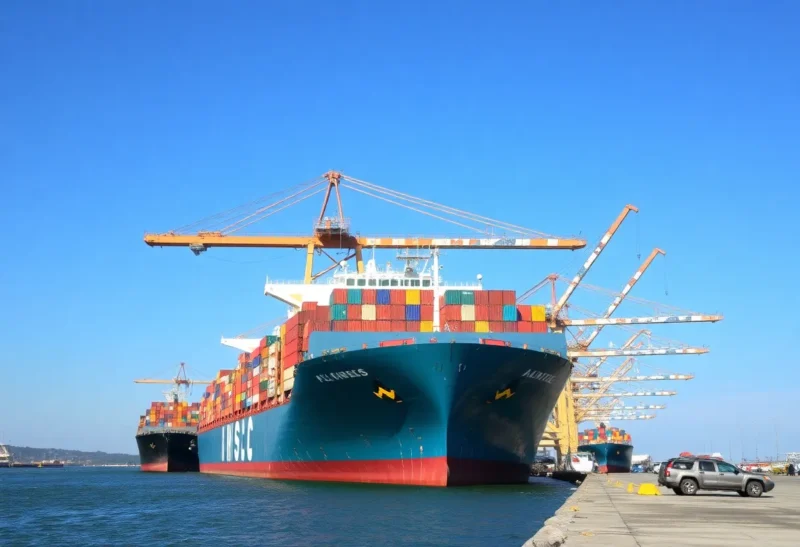
In 1956, a trucking entrepreneur named Malcolm McLean loaded 58 metal boxes onto a converted tanker in Newark, New Jersey, and shipped them to Houston. The containers were standardised in size so that the same box could move seamlessly between ship, train, and truck without unpacking and repacking its contents. That unremarkable voyage quietly began a transformation of global trade that would, over the following decades, make manufactured goods cheap, enable complex international supply chains, and tie the global economy together in ways that created both enormous wealth and significant fragility.
What Containerisation Actually Changed
Before containerisation, cargo ships were loaded piece by piece—bags, barrels, crates, and bulk goods packed into holds by stevedores over days. A medium-sized ship might spend as much time in port being loaded or unloaded as it spent at sea. Labour costs for this “break-bulk” cargo handling were enormous, and goods were frequently damaged or stolen during the many handoffs. Port cities employed huge numbers of dockworkers, and the logistics of coordinating cargo across different transport modes required extensive repackaging and rehandling at each transition.
The container eliminated most of these costs in one stroke. A standard 20-foot or 40-foot container (the basis for the “twenty-foot equivalent unit” or TEU measurement still used today) can be loaded at a factory, sealed, and transported by truck to a rail yard, transferred to a train, moved to a port, loaded onto a ship by crane, unloaded at a destination port, placed on another truck or train, and delivered to the recipient—all without opening. The contents are packed once and unpacked once.
The effect on shipping costs was dramatic. Estimates suggest that containerisation reduced the cost of loading a ton of cargo by roughly 97%. The per-unit cost of moving goods internationally fell so dramatically that manufacturing goods in one country and selling them in another became economically viable for product categories that previously couldn’t bear transport costs. Chinese electronics, Southeast Asian textiles, Brazilian agricultural products, and European machinery became globally competitive partly because of how cheaply they could be shipped.
The Infrastructure That Containerisation Built
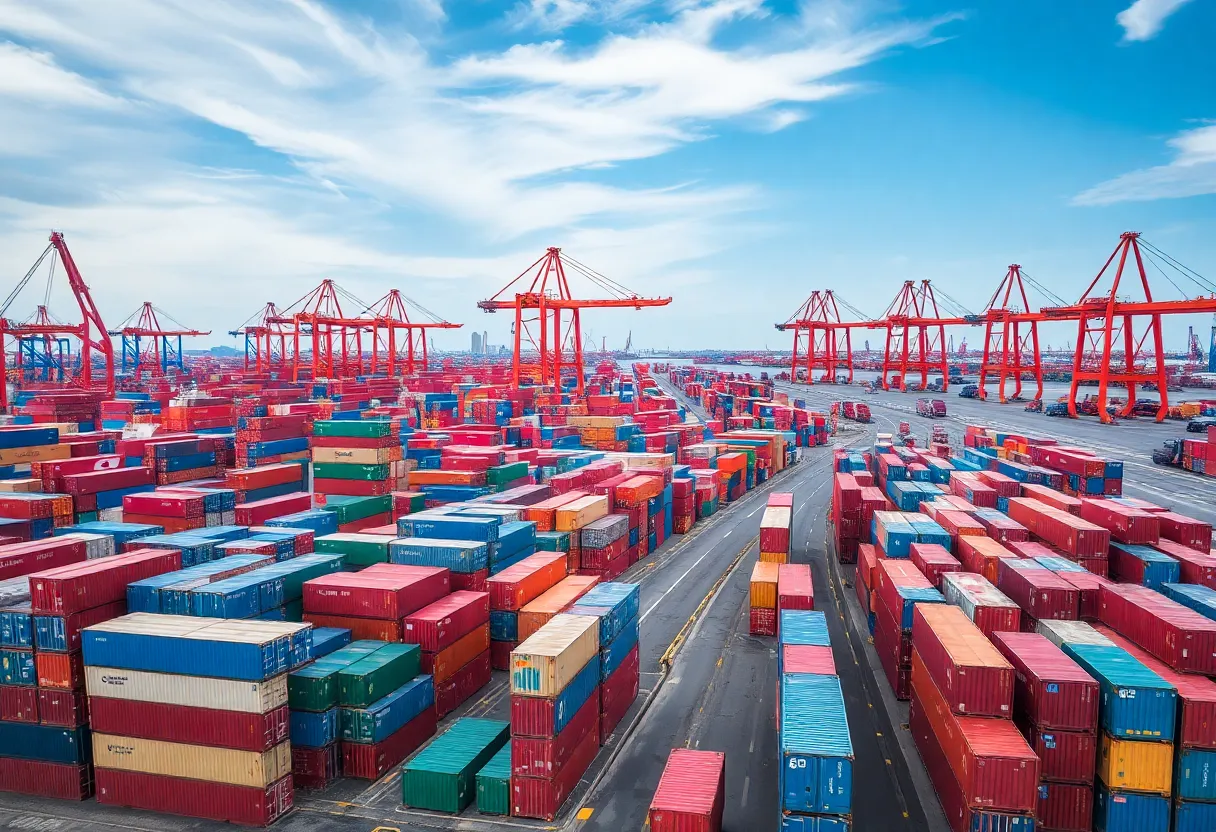
Containerisation drove the construction of a new generation of port infrastructure. Traditional ports with long wharves and large labour forces were replaced by specialised container terminals: large flat areas (called “yards”) where containers are stacked in organised grids and moved by giant gantry cranes that can span the widest ships. Modern container cranes can unload and load a container in a few minutes; a large modern port can turn around a container ship carrying 20,000 TEUs in under two days.
Ship design changed to follow the economics of containers. Container ships grew steadily in size as operators discovered that larger vessels reduced the per-container cost of ocean transport. Today’s largest container ships—the ultra-large container vessels (ULCVs) operated by companies like Evergreen, COSCO, and Maersk—can carry over 24,000 TEUs, are nearly 400 metres long, and require specialised deep-water ports that only a handful of cities can accommodate. The ship that started the container era carried 58 boxes; its modern descendants carry containers numbering in the tens of thousands.
The concentration of shipping into massive vessels serving a smaller number of hub ports created a hub-and-spoke model: large ships move between major ports (Rotterdam, Singapore, Shanghai, Los Angeles), and smaller feeder vessels distribute containers to secondary ports. Road and rail networks developed to serve these hubs, integrating the container system into the broader logistics infrastructure.
The Carrier Oligopoly and Rate Volatility
The container shipping industry has consolidated substantially over the past two decades. What was once a fragmented industry with dozens of competitors has, through bankruptcies, mergers, and acquisitions, become dominated by a small number of major alliances. The three main alliances—2M, Ocean Alliance, and THE Alliance—collectively controlled the majority of global container shipping capacity in recent years. The 2021 bankruptcy of Hanjin Shipping, once the world’s seventh-largest container line, wiped out a competitor and further tightened the oligopoly.
This consolidation has consequences for rate stability and shipper bargaining power. During the COVID-19 pandemic, the dynamics of concentrated carrier capacity collided with a demand surge for consumer goods (as spending shifted from services to products during lockdowns) and a series of port disruptions that backed up container flows. The result was a historic freight rate spike: spot rates on the Asia-to-Europe route rose from roughly $1,500 per 40-foot container in early 2020 to over $14,000 at peak in 2021, representing a nearly tenfold increase. Many exporters found it difficult to secure container space at any price during peak disruption periods.
The Vulnerabilities Exposed by Recent Disruptions
The COVID pandemic exposed the fragility of a shipping system optimised for efficiency rather than resilience. Several failure modes became apparent. Port labour disruptions cascaded globally: because containers need to flow through a small number of critical nodes, a slowdown at any major hub backs up the entire system. The ports of Los Angeles and Long Beach, which handle a large share of US imports from Asia, experienced record backlogs as COVID-related disruptions reduced throughput, creating an anchor chain of vessels waiting offshore.
The Suez Canal blockage in March 2021, when the container ship Ever Given ran aground and blocked the canal for six days, provided a vivid demonstration of how much global shipping depends on a handful of chokepoints. About 12% of global trade passes through the Suez Canal. The six-day blockage created a backlog of ships that took weeks to clear, with knock-on effects across multiple supply chains. Similar vulnerabilities exist at the Panama Canal, the Strait of Malacca, and the Strait of Hormuz.
Equipment imbalances are a structural vulnerability of the container system. Containers flow in directions dictated by trade imbalances: when the US imports far more from China than it exports, containers accumulate in the US and are scarce in China. Repositioning empty containers (which move without generating revenue) is a significant operational cost, and during demand surges the mismatch between where containers are and where they need to be contributes to equipment shortages. The pandemic exacerbated this by disrupting the normal flows that keep equipment circulating.
The Geography of Concentration
Container shipping has created extreme geographic concentration in port infrastructure. The world’s top ten container ports—Shanghai, Singapore, Ningbo-Zhoushan, Shenzhen, Guangzhou, Busan, Jebel Ali, Qingdao, Hong Kong, and Rotterdam—handle a disproportionate share of global container volume. China alone accounts for seven of the top ten ports. This concentration means that disruptions in a small number of locations have global implications.
Port consolidation has also affected inland regions whose ports didn’t survive the transition to deep-water container mega-terminals. Cities like San Francisco, once major port cities, lost their maritime commerce as container traffic shifted to facilities that could handle large vessels. The distribution of economic benefits from container trade has followed the geography of port infrastructure, concentrating logistics value in hub cities and regions with the capital to invest in terminal development.
Decarbonisation as the Next Structural Challenge
Container shipping is responsible for roughly 3% of global CO2 emissions—more than aviation—and faces increasing regulatory pressure to decarbonise. The International Maritime Organisation has set targets for reducing shipping emissions, and the EU’s Emissions Trading System now includes shipping. The challenge is technological: container ships run on heavy fuel oil optimised for long-range, low-cost operation, and the alternatives (LNG, methanol, ammonia, hydrogen) each face adoption hurdles around infrastructure, energy density, and cost.
The transition to alternative fuels will require simultaneous investment in ships and bunkering infrastructure—a classic coordination problem where no party wants to move first. Some carriers have ordered dual-fuel vessels capable of running on both conventional fuel and methanol, positioning for a transition whose timeline remains uncertain. The economics of decarbonisation will likely mean higher shipping costs, reversing some of the cost reduction that containerisation achieved—which has implications for the geographic distribution of manufacturing and trade patterns.
Container shipping transformed the global economy so thoroughly that it’s difficult to imagine what trade would look like without it. The goods in any modern household represent supply chains that are only possible because of standardised containers moving on standardised vessels through standardised terminal infrastructure. That transformation also created dependencies: a system optimised for the lowest per-unit cost is not the same as one optimised for resilience, and recent disruptions have made the trade-offs in that optimisation newly visible.