What Happens to Your Body When You Sit at a Desk for Eight Hours

Ian Cross
July 7, 2026
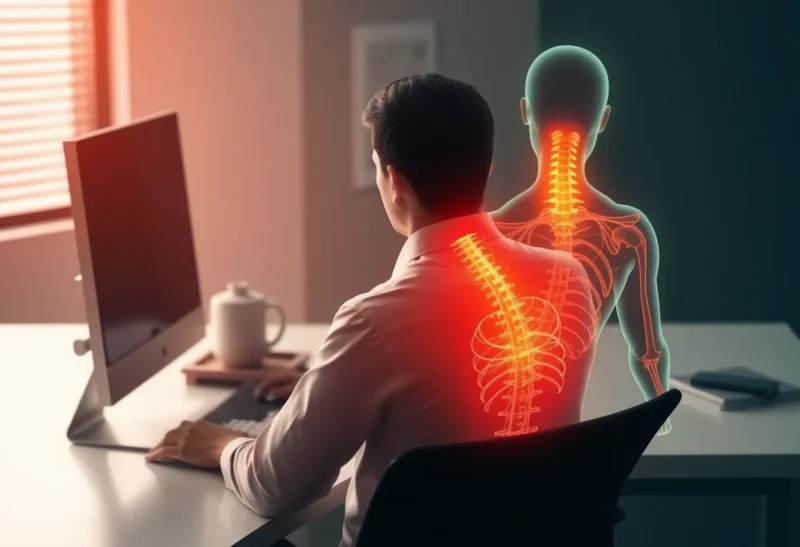
The phrase “sitting is the new smoking” circulated widely enough to become a cliché before the backlash arrived pointing out that it overstated the evidence considerably. The truth is somewhere between “harmless” and “as dangerous as smoking”—prolonged sedentary time does produce measurable physiological changes across multiple systems, some of which have implications for long-term health risk, but the mechanisms and magnitudes are specific and worth understanding accurately rather than through alarmist shorthand.
Here’s what the research shows actually happens to your body during and after eight hours of desk sitting—the acute effects you feel on a given day, the cumulative mechanisms over time, and what interventions the evidence supports.
What’s Happening in the First Few Hours
Within the first hour of sitting, several acute physiological changes begin:
Reduced lower body blood flow. Seated posture compresses blood vessels in the legs and reduces the mechanical pumping action of calf muscles that normally aids venous return (blood returning to the heart). Blood pools in the lower legs, causing the swelling and heaviness that many desk workers notice by mid-afternoon. The compression at the knee and hip crease further reduces flow in the femoral vessels.
Postural muscle fatigue. Contrary to intuition, sitting is not restful for the muscles of the spine and core. Maintaining an upright seated posture requires sustained low-level contraction of the paraspinal muscles, which fatigue over time at a different rate than during standing. Slouching—the posture that develops as these muscles fatigue—is the body’s mechanism for distributing the postural load, but it increases compressive forces on specific spinal discs and reduces the efficiency of diaphragm movement for breathing.
Disc compression changes. Intradiscal pressure—the pressure within the intervertebral discs—is lowest when lying flat, higher when standing, and highest when sitting, particularly when sitting slightly bent forward toward a screen. After approximately 30–45 minutes, the fluid that provides the disc with its shock-absorbing and nutrient-delivery properties begins to be expressed under sustained compression, reducing disc height slightly. This disc height reduction is normal and reversible—discs rehydrate during sleep and movement—but sustained high intradiscal pressure contributes to cumulative disc wear over years.
Hip flexor shortening. The hip flexors (primarily the iliopsoas complex) are in a shortened position when seated. Sustained shortening over hours produces temporary adaptive shortening and reduced extensibility that persists for a period after standing. This is the “tight hip flexors” that many desk workers experience, which causes anterior pelvic tilt—a forward rotation of the pelvis that places the lumbar spine in hyperlordosis and is associated with lower back discomfort.

The Metabolic Effects
The metabolic consequences of prolonged sitting are among the more significant and well-documented effects in the research literature:
Lipoprotein lipase suppression. Lipoprotein lipase (LPL) is an enzyme active in muscle tissue that plays a central role in clearing triglycerides from the bloodstream and enabling fat oxidation. Research by Marc Hamilton at the Pennington Biomedical Research Center showed that prolonged inactivity of leg muscles—specifically the absence of low-level muscle contractions involved in standing and walking—dramatically suppresses LPL activity in those muscles. The suppression occurs within hours and is not reversed by subsequent exercise if the inactivity precedes it. This is the key mechanistic finding behind concerns about sedentary time: the metabolism of blood lipids is partially dependent on low-level continuous muscle activity, not just on exercise sessions.
Insulin sensitivity changes. Glucose uptake by muscle tissue is partly mediated by contraction-stimulated GLUT4 translocation (a process through which glucose transporter proteins move to the cell surface to facilitate glucose uptake). Prolonged sitting reduces the contractions that stimulate this process in leg muscles, blunting the clearance of glucose from the bloodstream after meals. Research has shown that blood glucose excursions after eating are higher and more prolonged on days with high sedentary time compared to days with similar exercise but more frequent movement breaks.
Reduced caloric expenditure. The thermic effect of non-exercise activity (NEAT—non-exercise activity thermogenesis) is significantly higher when standing and moving than when sitting. Studies comparing sedentary office workers to their more active peers show differences of 200–500 calories per day attributable to NEAT, which compounds over time as a meaningful factor in energy balance.
The Cardiovascular System
Prolonged sitting’s cardiovascular effects operate through several mechanisms:
The reduction in cardiac output that accompanies the shift from standing to sitting is modest but consistent. Heart rate is lower when seated, and both venous return and stroke volume are slightly reduced. For cardiovascular health, the concern is primarily cumulative: the dose-dependent relationship between sedentary time and cardiovascular risk in observational studies, even after adjusting for exercise levels, suggests that the periods between activity matter independently of the activity itself.
The IPAD study (International Physical Activity and the Environment Network) and several large cohort studies including the European Prospective Investigation into Cancer (EPIC) have found that sedentary time is independently associated with cardiovascular disease risk, even when controlling for total moderate-to-vigorous physical activity. The interpretation of this relationship is disputed—residual confounding is difficult to exclude in observational data—but the biological plausibility is supported by the LPL and insulin mechanisms described above.
Blood pressure is not significantly elevated by short periods of sitting in healthy individuals, but the fluid shifts associated with prolonged sitting (dependent edema—fluid accumulation in the ankles and lower legs) can cause a transient rise in blood pressure when you stand after sitting for hours, as the fluid shifts back and cardiac preload increases suddenly.
The Musculoskeletal Cascade
The musculoskeletal effects of prolonged sitting interact in ways that compound:
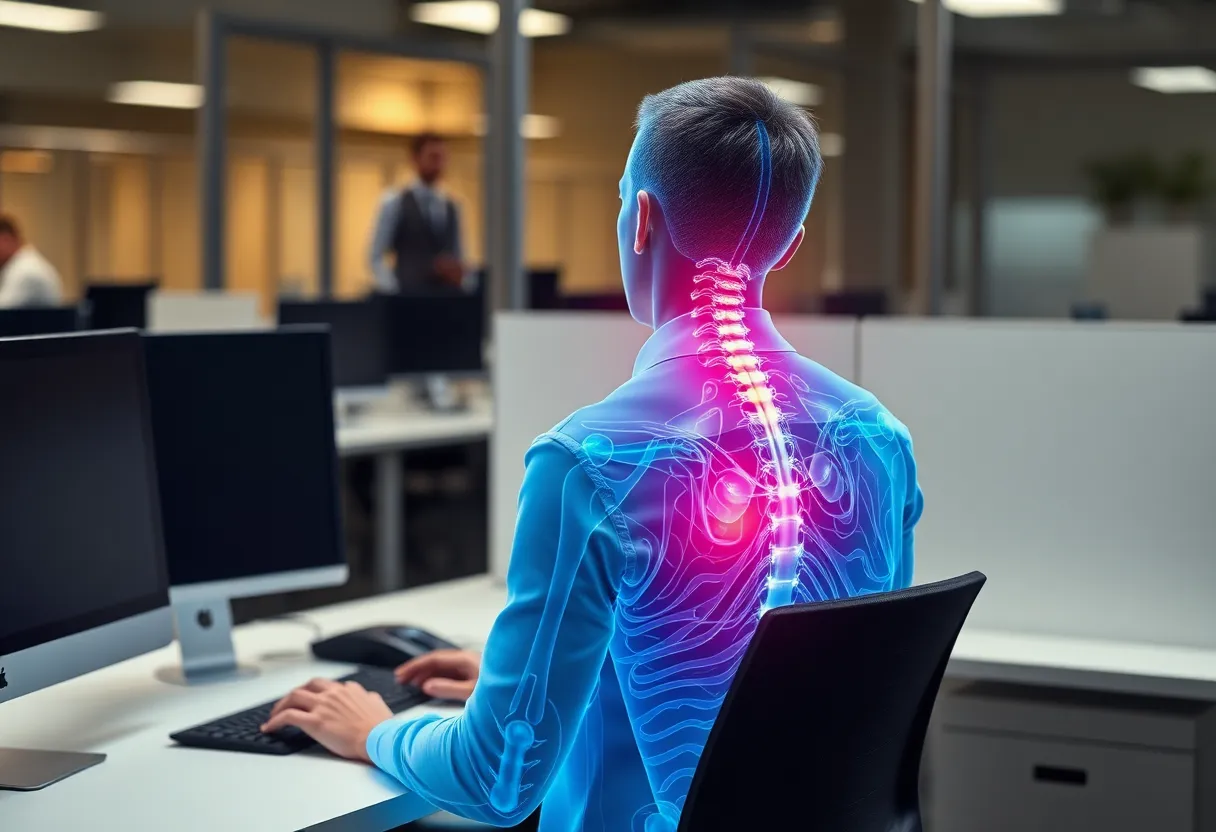
Hip flexor shortening causes anterior pelvic tilt, which places the lumbar spine in sustained hyperlordosis (excessive inward curve), which increases compressive forces on posterior spinal elements and facet joints. Meanwhile, sustained forward head posture at a screen—common in people whose monitor is too low or too close—increases the effective load on the cervical spine significantly. A head that is neutrally balanced on the spine creates an effective load of approximately 4–5 kg; at 15 degrees of forward flexion, the effective load increases to ~12 kg; at 30 degrees (typical “looking at a phone” posture), to ~18 kg. These are not the weights that the muscles actually exert, but the biomechanical equivalent that those muscles must counteract sustainedly.
Glute muscle inhibition is a well-documented effect of prolonged sitting. The gluteus maximus—the primary hip extensor and one of the most powerful muscles in the body—becomes inhibited through reciprocal inhibition with the hip flexors (when the hip flexors are constantly shortened and activated, the glutes are neurologically suppressed). The clinical result, sometimes called “dead butt syndrome” or gluteal amnesia, is a pattern where the glutes fail to fire appropriately during activities that should recruit them—walking, stair climbing, and athletic movements—leading to compensatory loading on the lower back and hamstrings.
What the Research on Breaks Actually Shows
The most consistently supported intervention in the sedentary research literature is frequent short movement breaks, rather than a single bout of exercise at the end of the day.
A 2012 study in Diabetes Care by Dunstan et al. found that breaking sitting with 2-minute light-intensity walking breaks every 20 minutes produced significantly better post-meal blood glucose and insulin responses than sitting continuously, even though total exercise volume was very low. The frequency of breaks, not the intensity, was the critical variable.
Research on “sit-stand protocols” (alternating between sitting and standing desks) shows improvements in lower body discomfort, energy levels, and some metabolic markers, but the optimal ratio is not as tightly defined as the marketing for standing desks implies. Standing for 50–70% of the workday appears to reduce discomfort; standing for 100% of the workday produces its own problems (lower limb pain, varicose vein risk, and fatigue). The sit-stand alternation matters more than maximising standing time.
Walking meetings, stair use, 2-minute walks every 30 minutes, and brief mobility exercises targeting hip flexors and glutes at transition points are all supported by the evidence to a meaningful degree. Wearable reminders (smartwatch move prompts, app-based breaks) show modest benefits in compliance studies, though the effect sizes for health outcomes specifically are still being studied.
The Exercise Doesn’t Fully Compensate Finding
The most counterintuitive and practically important finding in the sedentary behaviour research is that exercise does not fully reverse the metabolic effects of prolonged sitting on the same day. Someone who sits for 8 hours and then exercises for an hour has a metabolically different day than someone who sits for 4 hours, exercises for an hour, and sits for 4 more hours. The LPL suppression, insulin response blunting, and reduced NEAT-based energy expenditure during the sitting period are not fully compensated by the subsequent exercise session.
This finding—which contrasts with the intuition that “I went to the gym, so I’ve handled my health for the day”—is why public health guidance has increasingly moved from “do 150 minutes of moderate exercise per week” to “reduce prolonged sitting and increase total daily movement in addition to structured exercise.” Both are independently important.
Practical Calibration
The evidence doesn’t support the extreme “sitting is killing you” framing, which overstates certainty and magnitude. It does support treating prolonged unbroken sitting as a genuine occupational health issue with specific mitigation strategies:
- Movement breaks every 25–30 minutes, with at least brief (1–5 minute) light activity, have the strongest evidence for acute metabolic benefit
- Monitor and screen height that keeps the head in a neutral position reduces cervical loading significantly—the monitor top should generally be at or slightly below eye level
- Hip flexor and glute activation exercises targeting the patterns inhibited by sustained sitting (hip flexor stretches, glute bridges) address the musculoskeletal cascade directly
- Standing desk use with appropriate ratio of sitting to standing reduces lower body discomfort, though it does not substitute for movement breaks
The workplace physiology of desk work is well-understood enough to make specific, evidence-based improvements. The alarmist framing that made the topic famous obscures the actionable specifics—which are quite tractable once you understand what’s actually happening.