What Cochlear Implant Technology Still Can’t Replicate About Natural Hearing

Dr. Priya Krishnamurthy
July 9, 2026
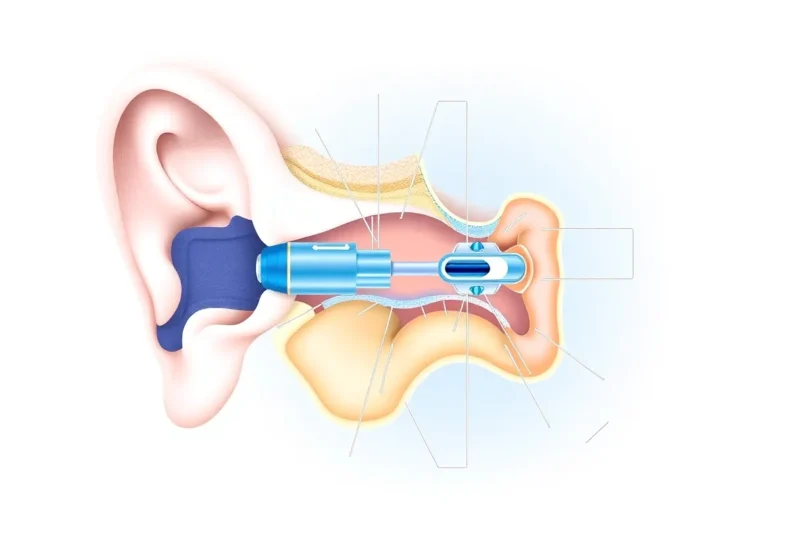
Cochlear implants are routinely, and reasonably, described as one of the genuine triumphs of modern medical bioengineering — a device that can restore functional hearing to people with severe to profound hearing loss who get little to no benefit from conventional hearing aids, by converting sound directly into electrical signals delivered to the auditory nerve. That framing is accurate and shouldn’t be undersold. It’s also easy to walk away from with an inflated sense of how close the device gets to replicating natural hearing, and the actual engineering gap between the two is instructive about just how sophisticated biological hearing really is.
What the Device Is Actually Doing
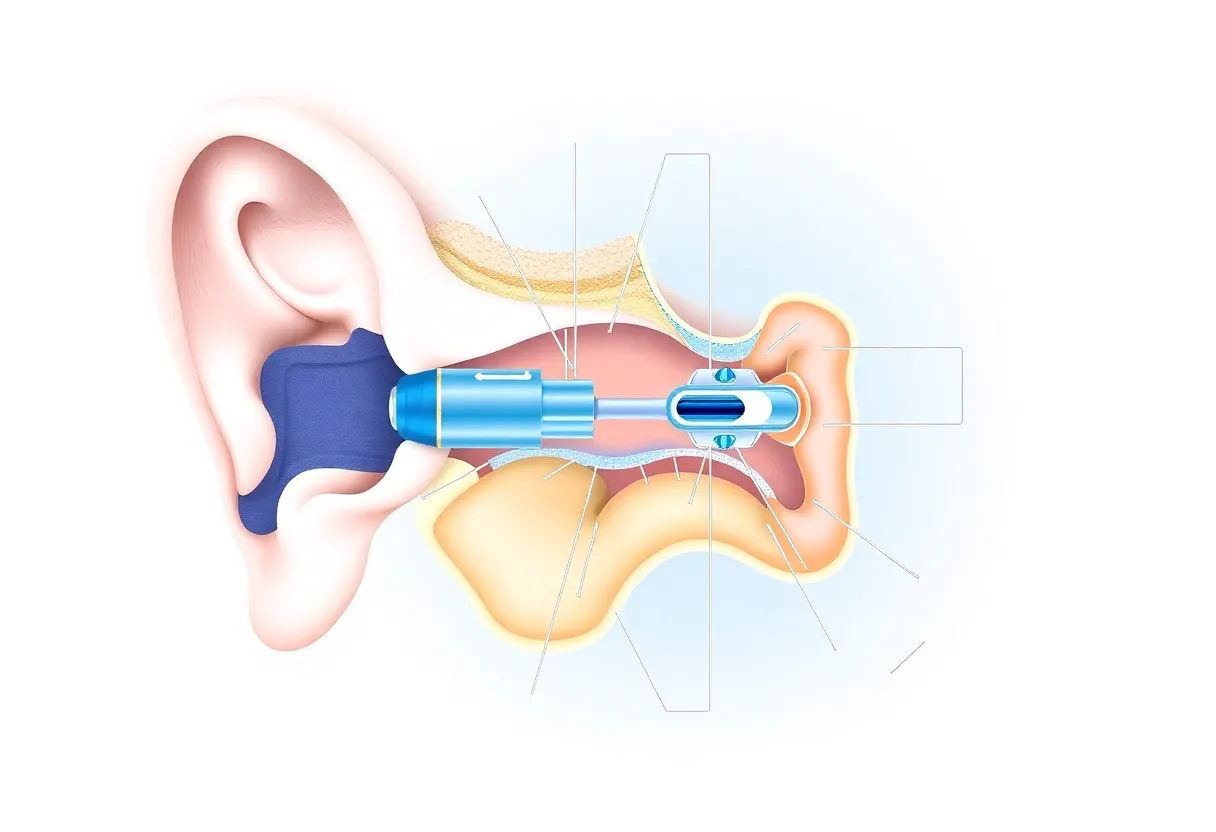
Natural hearing relies on the cochlea’s roughly 16,000 hair cells, distributed along its spiral length, each tuned to respond most strongly to a specific frequency range and each connected to auditory nerve fibers that carry frequency-specific information to the brain with remarkable temporal and spectral precision. A cochlear implant replaces this entire mechanism with an electrode array — typically somewhere between 12 and 22 electrode contacts, depending on the manufacturer and model — surgically threaded into the cochlea, each electrode stimulating a broad region of the auditory nerve rather than the narrow, precise frequency band a healthy hair cell would target.
That’s the central engineering constraint underlying essentially every limitation cochlear implant users describe: the device is attempting to recreate the frequency resolution of roughly 16,000 specialized biological sensors using somewhere around 12 to 22 electrical contacts. The brain does an impressive amount of adaptive work to make sense of this much coarser input, and outcomes — particularly for speech understanding in quiet environments — are often very good. But coarser input is still coarser input, and it shows up predictably in specific listening situations that require the frequency resolution the device simply doesn’t have available to deliver.
Music Sounds Different, Not Just Quieter
Speech recognition, the primary clinical benchmark cochlear implants are evaluated against, depends heavily on broad spectral and temporal cues that a coarse electrode array can convey reasonably well, especially with modern speech-processing strategies. Music perception depends on much finer pitch discrimination — distinguishing closely spaced notes, perceiving harmony and chord structure, following melodic lines against a background of other instruments — and this is consistently the area where cochlear implant users report the largest, most persistent gap compared to normal hearing, across essentially every published study on implant user music perception.
Many implant users describe music as sounding “buzzy,” “mechanical,” or difficult to identify by melody alone, and pitch discrimination testing consistently shows implant users needing much larger frequency differences between two tones to reliably tell them apart compared to normal-hearing listeners — a gap directly traceable to the mismatch between roughly two dozen electrode contacts and the fine-grained tonotopic map a healthy cochlea provides. Some implant users adapt by relying more heavily on rhythm and lyrics to enjoy music, rather than melody and harmony the way normal hearing typically allows, which is a genuine adaptation but not a resolution of the underlying limitation.
Noisy Environments Remain the Hardest Real-World Problem
Speech understanding in quiet, one-on-one conversation is where cochlear implants perform closest to their headline success stories. Speech understanding in background noise — a crowded restaurant, a classroom with multiple talkers, a family dinner with cross-conversation — remains measurably harder for implant users than for normal-hearing listeners, and harder than for many hearing aid users with less severe hearing loss, because separating a target voice from competing background sound depends heavily on exactly the fine frequency and temporal resolution that the electrode array can’t fully provide.
Modern implant processing strategies have made real, measurable progress on this specific problem — directional microphone systems, adaptive noise-reduction algorithms, and beamforming technology that emphasizes sound from the direction a user is facing have all improved speech-in-noise performance meaningfully compared to earlier generation devices. But the improvement comes from better signal processing before the electrical stimulation stage, working around the fundamental electrode resolution limit rather than eliminating it, and independent research continues to show a real, persistent gap between implant users and normal-hearing listeners in genuinely difficult noise conditions.
Sound Localization Loses Information That’s Hard to Recover
Normal binaural hearing localizes sound sources using extremely precise interaural time differences — the brain detects sub-millisecond differences in when a sound arrives at each ear to calculate direction — along with interaural level differences and spectral cues from the shape of the outer ear. Cochlear implant sound processing, especially in devices that don’t specifically preserve fine timing information, can degrade the precision of these timing cues, and users with a single implant (unilateral) lose binaural comparison entirely, since localization fundamentally requires input from two ears to triangulate direction.

Bilateral implants (one in each ear) have improved localization ability meaningfully compared to single-implant users, and are now more commonly recommended for candidates, but even bilateral implant users typically show measurably worse sound localization accuracy in controlled testing than normal-hearing listeners, because the timing precision each implant delivers still falls short of what natural hair cell transduction provides, even with two working together.
What’s Actually Improving, and Why the Core Limit Persists
None of this means implant technology is stagnant. Newer electrode array designs have improved insertion depth and reduced trauma to residual hair cell structures, which matters directly for hybrid approaches that combine electrical stimulation with acoustic amplification for users who retain some residual natural hearing at certain frequencies — a combination that measurably improves both speech and music perception compared to electrical stimulation alone, precisely because it reintroduces some of the fine frequency resolution that pure electrical stimulation can’t provide. Processing algorithms continue to improve speech-in-noise performance through better signal separation and adaptive strategies.
What hasn’t changed, and isn’t likely to change without a fundamentally different approach to the electrode-to-nerve interface, is the core numerical mismatch: a device with a few dozen independent stimulation channels standing in for a biological system with thousands of independently tunable sensors. Research into higher electrode-count arrays, optogenetic stimulation approaches that could theoretically achieve much finer spatial precision, and other next-generation interface technologies are active areas of research specifically aimed at closing that gap, but they remain experimental. For now, the honest technical answer to what cochlear implants can’t yet replicate is fairly specific: not “sound” in some vague sense, but the fine-grained frequency and temporal resolution that music, noisy-room speech understanding, and precise sound localization all depend on more heavily than quiet one-on-one conversation does.