What 3D Printing With Resin Actually Requires Compared to FDM

Anya Petrov
July 7, 2026
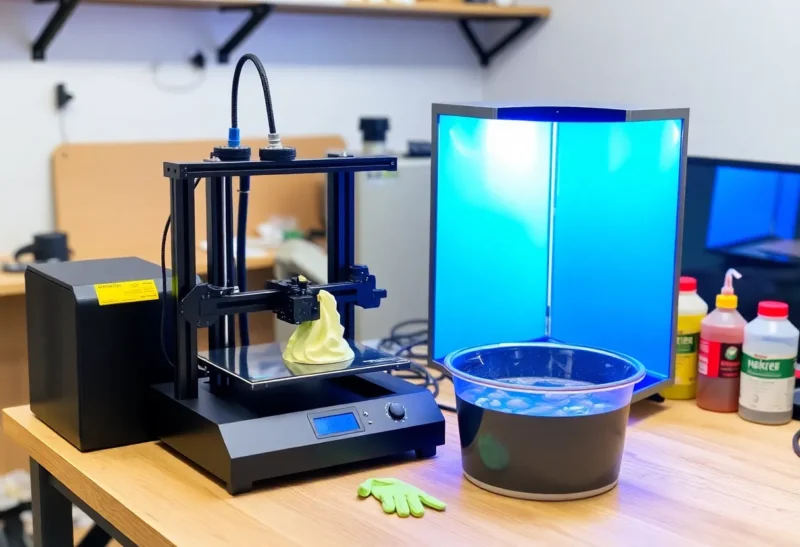
Consumer 3D printers have split into two distinct technologies that are better understood as different tools for different jobs than as better and worse versions of the same thing. FDM (Fused Deposition Modeling) — the technology in most desktop printers, where a heated nozzle deposits melted plastic filament layer by layer — is what most people picture when they think of home 3D printing. MSLA resin printing (Masked Stereolithography Apparatus, the technology in most consumer resin printers) uses a UV light screen to cure liquid photopolymer resin layer by layer, producing parts with dramatically finer detail at the cost of significantly more involved post-processing and handling requirements.
The detail quality advantage of resin is why it dominates in miniature and tabletop gaming printing, jewelry casting, dental models, and any application where fine surface detail matters. The workflow advantage of FDM is why it dominates for functional parts, large prints, prototyping, and anyone who values print-and-go convenience over detail quality. Understanding the real differences — not just the surface-level “resin is prettier” framing — helps make better decisions about which technology fits your actual use case.
The Resin Workflow: What Actually Changes
With FDM, the post-processing workflow is: remove the print from the bed, remove support structures if you used them, possibly sand or fill visible layer lines if finish quality matters. That’s largely it. The material (PLA, PETG, ABS) is a solid thermoplastic that handles safely with bare hands. Cleaning up is trivial.
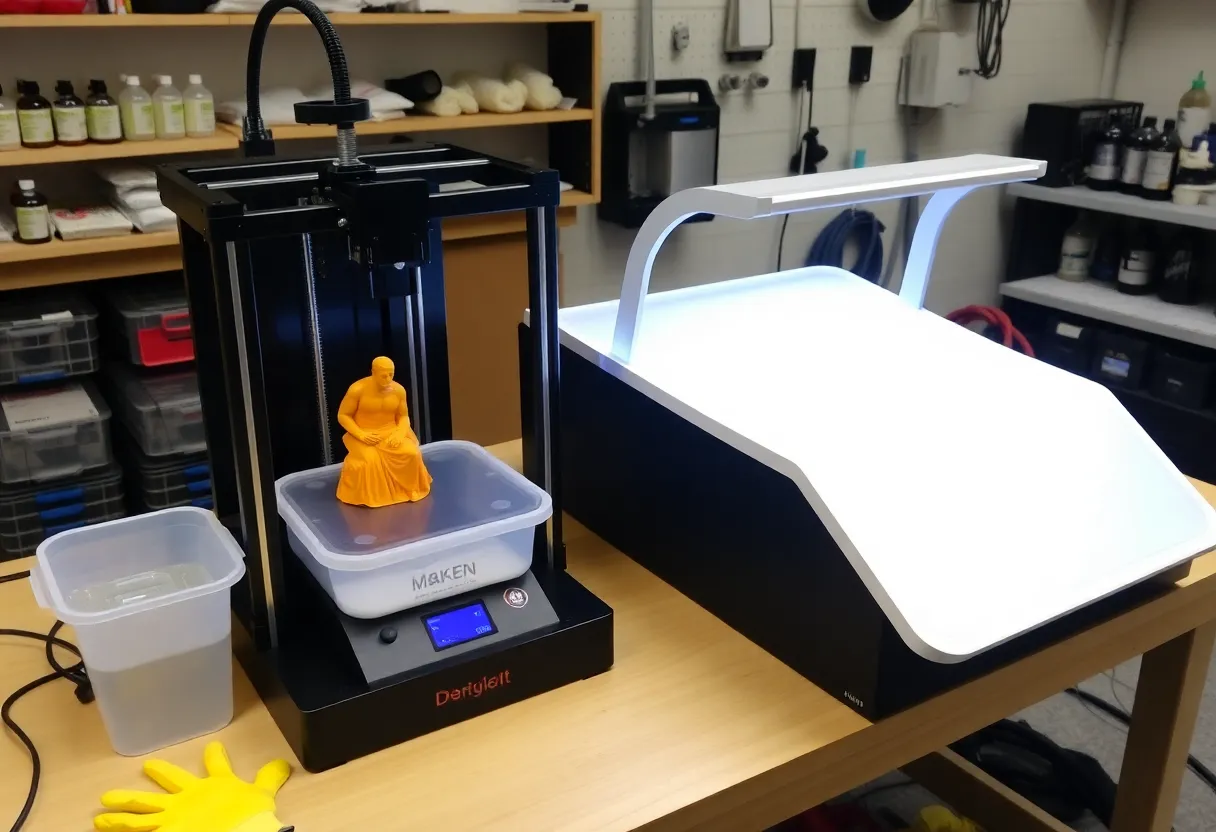
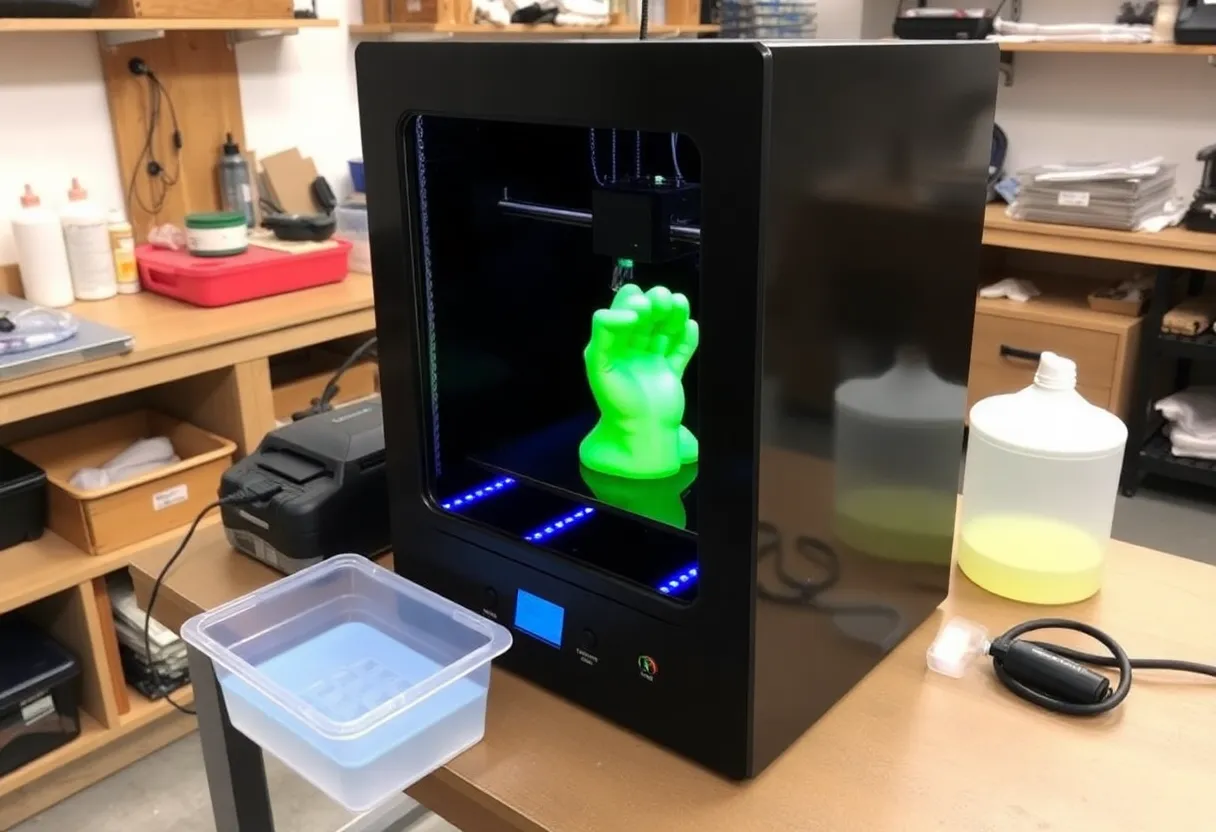
Resin printing’s post-processing workflow is substantially different. Fresh off the printer, a resin print is coated in uncured liquid resin — the same photopolymer that is mildly to moderately toxic, a skin irritant, and potentially an allergen with repeated exposure. Before handling the print without gloves, it needs to be washed — typically in isopropyl alcohol (IPA) or in dedicated washing solutions — to remove the uncured resin from its surface. After washing, it needs UV post-curing to fully cure the resin and achieve final mechanical properties. The minimum equipment for a resin setup is therefore the printer, a wash station (or a jar of IPA), and a UV curing station. The minimum safety equipment is nitrile gloves worn any time you’re handling resin or fresh prints.
The liquid resin itself requires careful handling. It should not be poured down drains — uncured photopolymer resin is an environmental hazard. Resin-contaminated IPA needs to be cured (expose it to UV light until the resin solidifies) before disposal. The FEP film at the bottom of the print vat needs periodic replacement as it gets cloudy from UV exposure, affecting print quality. Failed prints leave resin fragments in the vat that need to be filtered out. The operational complexity is meaningfully higher than FDM.
Print Volume: The Often-Overlooked Constraint
Consumer resin printers have significantly smaller build volumes than equivalent-cost FDM printers. A Bambu Lab A1 Mini FDM printer has a 180×180×180mm build volume. An Elegoo Saturn 4 resin printer at a similar price has a 218×123×260mm build volume — narrower in the x-y plane, making it more suited to vertically oriented prints rather than large flat prints. The flagship 12K resin printers have larger build volumes but cost significantly more.
For tabletop miniatures (typically 25-35mm scale), jewelry masters, dental models, and small detailed decorative objects, resin’s build volume is adequate. For phone cases, tool holders, enclosures, functional brackets, or any print that needs to be larger than roughly 15cm in any dimension, FDM is usually the right technology — both because the build volume is larger and because FDM materials like PETG, ASA, and Nylon offer mechanical properties that most consumer resins don’t match.
This is the decision point many buyers miss: if the primary use case is functional parts or large-format printing, resin’s detail advantage doesn’t compensate for its smaller build volume and more demanding workflow. If the primary use case is small, detailed objects — miniatures, figurines, jewelry, fine mechanical details — resin’s output quality is genuinely superior and worth the additional workflow complexity.
Material Properties
Standard consumer resins (ABS-like, standard, or basic resins from Elegoo, Anycubic, Phrozen) produce prints that are brittle compared to FDM materials. They’re harder and smoother-surfaced than PLA, but they crack under impact and flex rather than deforming — not ideal for anything that experiences mechanical stress. Premium functional resins (ABS-like Plus, tough resins, flexible resins, and engineering resins) improve on this considerably, but they add cost and may require tuned print settings.
FDM material diversity is the clear advantage here. PLA for basic prints, PETG for functional parts with good impact resistance and some temperature tolerance, ASA and ABS for outdoor or high-temperature applications, Nylon for flexible and wear-resistant parts, TPU for flexible prints, carbon-fiber composites for stiff lightweight parts — the range is broader and better characterized than the resin material space, and compatibility with most FDM printers (especially those with hardened steel nozzles) is straightforward.
Which Technology Makes Sense for Different Use Cases
For most people getting into 3D printing without a specific use case in mind, FDM is the more forgiving starting point. The workflow is simpler, the materials are easier to handle, the build volumes are larger, and modern FDM printers (Bambu Lab’s lineup in particular) have reduced the calibration and failure rate that used to make FDM frustrating for beginners. A first-timer who wants to print useful household objects, replacement parts, and practical items will be better served by FDM.
Resin is the right choice — even as a first printer — for someone with a specific high-detail use case. Tabletop wargamers who want to print their own miniatures, jewelry designers who need casting masters, and hobbyists who specifically want detailed figurines or display-quality models benefit from resin’s surface quality immediately. The workflow complexity is a real cost, but it’s learnable and manageable for someone who’s motivated by the output quality advantage.
Many experienced makers run both. FDM for functional parts, larger prints, and anything that needs engineering-grade materials; resin for detailed models, miniatures, and molds. The two technologies complement each other rather than competing, once you have the workflow for both handled. The investment in a resin setup — printer, wash station, cure station, consumables — is manageable alongside an existing FDM setup, and the output options are meaningfully expanded by having both available.