The Real Cost of Building a Portable Streaming Rig

Reese Dunn
March 15, 2026
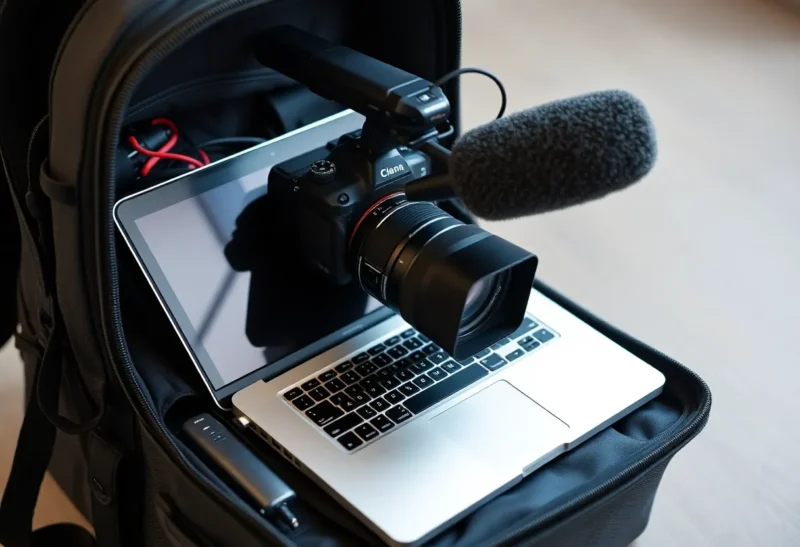
Building a portable streaming rig—something you can pack and take to events, travel, or a second location—sounds straightforward: laptop, camera, mic, maybe a capture card and a light. But the real cost isn’t just the gear; it’s compatibility, reliability, and the time you spend making it all work on the go. Here’s what a portable streaming rig actually costs in 2026.
Hardware: The Obvious Part
The visible cost is the gear. A capable laptop for encoding and running your streaming software; a decent USB or HDMI camera (or a DSLR/mirrorless with a capture card); a portable microphone (USB or XLR with a compact interface); a capture card if you’re pulling in a console or second machine; maybe a small LED light and a tripod or clamp. You can go budget (a few hundred dollars) or high-end (several thousand). The range is wide, but the real cost often hides in the next layers.
Portability adds constraints. You need gear that’s small, light, and durable enough to travel. That often means paying a premium for “prosumer” or pro gear that’s built for it—compact interfaces, travel cases, cables that don’t tangle. So the bill for “portable” versions of the same capability is usually higher than a fixed desk setup.
Compatibility and the “Works on My Desk” Problem
What works at home doesn’t always work on the road. Different power (voltage, outlets, dongles), different USB ports and hub behavior, different network conditions (hotel Wi‑Fi, conference networks, or cellular backup). Your portable rig has to handle variable power, variable bandwidth, and sometimes no Ethernet. That means testing and often buying extra adapters, a good USB hub, and maybe a cellular modem or phone tethering plan. The “real cost” includes the dongles and the time spent debugging when something doesn’t recognize a device or the stream drops.
Software matters too. Streaming apps, drivers, and capture cards can behave differently on another machine or after a Windows/Mac update. Keeping a dedicated “streaming laptop” with a known-good config is one approach; the cost is either a second machine or the risk of breaking your main laptop’s setup when you tweak for streaming.
Time and Reliability
The real cost of a portable streaming rig is often time. Time to research gear that travels well; time to build and test the kit; time to rehearse setup and teardown so you’re not fumbling at the venue; time to troubleshoot when the venue’s network is locked down or your capture card doesn’t wake up. If you stream occasionally from the road, that might be acceptable. If you’re doing it often, the hidden cost is the hours you spend making it reliable.
Reliability also means redundancy. Do you carry a backup cable, a backup mic, or a backup way to get online? Each addition adds cost and weight. The “real cost” is deciding how much redundancy you need so that one failure doesn’t kill the stream.
Network and Power
Streaming on the go means dealing with whatever network you get: hotel Wi‑Fi, conference Wi‑Fi, or cellular. Upload bandwidth and stability vary wildly. The real cost can include a decent cellular plan with enough hotspot data, or a dedicated backup like a second SIM or a router that can fail over. Power is another variable: outlets may be scarce, and you might need a small battery or power bank to keep the laptop and peripherals running during setup. None of that shows up in the “camera + mic + capture card” list, but it’s part of the real cost.
What You Actually Need
For a minimal portable rig: a laptop that can encode your stream (or an external encoder if you prefer), a camera that works over USB or HDMI, a mic, and a way to get online. That can be done for a few hundred to a couple of thousand dollars depending on quality. The real cost is making it robust: the right bag, the right cables, the right testing, and the acceptance that something will go wrong sometimes. Budget for that—and for the time to fix it. If you only stream from one place, a portable rig may not be worth it; if you travel for events or want the option to go live from anywhere, the real cost is the gear plus the time and backup plans that make it reliable.
The Bottom Line
The real cost of a portable streaming rig isn’t just the gear—it’s compatibility, reliability, and the time you invest in making it work on the go. Plan for hardware, adapters, redundancy, and rehearsal. If you’re honest about that, you’ll have a better sense of what “portable” really costs in 2026.