The Case for Smaller, Denser Cities Over Sprawl: What Urban Economics Shows

Nadia Fourie
July 7, 2026
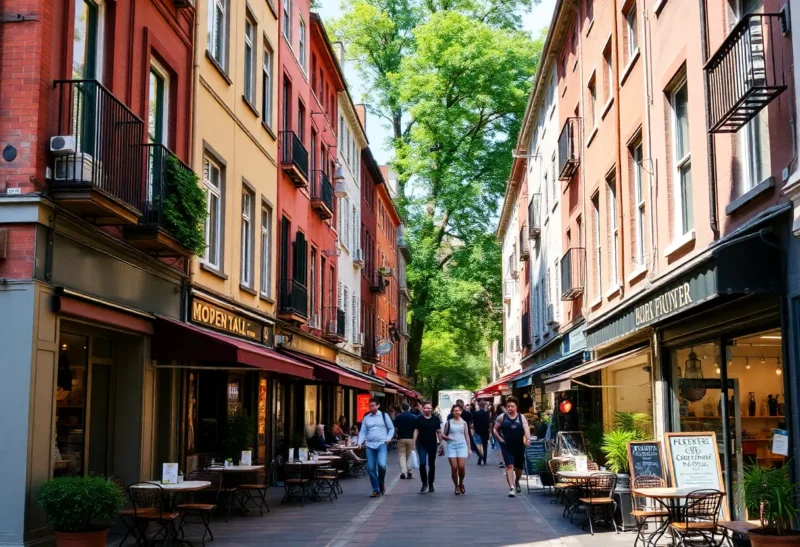
The debate about urban density is often framed as a conflict between preferences—between people who like the quiet and space of suburbs and people who like the energy and walkability of dense urban cores. Urban economics has been accumulating evidence for decades that suggests the choice between density and sprawl is not purely a matter of taste. It has measurable consequences for productivity, fiscal sustainability, environmental outcomes, health, and social mobility that point consistently in one direction.
This doesn’t mean dense cities are right for every person or every context. But the economic and social science literature on how density affects outcomes is clearer than the political culture wars around urban development typically reflect.
The Agglomeration Effects: Why Density Produces Productivity
The most well-established finding in urban economics is that productivity increases with city size and density—a phenomenon called agglomeration. Workers in denser cities earn more, and firms in denser cities are more productive, even after controlling for the types of industries present and the characteristics of the workers.
The mechanisms behind agglomeration are well-theorised and empirically supported: denser cities enable labour market pooling (workers and firms can find better matches across a larger, closer labour pool), knowledge spillovers (the informal exchange of ideas, techniques, and tacit knowledge happens more frequently when people physically interact), and input sharing (specialised suppliers, services, and infrastructure can justify their costs when the market is concentrated enough).
Economists like Enrico Moretti have documented the magnitude of these effects. Workers in the same industry and same occupation earn substantially more in dense cities than in dispersed ones, and the premium increases in industries that rely heavily on knowledge and collaboration—tech, finance, professional services. The difference is not merely nominal; it reflects real productivity differences.
The implication is that land-use regulations that restrict density—single-family zoning, height limits, setback requirements, parking minimums—impose aggregate economic costs by preventing cities from achieving the density that maximises agglomeration. These costs are diffuse (spread across all the workers who would have been in more productive situations) and invisible (the counterfactual city that wasn’t built), which is why they don’t appear in political accounting even though they are large in aggregate.
The Fiscal Reality of Sprawl
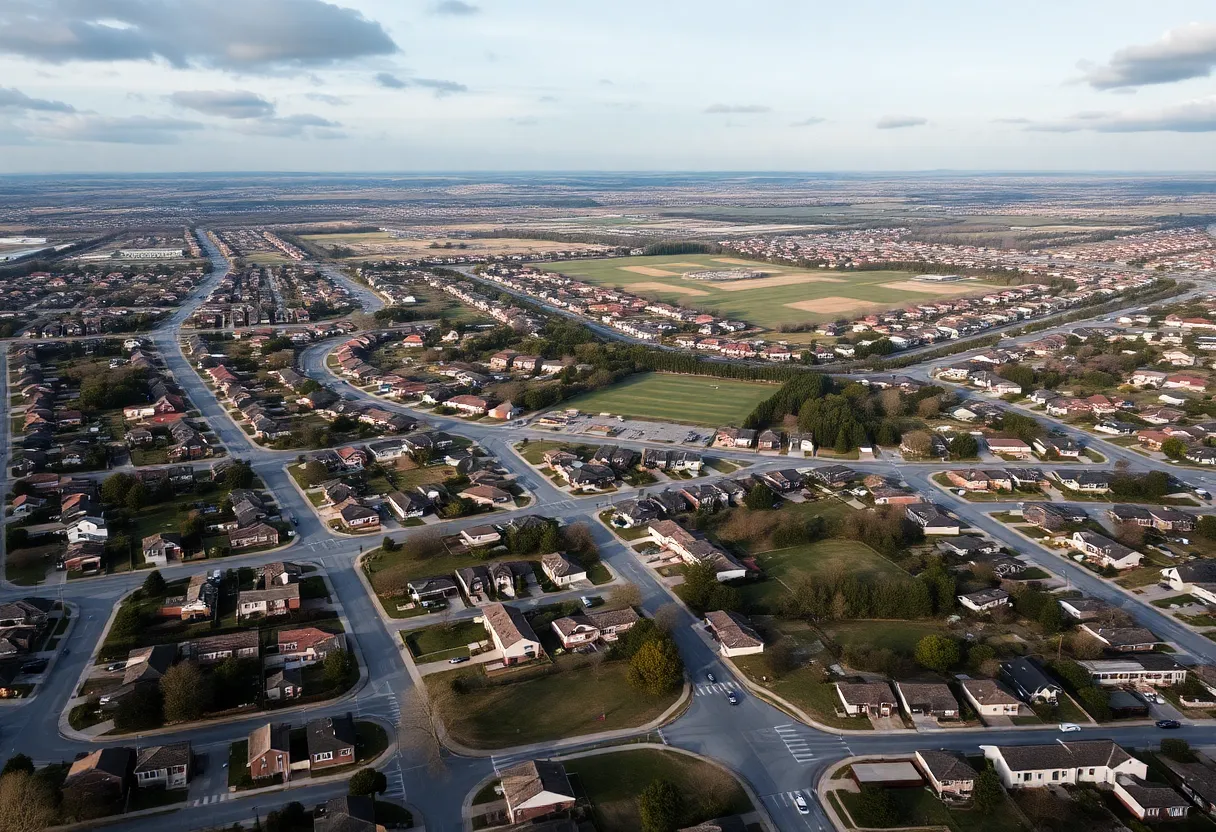
Suburban development is often politically popular because it appears to expand the tax base: new homes and commercial development generate property tax revenue. The less visible side of the ledger is the infrastructure that sprawl requires. Low-density development demands long roads, water and sewer lines, stormwater systems, electrical distribution, and emergency service coverage areas—all of which must be maintained indefinitely.
Strong Towns, the urban analysis organisation led by Charles Marohn, has documented through case studies across American municipalities that most suburban-pattern development is fiscally insolvent when the full lifecycle infrastructure cost is accounted for: the tax revenue generated by typical residential sprawl doesn’t cover the infrastructure maintenance liability that the development creates. The development looks profitable in the short term because new infrastructure doesn’t require maintenance immediately; the costs arrive decades later when roads need resurfacing, pipes need replacement, and stormwater systems need upgrading.
Dense, walkable urban development has lower infrastructure cost per capita and per unit of tax revenue. A block of four-storey apartment buildings generates more tax revenue per unit of road than a cul-de-sac of single-family homes, while requiring less road per resident. The efficiency of dense development in infrastructure terms is not marginal—it’s substantial, and it’s one of the key reasons that many American municipalities with large suburban development footprints face chronic underfunding for infrastructure maintenance.
Environmental Outcomes: Per-Capita Is the Right Measure
Dense urban residents typically have lower per-capita carbon footprints than suburban or rural residents. This seems counterintuitive—cities look dense and industrial, while suburbs look green and spacious. The explanation lies in per-capita resource consumption rather than total resource use.
Urban residents drive less—because destinations are closer, transit is viable, and walking and cycling work for a larger fraction of trips. Transportation is typically the largest component of household carbon footprints, and short, walkable trips produce far less carbon than car-dependent suburbia. Apartments in shared buildings use less energy per resident for heating and cooling than detached houses, because shared walls reduce heat loss and the building-to-occupant ratio is higher.
The land use argument is even clearer. An equivalent number of residents living at urban densities requires a fraction of the land area needed for suburban development. That land difference is available for agriculture, natural ecosystems, carbon sequestration, and biodiversity—uses that sprawl directly displaces. The idea that moving people to dense cities reduces the environmental pressure on natural land is well-supported by basic arithmetic even before the transportation and energy use comparisons are factored in.
Health and Social Outcomes
Walkable, dense urban environments produce better health outcomes on several measures than car-dependent suburban ones. Residents of walkable neighbourhoods are more likely to achieve the physical activity levels associated with reduced cardiovascular disease, obesity, and related conditions—not because they exercise deliberately, but because walking is embedded in their daily routines. The association between walkability and physical activity is one of the better-established findings in urban health research.
Mental health associations are more complex. Dense urban environments can be stressful in ways that suburbs aren’t; social isolation affects both urban and suburban residents but through different mechanisms. However, the access to social infrastructure—libraries, parks, cultural amenities, community organisations—that urban density enables tends to correlate with lower social isolation measures, and the causal mechanisms are reasonably well-understood.
Social mobility—the ability of people to move up the economic ladder across generations—has been studied extensively by Raj Chetty and colleagues through the Opportunity Atlas project. The geographic variation in upward mobility is enormous within the United States, and urban structure appears to be one of the contributing factors. Dense, mixed-income urban environments with good transit access and concentrated amenities tend to have better mobility outcomes than sprawling, economically segregated metropolitan areas.
The Housing Affordability Connection
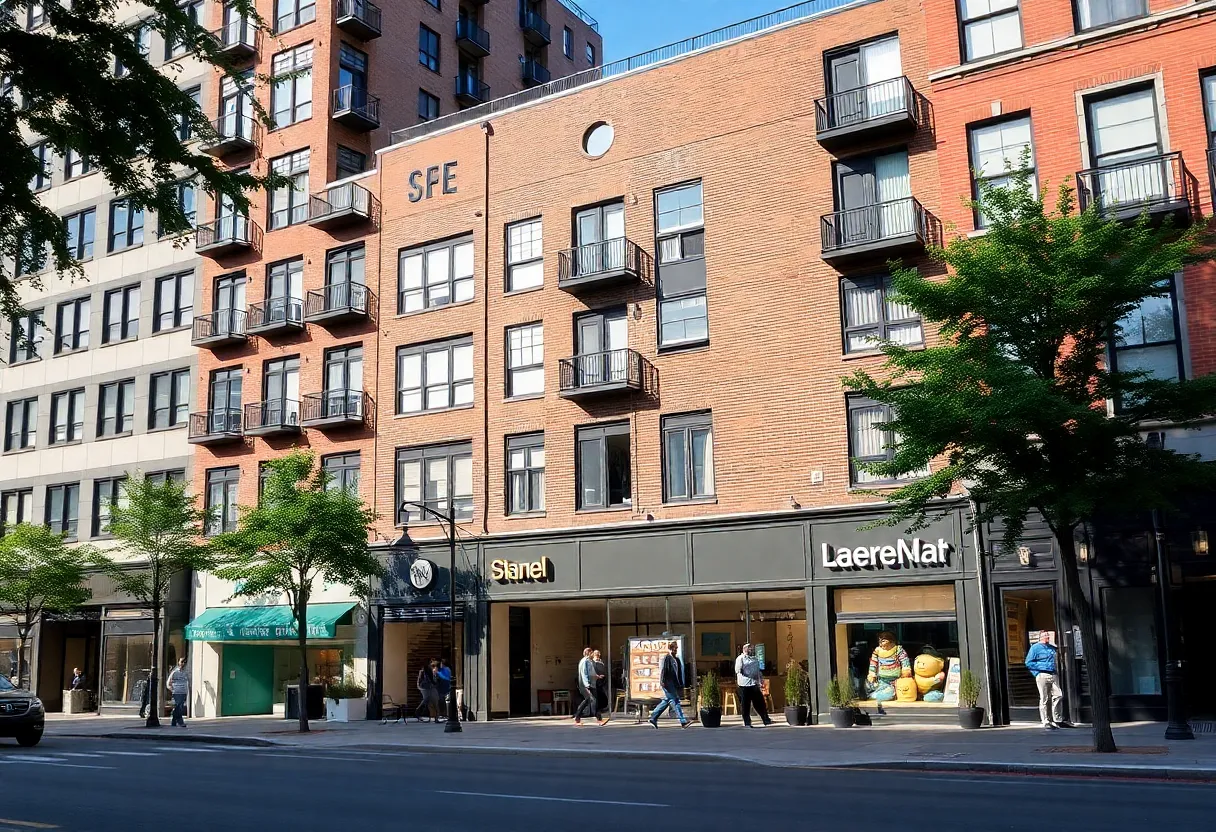
The most acute policy consequence of restricted urban density is housing cost. Cities that have restricted density—through single-family zoning, height limits, or slow permitting—have systematically become unaffordable as demand for urban living has increased. San Francisco, London, New York, and other high-productivity cities have housing costs driven by the gap between housing demand (driven by agglomeration-enhanced wages and quality of life) and housing supply (constrained by zoning that prevents adding units where demand is highest).
The economics of this constraint are clear: when land is scarce and regulations prevent building upward or subdividing, the existing housing stock appreciates dramatically. This benefits existing property owners—a politically powerful constituency—while imposing enormous costs on renters, younger households, and people attempting to access the labour market opportunities that productive cities offer.
The academic consensus among urban economists on the relationship between housing supply restrictions and housing costs is unusually strong. The political economy that produced and maintains these restrictions—homeowners who benefit from scarcity, neighbourhood groups that resist change, and political systems that over-represent existing homeowners relative to potential future residents—is equally well-understood. The gap between what urban economics recommends (more supply through upzoning and permitting reform) and what policy actually delivers in most expensive cities is a textbook case of how clear economic evidence can be consistently overridden by concentrated interest group politics.
What “Smaller, Denser” Actually Means in Practice
The case for density doesn’t require everyone to live in a high-rise. The most economically and socially effective urban form in much of the research is mid-rise, mixed-use, walkable development at moderate densities—think Amsterdam, Barcelona, Paris, or the older urban neighbourhoods of Tokyo, Montreal, or Seattle. Not skyscraper districts, but street-level retail with several floors of apartments above, blocks that allow walking to amenities, and transit that doesn’t require a car to function.
This form of development was the default of cities built before the automobile age; it was largely prohibited by post-war zoning in most of North America and is still illegal across large fractions of the land area of most American cities. The incremental reform agenda—legalising duplexes and accessory dwelling units, allowing small apartment buildings on main streets, streamlining permits for infill development—represents the policy implementation of what urban economics has been recommending for years.
The evidence that this approach produces better outcomes on the dimensions most people care about—economic opportunity, affordability, environmental sustainability, health, fiscal sustainability—is about as strong as urban policy evidence gets. The gap between evidence and implementation is a political problem, not an analytical one.