The Case Against Single-Use Plastics Beyond the Obvious Arguments

Zara Lindholm
July 7, 2026
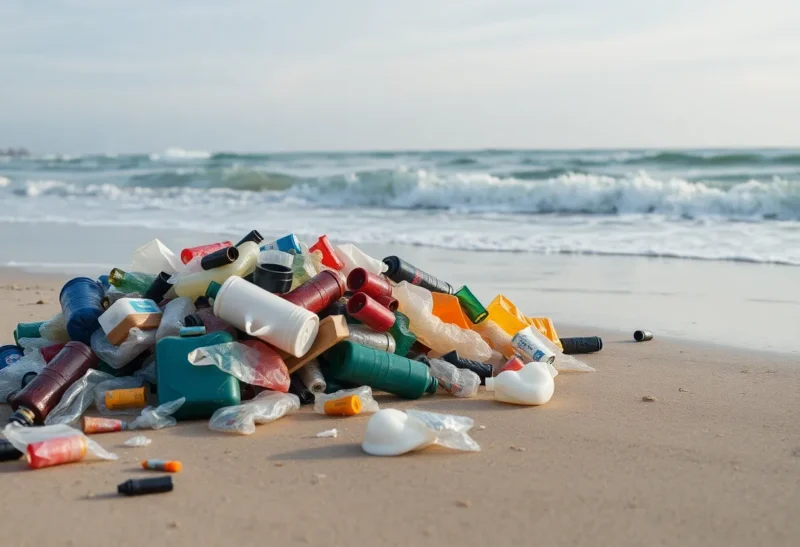
The obvious arguments against single-use plastics are the ones that saturate public discourse: ocean pollution, wildlife entanglement, the great garbage patches, the image of a sea turtle with a straw in its nostril. These arguments are accurate and relevant, but they tend to dominate conversation in a way that crowds out the less photogenic but equally important reasons to question the single-use plastic model—reasons that involve industrial economics, public health, recycling mythology, and the mismatch between what plastics can do as materials and how they’re most commonly used.
Understanding the full case against single-use plastics requires engaging with the less comfortable parts of the argument, including the ways that consumer-focused framing obscures industrial responsibility and the ways that alternative materials marketed as solutions have their own environmental costs that aren’t always acknowledged honestly.
Recycling Doesn’t Work the Way People Think
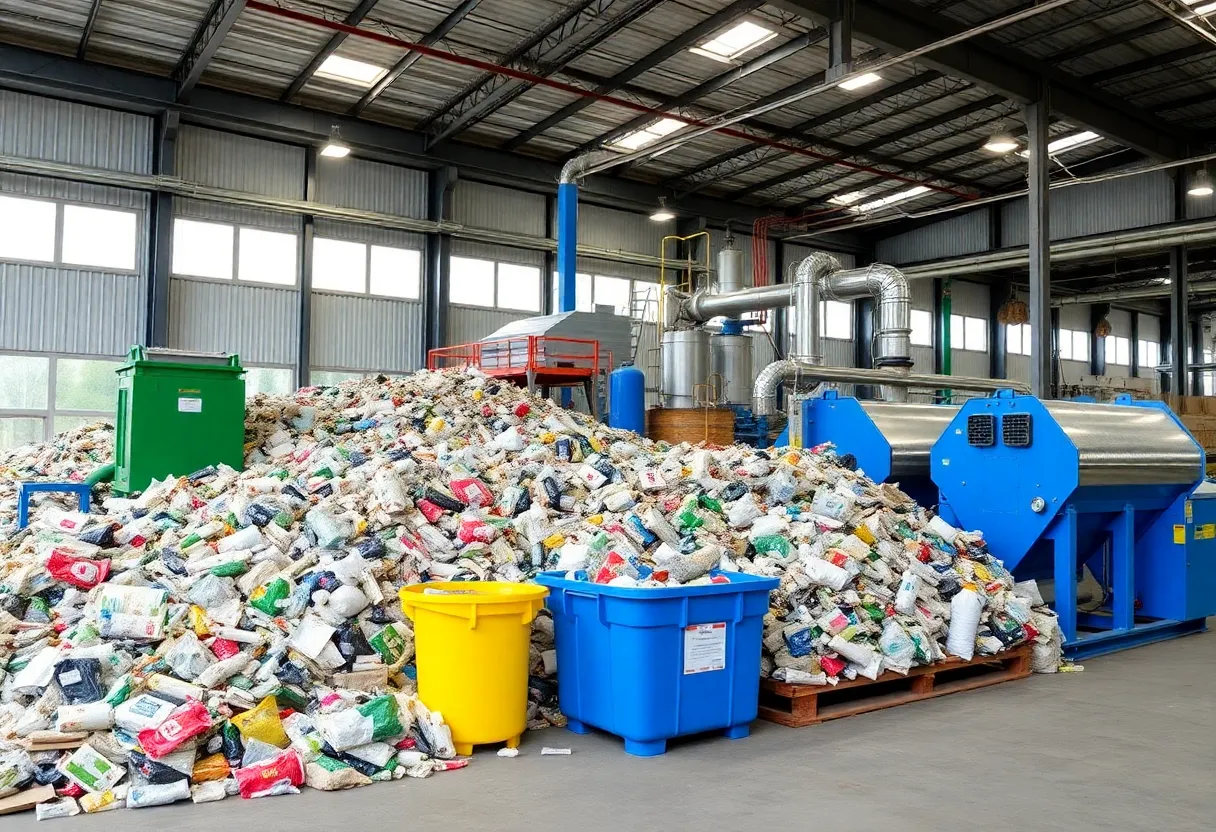
The most important piece of context for any discussion of plastic waste is how poorly the recycling system actually functions. Global plastic recycling rates are below 10%—meaning more than 90% of all plastic ever produced has been landfilled, incinerated, or released into the environment. The plastic recycling infrastructure that exists is limited, selective, and heavily dependent on market conditions for recycled material that have repeatedly collapsed.
The recycling symbol on plastic packaging is not a guarantee or even a strong indication that the packaging will be recycled. It indicates a resin type. Plastic resin types 1 (PET) and 2 (HDPE) are recycled at relatively high rates in countries with functional collection infrastructure. Resin types 3 through 7 are rarely recycled in practice—they exist in recycling streams mostly as contamination that reduces the value of what can be processed.
The economics of plastic recycling are structurally unfavourable: collecting, sorting, cleaning, and reprocessing plastic waste is expensive, and the resulting recycled plastic often has lower quality than virgin plastic and must compete on price with virgin material that benefits from subsidised fossil fuel feedstocks. When China stopped accepting foreign recycling imports in 2018, many municipalities discovered that their carefully sorted recycling had been going to the same landfill as their waste—because the economics of processing it didn’t work without the Chinese market.
The recycling framing has been actively promoted by plastic industry organisations for decades as a way of shifting responsibility for plastic pollution from producers to consumers and from system-level decisions to individual behaviour. Investigations into industry communications have shown explicit awareness that recycling would not solve the plastic pollution problem alongside continued promotion of recycling as the solution. Understanding this context matters for thinking about where solutions actually need to occur.
The Public Health Dimension
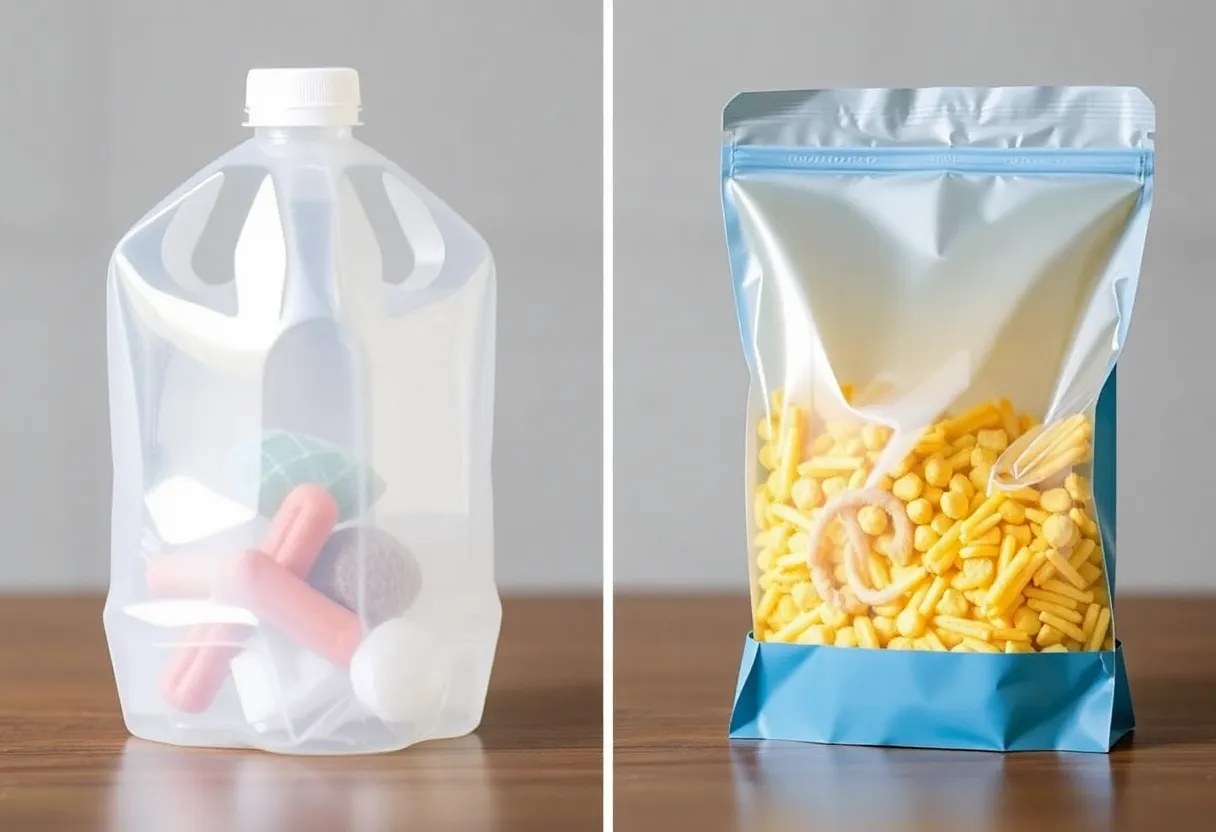
Microplastic contamination has emerged as a significant public health concern over the past decade. Plastic degrades into increasingly small particles—microplastics (below 5mm) and nanoplastics (below 1 micrometer)—that are now ubiquitous in the environment. Microplastics have been detected in human blood, lung tissue, placentas, and breast milk. They’ve been found in the deepest ocean trenches and at the summit of Everest.
The health implications of microplastic exposure are not yet fully characterised—this is an active research area where the science is developing rapidly. What is established is that many plastics contain additives (plasticisers, flame retardants, colorants, stabilisers) that are known endocrine disruptors and carcinogens, and that these chemicals can leach from microplastic particles. PFAS chemicals (per- and polyfluoroalkyl substances), which are used in many food-contact plastics and packaging, are associated with a range of health effects and are essentially non-degradable in the environment and the body.
The ubiquity of microplastic exposure makes it difficult to conduct the kind of controlled studies that would establish definitive dose-response relationships for specific health outcomes. This uncertainty has been used to dismiss concerns, but the precautionary logic runs in the other direction: the burden of proof for widespread environmental and physiological exposure to synthetic chemicals should arguably rest on demonstrating safety, not waiting for definitive harm proof decades after mass exposure has occurred.
The Economics of Designed Waste
Single-use plastic packaging is not an accident of materials science—it’s a product of deliberate economic design. Before disposable packaging became dominant, consumer goods were sold in refillable containers, and the cost and inconvenience of return systems were part of the price of goods. Disposable packaging externalised those costs to waste management systems, municipal budgets, and ultimately the environment, while allowing companies to reduce visible packaging costs and increase sales velocity.
Extended Producer Responsibility (EPR) legislation—which requires manufacturers to fund the collection and recycling of their packaging—is the policy mechanism most directly aimed at re-internalising these externalised costs. Countries with well-designed EPR schemes (Germany’s Green Dot system, various EU member state implementations) have achieved substantially higher plastic recycling rates than the global average, because the system creates financial incentives for producers to design packaging that can actually be collected and processed.
The plastic industry has historically lobbied against EPR legislation in markets where it hasn’t been implemented, preferring the current model where they produce packaging and municipalities and taxpayers bear the waste management burden. The framing of plastic pollution as a consumer responsibility problem—solved by individual recycling behaviour—serves this political function.
The Alternative Materials Problem
The honest version of the case against single-use plastics has to grapple with the environmental costs of alternatives. Paper bags have higher production energy requirements than plastic bags; cotton tote bags require hundreds of uses to achieve lower lifecycle environmental impact than the single-use bags they replace; glass is heavier and therefore more energy-intensive to transport; compostable bioplastics only deliver their environmental benefit if they’re composted in industrial composting facilities, which most consumers don’t have access to.
These comparisons are real and shouldn’t be dismissed. But they’re typically presented in a framing that serves the plastics industry: the comparison is between single-use plastic and a single-use alternative, which often does make plastic look favourable. The more relevant comparison in many cases is between single-use plastic packaging and reusable systems—refillable containers, concentrated products, bulk purchasing—where the lifecycle calculation shifts substantially.
The environmental cost of a reusable container is amortised over many uses. A glass bottle that replaces 100 plastic bottles has a very different lifecycle profile from a glass bottle that’s used once. The question isn’t “which disposable material is least bad” but “where does disposable design make sense and where does it serve commercial interests at environmental cost?”
Where the Argument Actually Points
The full case against single-use plastics points toward system-level changes that consumer behaviour alone cannot produce. Recycling rates won’t reach meaningful levels without extended producer responsibility. Microplastic contamination won’t be addressed by reusable straws. PFAS in food packaging won’t be eliminated by individual choices at the grocery store.
Consumer choices still matter at the margins and can signal preference to markets. But the more important levers are: EPR legislation that makes producers financially responsible for their packaging end-of-life; restrictions or bans on specific high-impact single-use plastic items; requirements for genuinely recyclable or compostable packaging formats; investment in collection and processing infrastructure; and elimination of subsidies that make virgin plastic cheaper than recycled.
The obvious arguments about ocean pollution are viscerally compelling and politically useful for generating attention. The less obvious arguments about recycling mythology, industrial economics, public health, and policy design are what point toward interventions that could actually change outcomes. Both kinds of arguments are part of an honest account of why the single-use plastic model is a problem worth taking seriously.