Space Telescopes Are Beating Earth’s Best—What That Means for Science

Robin Hayes
February 24, 2026
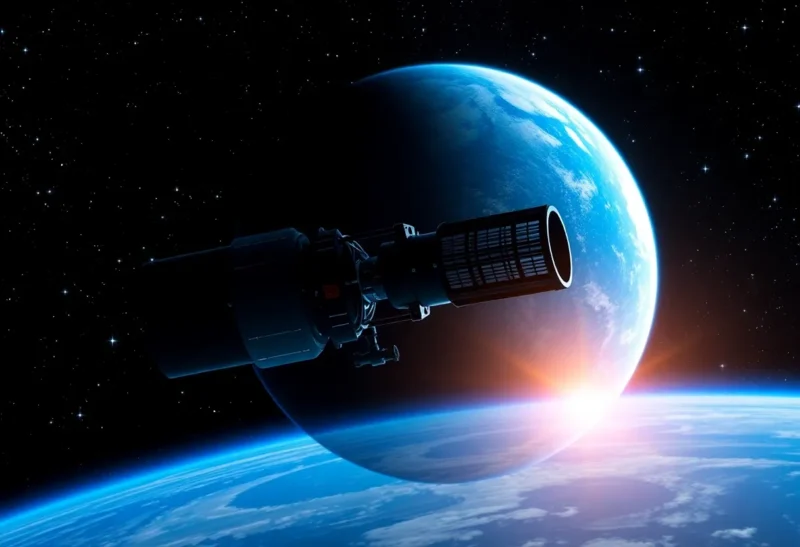
For most of the history of astronomy, the best views of the universe came from the ground. Big mirrors, high mountains, and decades of refinement made Earth-based observatories the workhorses of discovery. That’s changing. Space telescopes—Hubble, James Webb, and the next generation—are now delivering data that ground-based facilities simply can’t match. Not because the ground has gotten worse, but because space has gotten within reach. The shift is reshaping how we do science: what we can see, how we plan missions, and what we’re willing to pay for. Here’s what it means.
Why Space Wins
Earth’s atmosphere is the enemy of clarity. It blurs light, absorbs certain wavelengths, and twinkles with turbulence. Ground-based telescopes fight back with adaptive optics—deformable mirrors that correct for the atmosphere in real time—and they’ve gotten very good. But they can’t see the wavelengths that the atmosphere blocks entirely. Infrared, especially the far infrared, is largely invisible from the ground. So is much of the ultraviolet. Space telescopes sit above the atmosphere. They get a clean signal across the full electromagnetic spectrum (or as much as their instruments are built for). That’s not a small advantage—it’s the difference between seeing a fraction of the picture and seeing the whole thing.
Then there’s stability. In space there’s no wind, no temperature swing from day to night in the same way, and no vibration from traffic or construction. The telescope can point at a patch of sky for days if needed, gathering photons without the noise that ground-based long exposures have to contend with. For faint, distant objects—early galaxies, exoplanet atmospheres, or the cosmic microwave background—that stability is everything.
What’s Actually Changing
Hubble and JWST have already shown what space can do: deep fields that reveal galaxies at the edge of observable time, exoplanet spectra that hint at atmospheres, and images that become cultural touchstones. The next wave—Nancy Grace Roman, ESA’s Euclid, and the proposed Habitable Worlds Observatory—will push further. More resolution, broader surveys, and a focus on the questions that only space can answer. At the same time, ground-based telescopes aren’t standing still. The Extremely Large Telescope (ELT) and the Thirty Meter Telescope (TMT) will have mirrors an order of magnitude larger than JWST. They’ll excel at certain tasks—high-resolution spectroscopy, time-domain astronomy, and anything where collecting area matters more than atmospheric transmission.
So the story isn’t “space wins, ground loses.” It’s that the division of labor is shifting. Space owns the wavelengths the ground can’t see and the ultra-deep, ultra-stable observations. The ground owns the huge mirrors, the rapid follow-up, and the kind of projects that are too big or too flexible to put in orbit (yet). The best science will come from combining both—space for discovery and depth, ground for detail and cadence.
What It Means for How Science Gets Done
Space telescopes are expensive and slow. A single mission can take decades from concept to data. You can’t easily upgrade a instrument that’s a million miles away. So the way astronomers work is changing: more collaboration around big missions, more pressure to get the science right before launch, and more reliance on simulations and precursors to de-risk the design. At the same time, the data from space missions is often public. JWST’s early release science and archive mean that thousands of researchers can work on the same observations. That democratizes access—you don’t need to have built the telescope to do the science—but it also means that the most competitive proposals are for the most sought-after targets. The bottleneck shifts from “who has telescope time” to “who gets to point the telescope.”
For early-career scientists, the lesson is that space astronomy is both more accessible (you can work on JWST data without being on the team) and more centralized (the big decisions are made by agencies and consortia). Ground-based astronomy still offers more opportunities to propose, to build, and to iterate. The mix of skills that matter—data analysis, simulation, instrumentation, and proposal writing—depends on which side of the atmosphere you’re targeting.
The Bottom Line
Space telescopes are beating Earth’s best where it matters most: clean light, stable pointing, and wavelengths the atmosphere hides. That doesn’t make ground-based astronomy obsolete—it redefines the partnership. Space does what only space can do; the ground does what it’s still best at. For science, the payoff is a fuller picture of the universe: more wavelengths, deeper fields, and a pipeline of missions that will keep pushing the limits of what we can see. The golden age of astronomy isn’t space versus ground. It’s both.