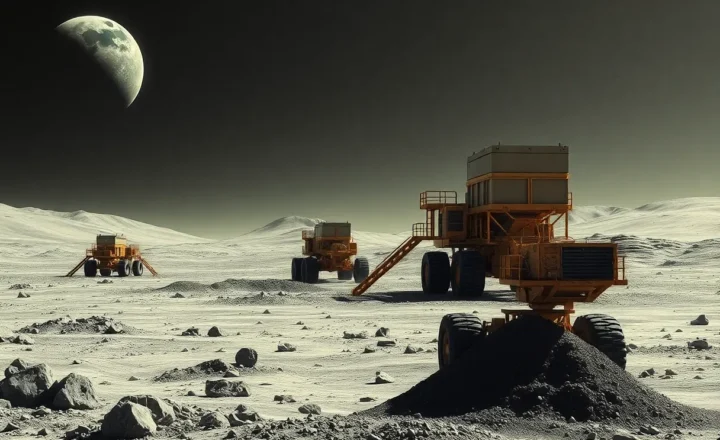
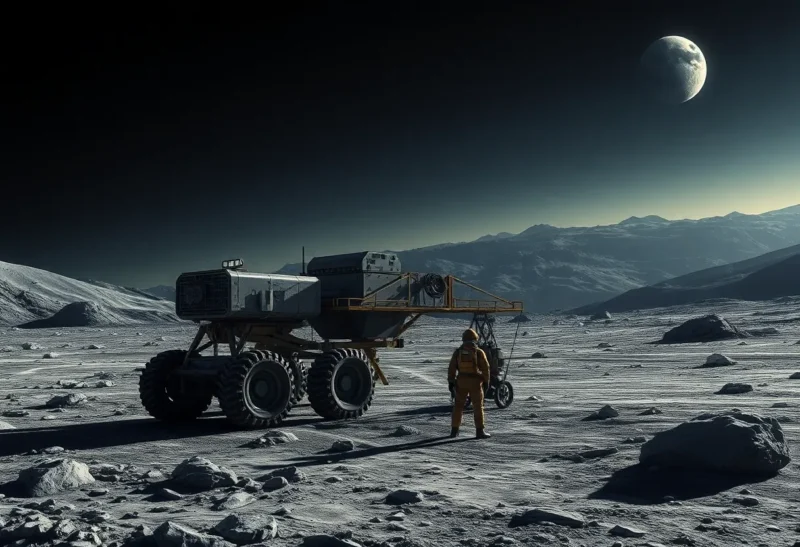
Lunar mining sounds like science fiction until you look at who’s building landers, who’s bidding on regolith, and who’s planning to use the moon as a pit stop for deeper space. The vision is clear: extract water ice, helium-3, or metals to support a lunar base or fuel missions beyond Earth. The part that gets less attention is the logistics—how you actually get equipment there, run it in brutal conditions, and move product where it’s needed. That’s the bottleneck nobody’s fully solving yet.
Why the Moon, and Why Now
Interest in lunar resources isn’t new. Water ice at the poles could be split into hydrogen and oxygen for propellant, cutting the cost of launching fuel from Earth. Helium-3 is talked about for fusion (still speculative). Regolith itself can be used for construction or radiation shielding. What’s new is the combination of commercial landers, NASA’s Artemis program, and international moon plans. The “why now” is cheaper access, political will, and the idea that in-situ resource use (ISRU) could make a sustained presence affordable. But getting there is one thing. Mining, processing, and using the stuff is another.
The Logistics Nobody’s Solving Yet
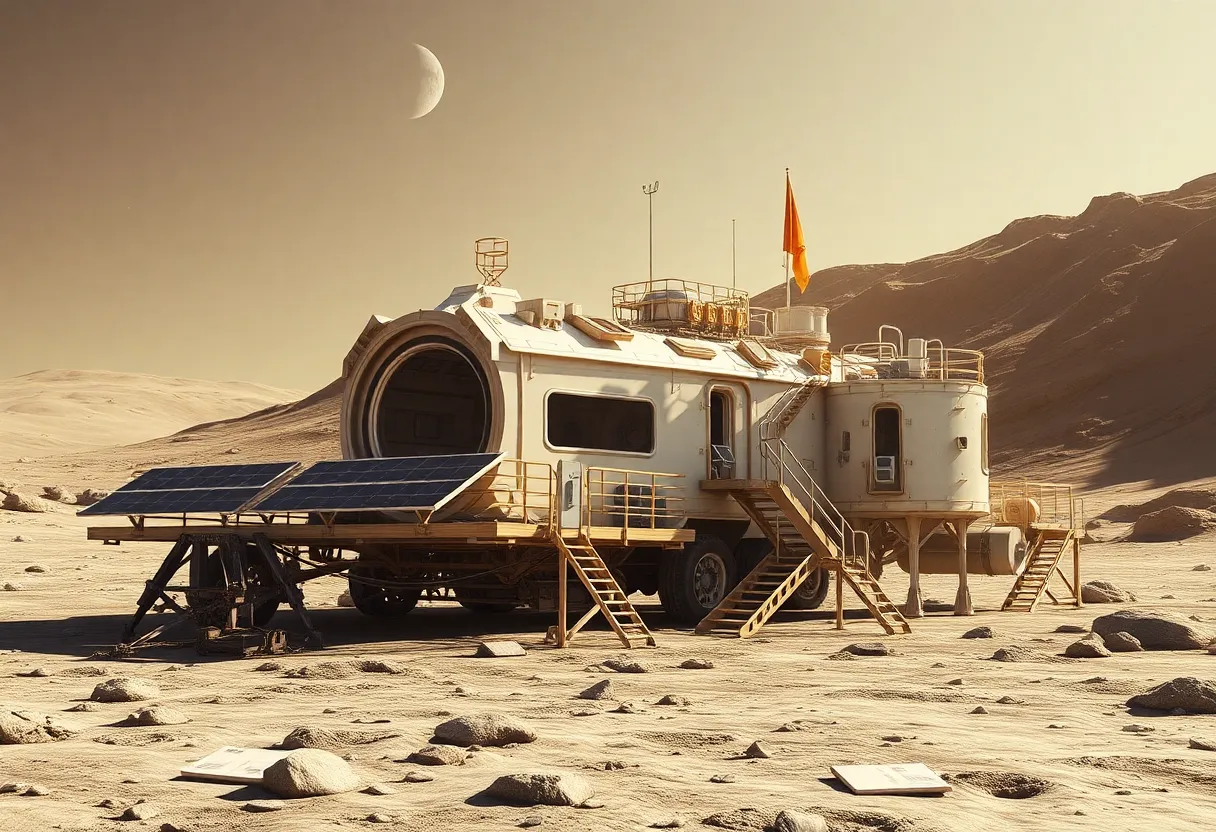
Mining on Earth relies on heavy equipment, power, and supply chains. On the moon you have none of that at scale. You need machines that work in vacuum, extreme temperature swings, and abrasive dust that gets into everything. You need power—solar is obvious but you have two-week nights at most sites unless you’re at a pole with near-continuous light. You need to get equipment to the surface: mass and volume are expensive. Every kilogram you land has to be designed for the environment and for minimal maintenance, because you can’t send a mechanic. Then you have to process the material—crush, heat, or chemically separate—and either use it on-site (e.g. water for life support or propellant) or somehow get it off the moon. Each of those steps is a logistics and engineering problem that’s still in early stages.
Regolith is abrasive and sticks to surfaces because of the way it’s charged in the lunar environment. Moving it, sorting it, and feeding it into processing equipment without jamming or wearing out machinery is an open challenge. So is scale: demonstrator missions might extract kilograms; a real ISRU operation would need to handle tonnes. The gap between “we proved we can extract water from simulant” and “we’re running a continuous operation that supplies a base” is huge. Nobody has fully solved the end-to-end logistics—land, deploy, mine, process, store, use—in a way that’s cost-effective and reliable. Add to that temperature extremes (over 100°C in the day, well below freezing at night in most places), radiation, and the fact that spare parts and repair crews are not a quick shipment away. Every system has to be redundant, simple, or both.
Who’s Working on It
NASA and other space agencies are funding ISRU research and flying instruments to characterize resources. Commercial players are building landers and proposing mining and processing payloads. Some are focused on water extraction; others on construction materials or metals. The technology is advancing—small-scale experiments, prototypes, and partnerships—but the full chain from “dirt on the moon” to “usable product” is still fragmented. Different teams are solving different pieces. The integration—how it all works together in a real mission—is where the logistics get messy. Standards, interfaces, and who does what (e.g. who provides power, who handles transport between sites) are still being worked out. Legal and policy questions—who owns extracted resources, how liability works, how nations and companies coordinate—add another layer. The Outer Space Treaty and national laws are evolving, but the “rules of the road” for lunar operations are not fully settled. Until they are, large-scale investment in mining logistics may stay cautious.
Why It Matters Anyway
Lunar mining matters because it’s the test case for using space resources. If we can make it work on the moon—with its proximity to Earth, its known environment, and its strategic value for deep-space missions—we learn how to do it elsewhere. Mars and asteroids are farther and harder; the moon is the nearby lab. The logistics problems are hard but not impossible. They’re the kind of thing that gets solved when money and talent converge on a clear goal. The question is whether the goal stays “demonstrate capability” or becomes “run a sustained operation.” The latter is where the real logistics challenges live: continuous power, maintenance-free or low-maintenance equipment, and a supply chain that doesn’t depend on Earth for every kilogram of consumable. That’s the part nobody’s fully solving yet—and the part that will determine whether lunar mining is a sideshow or the backbone of a space economy.
Bottom Line
Lunar mining is moving from concept to early hardware. The vision—water, helium-3, construction material—is clear. The logistics—getting equipment there, running it in lunar conditions, processing at scale, and moving product—are still the bottleneck. Abrasive dust, power, mass limits, and the lack of a full end-to-end solution mean we’re not there yet. Progress is real, but the “nobody’s solving yet” part is the integrated, sustained logistics of making lunar mining more than a one-off experiment.