Klipper vs Marlin on a Bed-Slinger: When Input Shaping Is Worth Flashing the Printer

Anya Petrov
September 22, 2026
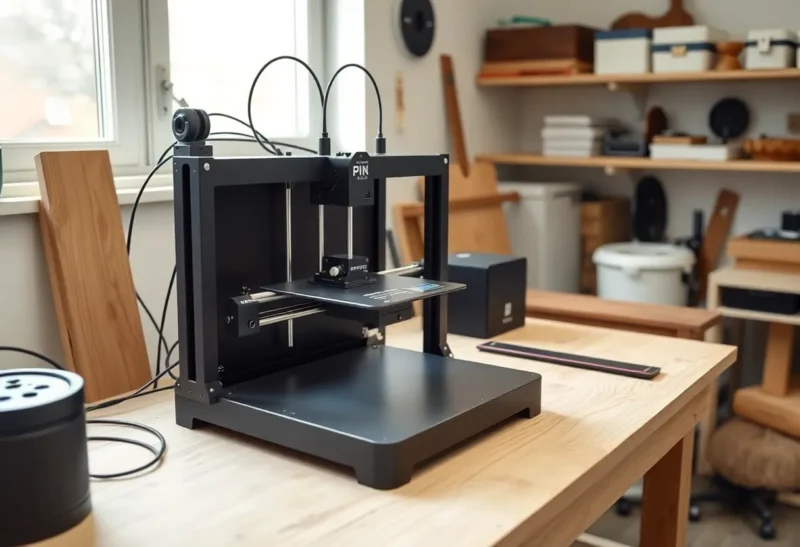
Bed-slingers shake. That is not a moral failing; it is physics. The bed moves in Y, the mass changes as the print grows, and at some speed the whole machine sings a frequency you can see in the walls of a calibration cube. Marlin has spent years getting respectable prints out of that architecture on a single MCU. Klipper’s pitch is different: push motion planning to a companion computer, measure the resonance, and cancel it with input shaping so the same hardware can run faster without looking drunk.
The question is not “is Klipper cooler.” It is whether input shaping—and the rest of the Klipper stack—is worth flashing a working bed-slinger that already makes usable parts. For a lot of printers bought as kits or budget bed movers, the honest answer is: sometimes yes, sometimes you are buying a second hobby.
What you actually change when you leave Marlin
Marlin runs on the printer’s board. You configure, flash, and print. The host (OctoPrint, a manufacturer UI, a card reader) is optional glue. Failure modes are familiar: bad EEPROM values, a bad flash, a sensor that needs a recompile.
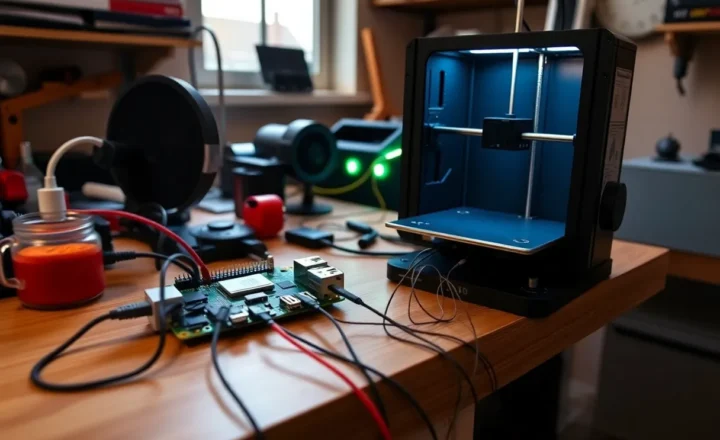
Klipper splits the world. A host—usually a Pi or similar—runs the heavy kinematics. The MCU firmware becomes a dumb realtime endpoint. You gain:
- input shaping and pressure advance tuning with less ritual pain
- smoother high-speed motion planning
- config as editable text files instead of a recompile culture
- niceties like helpful macros, exclusion zones, and web UIs (Mainsail/Fluidd)
You also gain a second computer that must stay healthy, networked enough to operate, and backed up. A bed-slinger that used to print from an SD card after a router died now depends on a Pi SD card of its own unless you plan carefully.

Input shaping on a bed-slinger: the real prize
Input shaping shines when resonance is the limiter between “fine at 40 mm/s” and “garbage at 80 mm/s.” Bed-slingers often hit that wall early because the Y axis is a tray of changing mass. An accelerometer workflow (ADXL345 and friends) lets Klipper measure ringing and apply a shaper so cornering artifacts drop without turning every print into a slow sculpture.
Worth it when:
- you already tightened belts, squared the frame, and still see ghosting as you raise speed
- you print a lot of functional parts and time-per-print matters
- you are willing to run the measurement prints and re-check after mechanical changes
Less worth it when:
- your prints are already slow because of filament, nozzle, or cooling limits—not motion
- the frame is loose enough that shaping papers over a floppy machine you should tighten first
- you print occasionally and do not care if a benchy takes 20 more minutes
Shaping does not fix a bent gantry. It forgives a stiffer-than-floppy machine that still rings. Do the spanner work before the FFT work.
When Marlin is still the rational firmware
Stay on Marlin (or the vendor’s Marlin fork) when:
- The printer is “good enough” and paid for in frustration already. If dimensional accuracy and surface quality meet your bar at comfortable speeds, flashing is optional entertainment.
- You want minimal host dependency. SD-card printing after a network outage is underrated household resilience.
- Your board and sensors are happy in stock config. Some manufacturer builds are hostile to casual Klipper ports—pinouts, weird MCUs, locked bootloaders.
- You upgrade mechanically first. Linear rail conversions, better wheels, bracing—these help both firmwares. Do them while Marlin still runs so you can A/B the mechanical win.
Modern Marlin is not a toy. It has pressure advance, linear advance, and plenty of motion features. The gap is less “Marlin cannot” and more “Klipper makes the tuning loop shorter for people who live in configs and plots.”

The hidden cost of Klipper on a cheap bed-slinger
Budget printers tempt Klipper because the marketing timelines show CoreXY rockets. Your Ender-shaped bed mover is not that machine. After flashing you may find:
- hotend cooling or extrusion still caps speed before shaping matters
- bed mesh and probe quirks eat a weekend
- USB noise or power dips make the MCU disconnect mid-print
- you now own Pi heat, Pi power, and Pi backups
Klipper is worth more on a bed-slinger you plan to keep for years than on a machine you will replace with a toolchanger fantasy next spring. Firmware investment compounds on hardware you trust.
A practical migration path that respects “it already prints”
- Document current Marlin settings and take a stock quality sample at your usual speed.
- Fix belts, eccentricity, and obvious wobble until the sample is clean slowly.
- Add a host Pi with a UPS-friendly power plan if you go Klipper; avoid powering the Pi from a random USB port on the printer PSU without checking reality.
- Port pins carefully; do not guess heaters.
- Get a reliable first layer and mesh before chasing speed.
- Only then run input shaper calibration and raise speed in steps, comparing to your Marlin sample.
If step 6 does not buy visible time or quality, you learned something: your limiter was not Marlin. Keep Klipper for the config UX if you like it, or flash back without shame.
Input shaping versus buying a different kinematics
Some people flash Klipper when they actually want a CoreXY. Be honest. If the bed mass is the villain and you print huge, fast decorative pieces, a different machine may beat months of bed-slinger heroics. If you print smaller functional parts and like the footprint of your current printer, shaping is the cheaper experiment.
Klipper also makes hybrid futures easier: same config habits if you later buy a Voron-ish kit. That training value is real for makers who will not stop at one printer. It is imaginary for someone who wants a single quiet appliance.
Pressure advance, macros, and the quality-of-life layer
People say they flash for input shaping and stay for everything else. Pressure advance tuning under Klipper is often less painful than the folklore that grew around older linear advance workflows. Macros turn “preheat, purge, home, set lights” into one button. A web UI beats walking to an SD card with greasy fingers.
Those wins accrue only if you use them weekly. If you print once a month, the Marlin menus you already know may cost less total time than learning a new stack—even if each Klipper print could be faster. Count human time, not only nozzle time.
Safety notes people skip in forum flexes
Heaters, thermistors, and max current limits are not vibes. When you port a board to Klipper, verify thermal runaway protection, heater pin maps, and fan wires before you walk away from a heated bed. Marlin’s stock config for your printer model embeds hard-won defaults. Your first Klipper config is a draft until a long soak test says otherwise.
Also respect moving beds. Higher speeds raise kinetic energy. Enclosures, cable chains, and belt quality that were “fine” at 50 mm/s can become failure points at 120. Speed is a system property.
Community configs versus understanding your machine
Copy-paste printer.cfg files are how beginners get a first print and how they inherit someone else’s heater pin mistake. Prefer a config that matches your exact board revision, then change one thing at a time. Marlin’s menu world hides some of that danger behind stock firmware from the seller. Klipper’s openness is power and rope.
If you do not want to learn pin maps, stay on the vendor image until you do. Curiosity is allowed to wait until after a run of successful parts.
Decision checklist
- Flash Klipper for shaping if ghosting blocks speed on an otherwise tight bed-slinger and you will use the speed.
- Stay on Marlin if quality is fine, uptime matters more than graphs, or the printer is a short-term tool.
- Do mechanics first either way; firmware cannot torque a loose eccentric.
- Budget a host computer’s failure modes as part of the Klipper cost, not an afterthought.
Input shaping is worth flashing when resonance is the next bottleneck you can prove with a before/after cube—and when you accept a Pi in the loop. It is not worth flashing because the forum timeline looks faster than your stock Ender. Bed-slingers can be quick. They get there with stiffness, tuning, and only then with a shaper that has something honest to cancel.
If you finish this article still unsure, run one experiment that does not require a flash: print the same model at your usual speed and at a modestly higher speed on Marlin. If the faster print is already unacceptable for mechanical reasons you can hear and see, Klipper will not be a personality transplant. If the faster print only rings, you have found the shaping use case—and you can flash with a hypothesis instead of a hope.