How the Internet of Things Actually Communicates—Protocols, Power, and Range

Drew Morrison
July 7, 2026
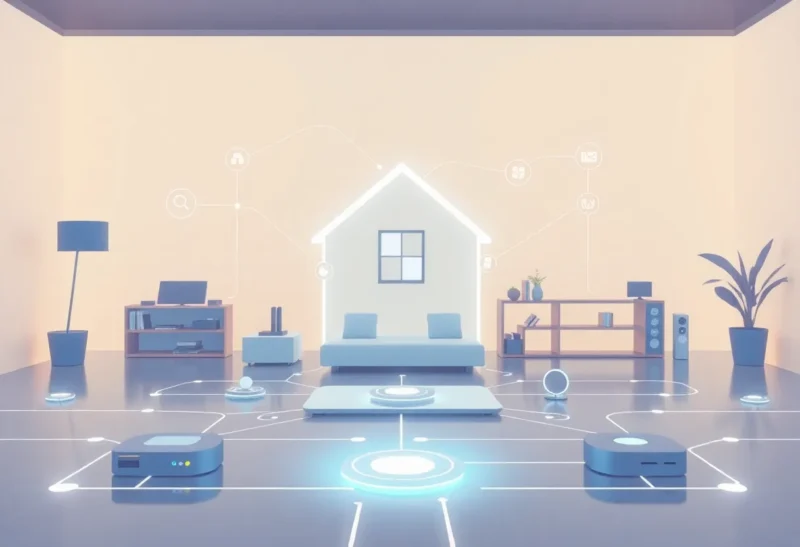
The phrase “Internet of Things” encompasses an enormous range of devices—from a connected light bulb that you control with your phone to industrial sensors monitoring a chemical plant to agricultural nodes measuring soil moisture across a thousand-acre farm. What unifies them is that they communicate wirelessly and operate with limited resources. What divides them is that no single wireless protocol can satisfy all the requirements of all these use cases, which is why IoT involves a sprawling ecosystem of competing and complementary communication standards.
Understanding which protocol does what—and why so many exist—requires grasping the fundamental tradeoffs in wireless communication: range, data rate, power consumption, and cost. In IoT, these tradeoffs are more constrained than in general wireless networking because many devices are battery-powered and expected to run for years without replacement, operate in noisy RF environments, and need to function reliably in large deployments with dozens or hundreds of devices.
The Core Tradeoffs
Every wireless communication system must balance four properties that are in tension with each other:
Range: How far can a signal travel reliably? Signals weaken with distance (path loss) and are attenuated by walls, floors, and obstacles.
Data rate: How much data can be transmitted per unit time? Higher data rates generally require better signal quality—more power, closer range, or wider radio bandwidth.
Power consumption: How much energy does the radio circuitry consume? Battery-powered devices with small batteries and multi-year lifespans have strict power budgets. Radios that transmit frequently or with high power kill batteries.
Cost and complexity: Simpler protocols with lower data rates typically require cheaper, lower-power chips. Protocols requiring complex signal processing increase chip cost and power draw.
No protocol maximizes all four. Choosing an IoT protocol is fundamentally an optimization across these tradeoffs for the specific deployment requirements.
Bluetooth LE: The Personal-Area Standard
Bluetooth Low Energy (BLE, or Bluetooth LE, part of the Bluetooth 4.0+ specification) is designed for short-range communication at very low power. A BLE device can transmit at milliwatt levels and be detected reliably within 10–30 meters in typical indoor environments. BLE radios can run from coin-cell batteries for years in applications involving infrequent communication.
BLE uses connection-oriented communication for streaming sensor data (heart rate monitors, fitness trackers) and advertisement-based communication for beaconing applications (location tracking, retail beacons, asset tracking). Bluetooth 5.x introduced long-range mode (coded PHY) that extends range to 100–200 meters at the cost of reduced data rate.
BLE’s strengths: extremely wide adoption in consumer electronics (every modern smartphone can communicate with BLE devices natively), low chip cost, low power, and well-understood security features. Weaknesses: short range, point-to-point architecture that doesn’t natively scale to large mesh networks (though Bluetooth Mesh adds that capability at the cost of complexity), and data rates too low for streaming video or large file transfers.
Use cases: wearables, health monitors, smart locks, proximity sensing, retail beacons, audio accessories.
Zigbee and Z-Wave: The Mesh Standards
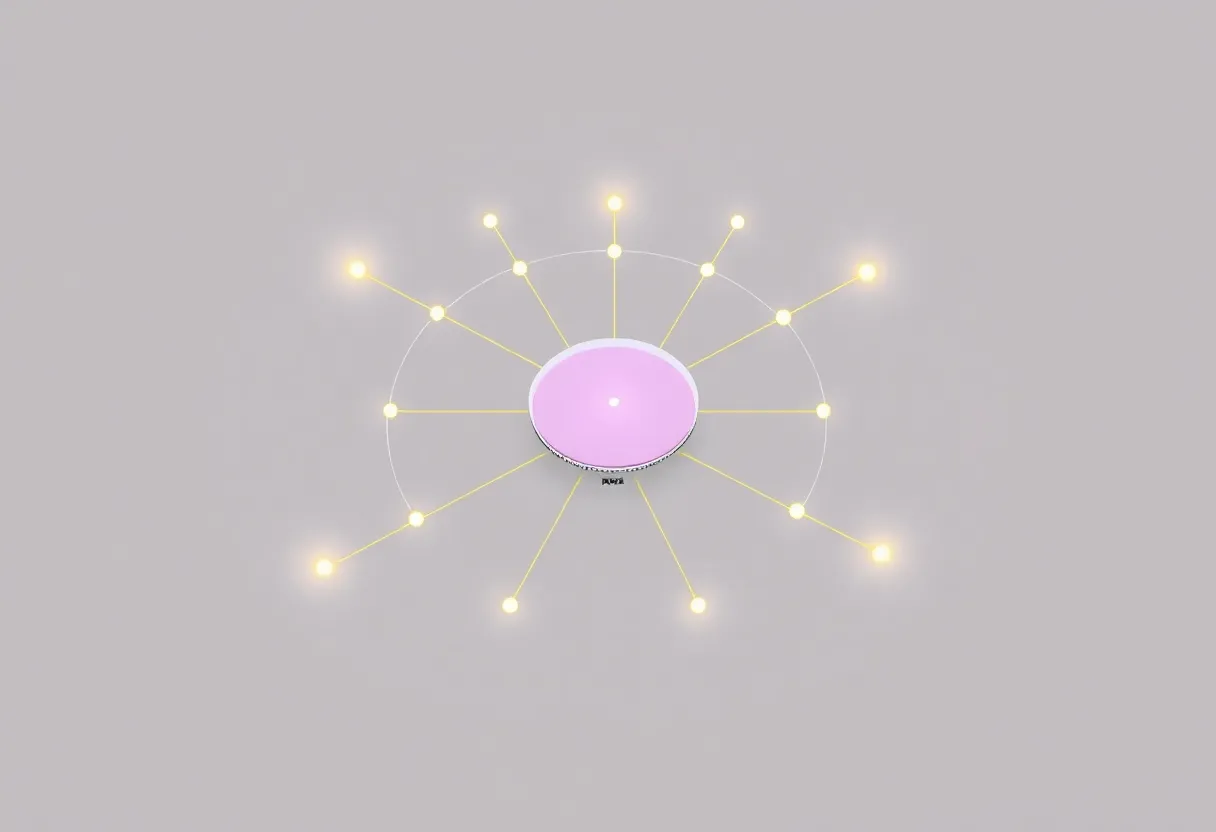
Zigbee (IEEE 802.15.4-based) and Z-Wave are both designed for low-power mesh networking in smart home and building automation. Their defining feature is mesh topology: devices can relay messages from other devices, extending range and providing redundancy. A Zigbee mesh with 30 devices can cover a large home even if individual devices have limited direct range.
Zigbee operates at 2.4 GHz (globally) with data rates of 250 kbps—more than enough for sensor data, commands, and small status updates but not for video. Z-Wave operates in the sub-GHz bands (around 900 MHz in the US), which provides better wall penetration and range than 2.4 GHz at the same power level. Sub-GHz signals also experience less interference from the crowded 2.4 GHz band (shared by Wi-Fi, Bluetooth, and microwave ovens).
Both support battery operation with duty cycling—devices sleep most of the time and wake briefly to check for messages or transmit data. A Zigbee door sensor might transmit only when the door opens, running for years on two AA batteries.
The fragmentation problem: Zigbee has suffered from interoperability issues because different vendors’ implementations weren’t always compatible even when both were “Zigbee certified.” This has improved with Zigbee 3.0 unification. Z-Wave has been better on interoperability due to tighter central certification, but has been a proprietary standard (now managed by the Silicon Labs Z-Wave Alliance).
Matter—the smart home standard developed by Apple, Amazon, Google, and the Connectivity Standards Alliance—runs over Thread (which uses the IEEE 802.15.4 radio layer similar to Zigbee) and Wi-Fi/Ethernet, and is designed to solve the fragmentation problem by providing a vendor-neutral application layer that works across ecosystems. Matter is accelerating the consolidation of smart home protocols.
Wi-Fi: Capable but Power-Hungry
Wi-Fi is the highest-bandwidth option in the IoT spectrum and the most familiar. Every home already has Wi-Fi infrastructure; connecting a device to it requires no additional hub or gateway. For IoT devices that need to transmit significant amounts of data—video cameras, streaming audio, devices that regularly upload large files—Wi-Fi is the natural choice.
The constraint is power. Wi-Fi radios are power-hungry by IoT standards. Maintaining a Wi-Fi association requires listening for beacons every 100 ms by default. The radio circuitry that handles Wi-Fi’s complex OFDM modulation and security processing draws significantly more current than simpler low-power radios. Battery-powered Wi-Fi devices typically last weeks or months, not years.
Wi-Fi HaLow (802.11ah) is a specification specifically targeting IoT, operating at 900 MHz with low power, long range (up to 1 km), and data rates from 150 kbps to several Mbps. It’s a genuine attempt to bring Wi-Fi’s ecosystem advantages to the battery-powered, longer-range IoT use cases where conventional Wi-Fi fails. HaLow adoption has been gradual.
Use cases: security cameras, video doorbells, smart speakers, appliances with frequent high-bandwidth communication needs.
LoRaWAN: Long Range, Low Power
LoRa (Long Range) is a proprietary modulation technique developed by Semtech that achieves remarkable range—1–10 km in urban environments, up to 40 km line-of-sight—at very low power and very low data rates (typically 250 bps to 50 kbps). LoRaWAN is the network protocol layer built on LoRa radio.
LoRa achieves its range through spread-spectrum modulation (Chirp Spread Spectrum), which spreads the signal across a wide bandwidth. This makes the signal extremely resistant to interference and allows it to be received even when it’s well below the noise floor—at the cost of very low data throughput.
LoRaWAN is designed for low-duty-cycle devices: sensors that transmit a few bytes of data once every few minutes or hours. A soil moisture sensor, an asset tracker, a water meter, an environmental monitor—all can run for years on a small battery and communicate over several kilometers to a LoRaWAN gateway.
The architecture is star-of-stars: end devices communicate with gateways, which forward data to a network server. End devices don’t communicate with each other directly. Public LoRaWAN networks operate in many cities; private deployments use owned gateways for industrial or agricultural applications.
Cellular IoT: NB-IoT and LTE-M
Cellular IoT protocols—NB-IoT (Narrowband IoT) and LTE-M (LTE for Machines)—use licensed cellular spectrum managed by mobile operators. They offer wide-area coverage (the same coverage as 4G/5G cellular networks), deep penetration into buildings and basements (especially NB-IoT at very low data rates), and good security through the cellular infrastructure.
NB-IoT is optimized for very low power and very low data rate—similar use cases to LoRaWAN, but using licensed spectrum. LTE-M supports higher data rates, voice (useful for emergency devices), and supports mobility (handoff between cell towers), making it suitable for asset trackers that move through cellular coverage areas.
The trade-off with cellular IoT is cost: devices need SIM cards and pay for connectivity, typically through per-device monthly fees. This is acceptable for high-value assets or applications where the unit economics work (smart meters, industrial equipment) but unworkable for very cheap, high-volume deployments.
Matter and Thread: Convergence in the Smart Home
Thread is a mesh networking protocol using the IEEE 802.15.4 radio layer (same as Zigbee), IP-based (devices get IPv6 addresses), and designed specifically for home IoT. Matter is the application layer built on Thread (and Wi-Fi/Ethernet) that provides a common device model and control interface across ecosystems.
Matter’s significance: an Apple Home user, a Google Home user, and an Amazon Alexa user can all control the same Matter-certified device. The device doesn’t need separate firmware for each ecosystem. This matters enormously for consumers frustrated by ecosystem lock-in, and for manufacturers who previously had to build and certify separately for each platform.
Thread/Matter-based devices are increasingly appearing in product lines from major manufacturers—smart bulbs, thermostats, locks, sensors—and the ecosystem is growing. The Thread border router (which connects the Thread mesh to the home Wi-Fi network) is now built into Apple HomePod, Google Nest Hub, Amazon Echo, and other hubs, providing Thread coverage without dedicated hardware in most smart-home-equipped homes.
Choosing the Right Protocol
The protocol decision for an IoT device comes down to the specific application requirements:
- Need to cover a building or campus, battery-powered, small data: Zigbee, Thread/Matter, Z-Wave
- Very long range (kilometers), battery-powered, tiny data: LoRaWAN
- Nationwide coverage, mobile assets: LTE-M or NB-IoT
- High bandwidth (video, audio), power available: Wi-Fi
- Short range, direct-to-phone connectivity: Bluetooth LE
- Smart home, broad ecosystem compatibility: Matter (over Thread or Wi-Fi)
The IoT protocol landscape is genuinely messy, and the mess reflects the genuine diversity of IoT use cases. No single wireless technology can be simultaneously long-range, high-bandwidth, low-power, and cheap—so the ecosystem splits along the lines these tradeoffs create, and devices are designed to match their communication requirements to the protocol that best fits their specific constraints. As Matter gains adoption, the smart home segment may consolidate significantly, but the broader IoT space will continue to support multiple parallel protocol stacks serving different parts of the power-range-bandwidth tradeoff space.