How Digital Twins Are Being Used in Manufacturing and Infrastructure

Luca Ferretti
July 7, 2026
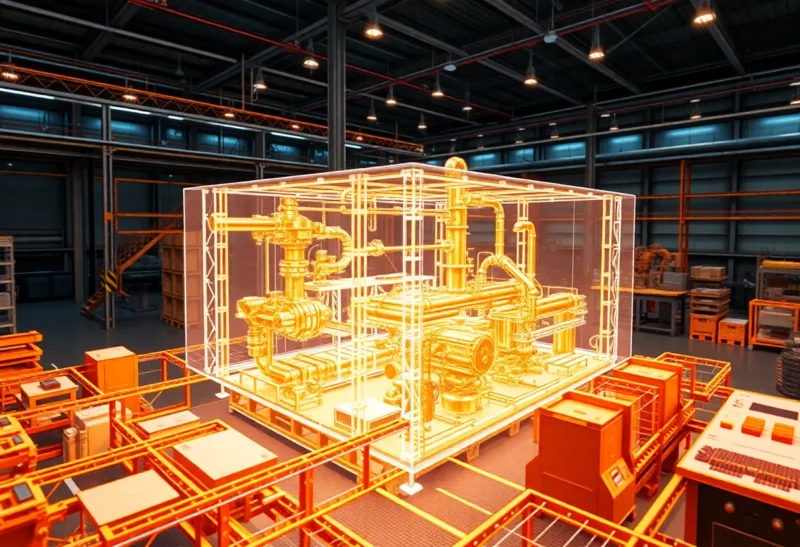
The term “digital twin” was coined by NASA, which developed the concept in the 1960s to model and simulate Apollo spacecraft systems. A digital twin is a virtual representation of a physical object, system, or process that is continuously updated with data from its physical counterpart. Unlike a static simulation or 3D model, a digital twin maintains a live connection to its physical equivalent, allowing it to reflect the current state, predict future behaviour, and inform decisions about the real-world system. The technology has matured substantially over the past decade and is now deployed in contexts ranging from individual machine components to entire cities—with varying degrees of sophistication and proven value.
What Makes Something a Digital Twin
The defining characteristic that distinguishes a digital twin from a conventional simulation or CAD model is bidirectionality: data flows from the physical to the digital (updating the model to reflect actual conditions) and potentially from the digital to the physical (using model outputs to inform real-world operations). A static model of a jet engine that was accurate when built but doesn’t update as the engine accumulates wear is not a digital twin; a model that incorporates sensor data from the running engine, tracks degradation over time, and predicts when maintenance is needed is.
In practice, digital twins exist on a spectrum. Some are primarily monitoring dashboards that visualise sensor data from the physical system. Others are physics-based models that use sensor inputs to continuously calibrate their parameters. The most sophisticated are high-fidelity simulations that can run faster than real time to predict future states, test interventions before implementing them, and optimise operations. The term is applied across this spectrum, which contributes to the hype that surrounds it—simple sensor dashboards are marketed as digital twins alongside genuinely sophisticated predictive models.
Manufacturing Applications
Manufacturing has been the primary domain of digital twin adoption. Industrial equipment manufacturers—Siemens, GE, Dassault Systèmes, PTC—have all invested heavily in digital twin platforms targeting factory operations. The core use cases are predictive maintenance, process optimisation, and product lifecycle management.
Predictive maintenance uses real-time sensor data from machines to predict when components will fail, allowing maintenance to be scheduled before breakdown rather than after. The value proposition is concrete: unplanned downtime is expensive in manufacturing (estimates of $50,000 per hour or more for some production lines are common), and planned maintenance is cheaper than emergency repair. A digital twin of a machine tool—tracking vibration signatures, temperature profiles, and cutting force data—can detect patterns that precede failure and schedule maintenance during planned downtime.
Rolls-Royce’s TotalCare programme, which provides power-by-the-hour maintenance contracts for aircraft engines, uses digital twins of each engine in service to track condition and predict maintenance needs. Each engine has a unique digital model that incorporates its specific operational history—the routes it has flown, the temperatures it has experienced, the cycles it has completed—allowing maintenance intervals to be adjusted based on actual condition rather than conservative fixed schedules. The programme has become a competitive advantage and a model for the “servitisation” of industrial products.
Infrastructure Applications
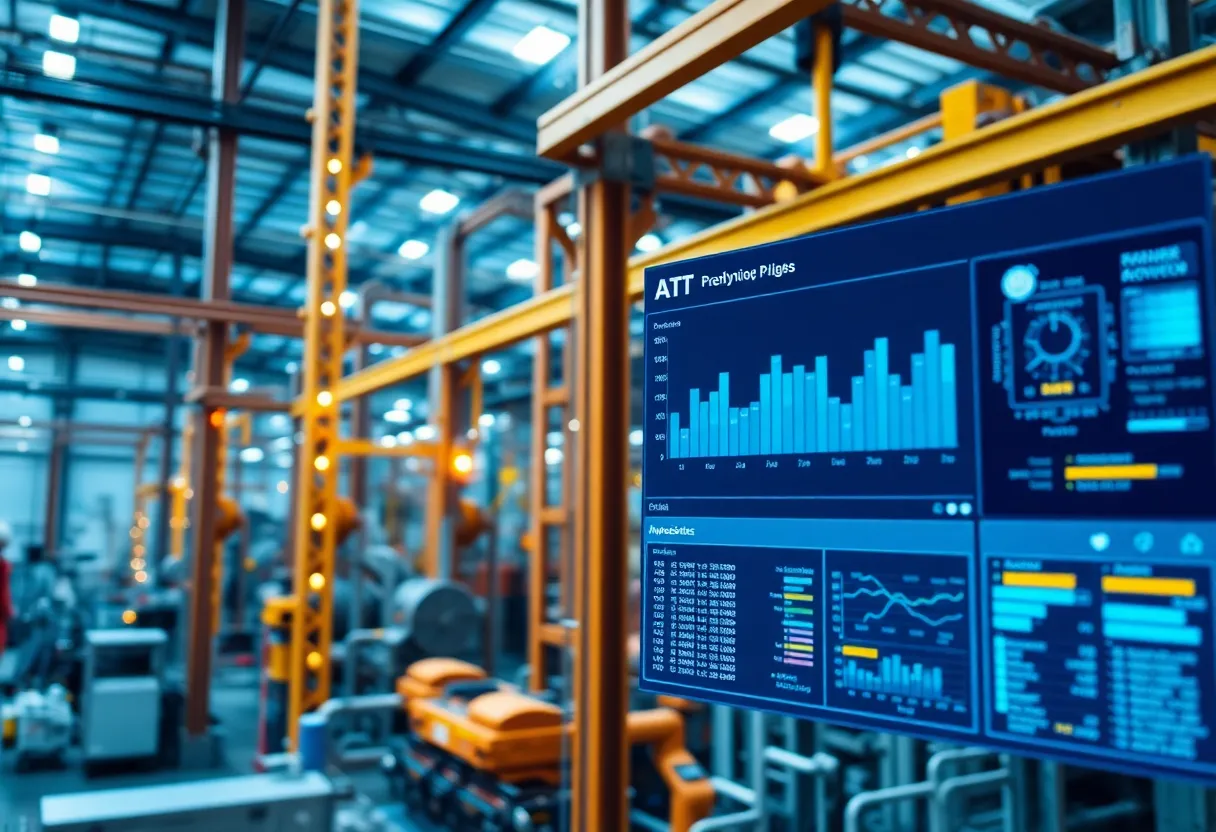
Infrastructure digital twins are among the most ambitious applications of the technology. Singapore has developed a virtual 3D model of the entire city—Singapore’s Virtual Singapore platform—that integrates building information models, terrain data, utility networks, and real-time sensor data to support urban planning, emergency response, and infrastructure management. Engineers can use the model to simulate shadow analysis for proposed buildings, plan telecommunications network coverage, and model flood scenarios.
Bridge monitoring is a well-developed application: sensor networks on bridges collect structural data (strain, vibration, temperature), and models that represent the bridge’s structural behaviour are updated with this data to track fatigue accumulation and detect anomalous responses that might indicate damage. Rather than performing expensive periodic inspections on fixed schedules, structural health monitoring with digital twin capabilities allows inspection resources to be directed where the data indicates concern.
Water utilities are using digital twins of distribution networks—pipe networks, pumping stations, reservoirs—to model flow patterns, detect leaks (by comparing modelled and metered flows), and simulate the effect of interventions before implementing them. Thames Water’s digital twin of its London distribution network is used to optimise pumping energy consumption, plan infrastructure upgrades, and manage network pressures.
The Data and Integration Challenge
The most significant practical challenge for digital twin deployment is not the modelling technology but the data infrastructure. A meaningful digital twin requires reliable, high-quality sensor data from the physical system it represents. Industrial facilities often have heterogeneous sensor infrastructure—equipment from different manufacturers, different communication protocols, different data formats, some of which predates the concept of networked sensors. Integrating this data into a coherent model requires significant data engineering work.
Operational technology (OT) systems—the sensors, PLCs, and SCADA systems that control industrial processes—were historically designed for reliability and isolation, not connectivity. Connecting them to information technology (IT) systems that power digital twin platforms creates cybersecurity challenges. A digital twin that can be used to simulate and optimise a factory also provides a detailed map of that factory’s operations and a potential attack surface. The convergence of OT and IT that digital twins require has driven significant investment in OT cybersecurity frameworks.
Model fidelity is another challenge. A digital twin is only as useful as the accuracy of its underlying model. Physics-based models require deep domain expertise to build and validate; data-driven models require large quantities of historical data and may not generalise to conditions outside their training distribution. The most capable digital twins combine physics-based models (which extrapolate reliably to novel conditions) with data-driven components (which capture empirical relationships that physics models miss). Building and maintaining these hybrid models requires multidisciplinary expertise that is not widely available.
Where the Value Is and Isn’t
The ROI evidence for digital twins is most solid for predictive maintenance in high-value equipment with good sensor coverage and quantifiable downtime costs. The value proposition is clear, the technology is mature, and case studies from aviation, heavy industry, and power generation show measurable returns. For more ambitious applications—city-scale digital twins, real-time process optimisation across entire factories—the evidence base is thinner and the upfront investment higher.
A 2020 Gartner survey found that only about 13% of organisations using digital twins considered their implementations mature. Many implementations remain at the visualisation and monitoring stage—useful but representing a fraction of the potential value from predictive and prescriptive capabilities. The gap between the concept and operational deployment reflects the difficulty of the underlying data, integration, and modelling challenges rather than the maturity of the modelling technology itself.
The organisations making the most of digital twins have typically done so by starting with a specific, well-defined use case with clear value metrics, building the data infrastructure to support that use case, demonstrating value, and then expanding scope. The approach of building a comprehensive digital twin of a facility or system as a first step tends to produce complex models that are expensive to maintain and whose operational value is unclear. The technology is real and the deployments are genuine—but the hype has outrun the typical implementation reality by a significant margin.