How Carbon Capture Technology Works and What Would Need to Change for It to Scale

Dr. Amara Diallo
July 7, 2026
Carbon capture appears in virtually every major climate scenario that limits warming to 1.5°C or 2°C. The IPCC’s 2021 and 2022 reports consistently find that even in pathways with very rapid emissions reductions, some amount of carbon dioxide removal from the atmosphere is likely necessary to compensate for hard-to-eliminate sectors and to draw down accumulated atmospheric CO₂. The gap between this modelled necessity and the current operational scale of carbon capture technology is very large, and understanding what drives that gap requires distinguishing between the different types of carbon capture and their respective technical and economic constraints.
The Three Main Categories
Carbon capture encompasses several distinct technologies that are often lumped together but have very different characteristics:
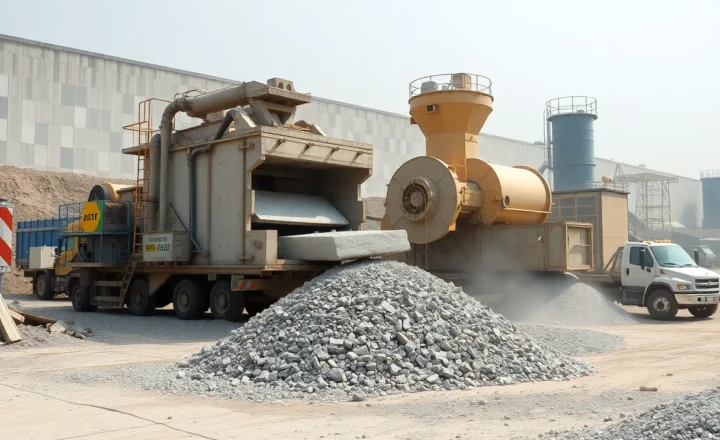
Point-source carbon capture and storage (CCS) captures CO₂ from concentrated emission sources—power plants, cement factories, steel mills, chemical plants—before it enters the atmosphere. The captured CO₂ is compressed and injected into geological formations for long-term storage. This doesn’t remove carbon that’s already in the atmosphere; it prevents additional carbon from being added by industrial processes that are difficult to electrify or decarbonise through other means.
Bioenergy with carbon capture and storage (BECCS) grows biomass (crops or trees) that absorbs atmospheric CO₂ through photosynthesis, burns that biomass for energy, and captures the resulting CO₂ for geological storage. If the full system is properly accounted for, this can achieve negative emissions—removing more carbon from the atmosphere than it emits—while generating energy. It’s prominent in climate models as a source of large-scale carbon removal.
Direct air capture (DAC) uses engineered systems to chemically extract CO₂ directly from ambient air, which contains only 0.04% CO₂. The captured CO₂ is then either stored geologically or used in applications like synthetic fuel production.
How Point-Source CCS Works
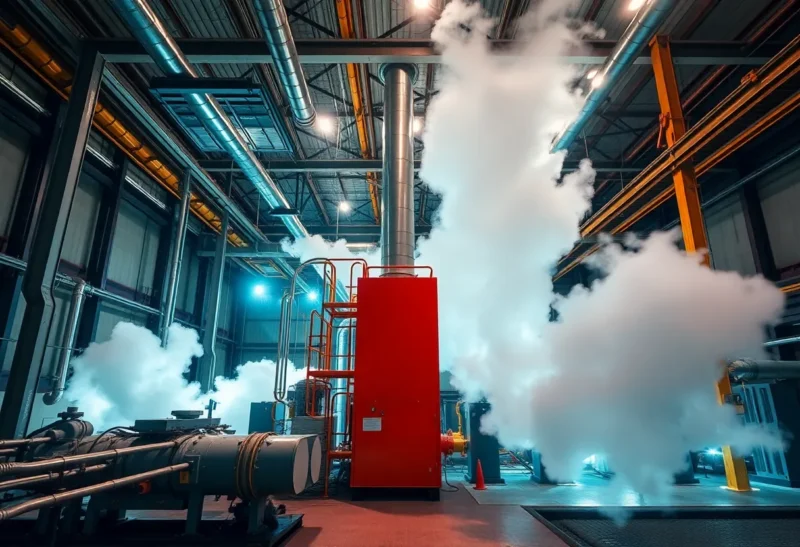
Point-source CCS at an industrial facility typically uses post-combustion capture: the flue gas after combustion passes through a chemical solvent (most commonly amine-based) that selectively absorbs CO₂. The CO₂-rich solvent is then heated to release the concentrated CO₂, which is compressed, transported via pipeline, and injected into geological storage formations—typically deep saline aquifers or depleted oil and gas reservoirs.
The technology is proven: the Sleipner project off Norway has been injecting CO₂ into a saline aquifer since 1996, and multiple industrial CCS facilities are operating globally. The constraint is not the technology itself but the cost structure and the absence of carbon pricing strong enough to make the investment worthwhile. CCS adds roughly $50–100 per tonne of CO₂ captured to the cost of industrial processes, depending on the concentration of CO₂ in the source gas (more concentrated is cheaper to capture). Without a carbon price or equivalent policy instrument at that level, there’s no financial case for CCS deployment in most contexts.
The pipeline and storage infrastructure requirements are also significant: captured CO₂ needs to get from industrial sources to storage sites, requiring pipeline networks that don’t currently exist at the scale CCS deployment would require. Building CO₂ transport infrastructure requires regulatory frameworks, right-of-way acquisition, and capital investment on a scale comparable to the natural gas pipeline system.
BECCS: The Land Use Problem
BECCS features prominently in climate models as a major source of negative emissions because it theoretically combines energy production with carbon removal. The deployment scenario in some models involves tens of millions of hectares of energy crops—switchgrass, miscanthus, fast-growing trees—supplying biomass for power generation with CCS.
The constraint on BECCS at this scale is land. Tens of millions of hectares of dedicated energy crops represent a substantial fraction of the world’s agricultural land. Diverting that land from food production or natural ecosystems to energy crops creates direct conflicts with food security and biodiversity. Multiple analyses have found that BECCS at the scale required by some climate models would require more land than is available without unacceptable displacement of food production or natural carbon sinks.
BECCS at more limited scale—using agricultural and forestry residues rather than dedicated energy crops, or targeting specific industrial bioenergy facilities where the biomass supply is genuinely sustainable—is less land-constrained and can contribute meaningfully to negative emissions without the scale conflicts. The challenge is that the climate models most optimistic about limiting warming to 1.5°C assume BECCS at scales significantly larger than what the land constraint appears to allow.
Direct Air Capture: The Cost Problem
DAC has attracted significant investment and attention because it doesn’t require proximity to concentrated emission sources—you can locate a DAC facility anywhere with access to cheap energy and geological storage. The technical challenge is that atmospheric air is extremely dilute in CO₂, making the energy cost of capture much higher than point-source capture.
The two leading DAC approaches are liquid solvent systems (like Carbon Engineering’s process, now deployed by Occidental Petroleum’s “Stratos” facility in Texas) and solid sorbent systems (like Climeworks’ facilities in Iceland). Current costs range from approximately $400 to $1,000 per tonne of CO₂ removed—far above the $50–150 per tonne range that climate economists typically cite as the cost of other mitigation options.
The DAC cost trajectory is projected to fall significantly with scale and learning—estimates range from $100–300 per tonne at scale for the currently deployed approaches, and potentially below $100 per tonne for next-generation processes. But “at scale” means hundreds of millions of tonnes per year rather than the hundreds of thousands currently operational, and the investment and timeline required to get from current scale to meaningful climate scale is enormous.
Climeworks’ Mammoth facility in Iceland, operational since 2024, captures approximately 36,000 tonnes of CO₂ per year—a meaningful demonstration but about 0.0001% of global annual emissions. The Stratos facility in Texas targets approximately 500,000 tonnes per year at full capacity. Scaling DAC to the billion-tonne-per-year scale that climate scenarios envision would require thousands of such facilities, powered by clean electricity to avoid the obvious contradiction of using fossil fuels to capture carbon.
What Would Need to Change for Scale
The constraints on carbon capture scaling are more economic and political than technical. The technology works; the question is who pays for it at what carbon price, and whether the policy environment creates the sustained investment case that multi-decade infrastructure buildout requires.
Point-source CCS needs a durable carbon price or equivalent regulatory requirement above roughly $80–100 per tonne to be economically attractive in most industrial applications. The US Inflation Reduction Act’s enhanced 45Q tax credits—up to $85 per tonne for CO₂ stored geologically—have driven meaningful investment in US CCS projects, demonstrating that policy instruments can unlock deployment. The question is whether this policy environment persists through the investment cycles that CCS infrastructure requires.
DAC’s cost trajectory depends heavily on clean electricity costs—electricity represents 50–70% of DAC operating costs—and on the development of lower-cost capture chemistries and system designs. The combination of falling renewable electricity costs and continued engineering learning could bring DAC costs to competitive levels within two decades; whether investment in the learning curve continues depends on consistent policy support.
The geological storage infrastructure question—where does the CO₂ go, and how do you verify it stays there—requires regulatory frameworks, geological characterisation of storage sites, and long-term liability structures that most countries haven’t yet established at the scale that serious CCS deployment would require. Building this infrastructure is achievable but requires institutional investment that moves at a different pace than technology development.