GPS Ground Stations: Why Phones Still Depend on “Boring” Earth Infrastructure

David Shaw
April 8, 2026
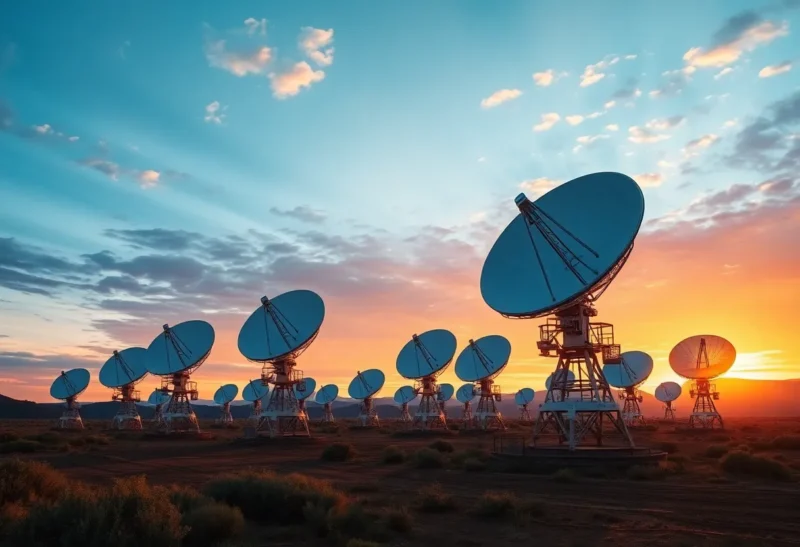
GPS feels like magic beamed from the sky: your phone listens to faint radio chirps from satellites and suddenly knows where you are within meters. The glamorous part is orbit—solar panels, atomic clocks, constellations threading the planet. The part nobody films for promos is Earth: squat antenna farms, fiber backhaul, calibration chores, and humans keeping reference frames from drifting. Without ground infrastructure, GNSS becomes a pretty radio show with bad timing—and your maps stop being trustworthy.
This article explains what ground stations actually do for GPS-class systems, why “space segment” headlines undersell the terrestrial work, and why your navigation app quietly depends on boring civil engineering. Bring curiosity; leave launchpad fantasies aside.
We will stay descriptive, not classified—military specifics differ by country, but the civilian principles translate. Accuracy matters more than dazzle when you are trying to land a plane or align a power grid.
Three segments, one service
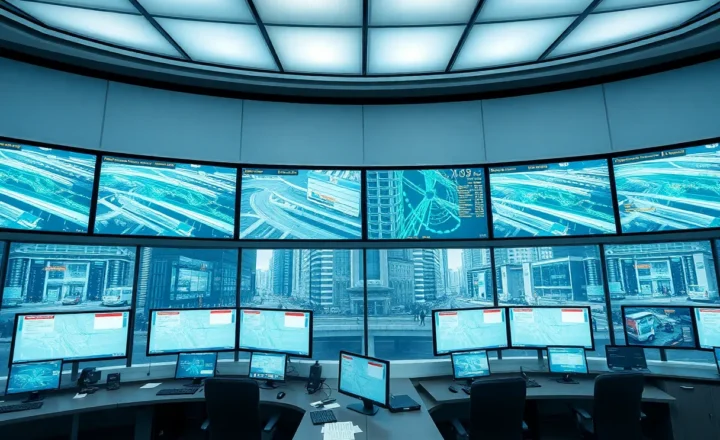
GNSS is taught as three segments: space (satellites), control (ground operations), and user (receivers). Phones are user equipment. The control segment tracks satellites, uploads navigation messages, steers clocks, and models errors like atmospheric delay. That work happens from facilities that look more like a utilities yard than a launchpad.
Those facilities need power, cooling, security, and staff rotations that survive weather and geopolitics. A satellite is a remote sensor; the ground site is where humans close the loop.
From pseudorange to position: what the ground enables
Receivers measure pseudoranges—time delays that include clock biases. Solving position and time requires estimating errors simultaneously. Navigation messages carry parameters that turn raw measurements into something stable: satellite clock corrections, orbital elements, health bits telling receivers to ignore a sick bird. Someone generates those parameters on schedule.

Why satellites are not enough
Satellites drift; clocks jitter; orbits evolve. Ephemeris data—the orbital recipe your receiver needs—comes from ongoing measurement and estimation. Ground networks observe signals, compare against known references, and feed updated navigation messages so your phone does not solve physics from scratch each Tuesday.
Ionospheric and tropospheric delays vary with weather and location. Models shipped in the signal help; regional augmentation and local corrections help more for aviation and surveying. Consumer phones benefit indirectly when the system stays coherent.
SBAS systems—satellite-based augmentation—broadcast corrections tailored for regions. They stitch together ground reference stations and geostationary relays. The architecture is a reminder: orbit is a transport layer; truth still anchors on surveyed ground.
Atomic clocks: synchronized reality
GNSS positioning is time-of-flight dressed as triangulation. Nanosecond clock errors become meter-level position errors. Spacecraft carry extraordinary clocks; Earthside facilities compare, discipline, and upload adjustments. The drama is invisible—unless a leap second debate or a maintenance window touches your timing stack.
Relativity is not just a fun fact: gravitational potential and velocity differences shift clocks. Engineers bake corrections into operations so your receiver does not need a physics PhD—just stable signals.

Reference frames and plate tectonics
Coordinates are not eternal. Continents move; survey datums update. Ground networks anchor positions to Earth models that evolve as measurements improve. High-precision users care deeply; phone users inherit the crumbs—still dependent on quiet geodesy work.
Sea level rise and crustal motion sound academic until coastal maps or flood insurance models shift. Infrastructure planners feel this first; your phone maps follow later.
Jamming, spoofing, and civilian fragility
GNSS signals are weak. Jammers fit in pockets; spoofers can mislead naive receivers. Mitigation mixes RF design, antenna diversity, inertial aiding, and cross-checks with cellular or Wi-Fi positioning. Ground systems cannot stop every attack in the field, but monitoring networks help characterize interference and keep services honest.
Airports and harbors invest in differential corrections; your phone may never use them directly, but the ecosystem benefits when safety-critical users stay aligned.
Other constellations, same homework
Galileo, GLONASS, BeiDou—different owners, similar needs: monitor stations, control centers, uplinks, and cross-calibration. Multi-constellation phones improve availability and resilience because failures decorrelate—when one system sneezes, another may still cough up ephemeris.
Why this matters beyond maps
Finance, telecom, and power grids lean on precise timing even when humans only notice maps. Ground maintenance is societal plumbing. When it works, it is boring; when it fails, headlines arrive.
Maintenance windows and your life
Operators schedule outages; receivers should handle satellite health flags gracefully. Apps that assume continuous fixes misbehave when a bird is marked unhealthy. Good software degrades politely; bad software blames the user.
Climate and resilience
Flood, fire, and storms threaten ground sites. Redundancy is designed—multiple monitor stations, diverse paths—but extreme events test plans. Undersea cables and power grids matter as much as antennas.
Takeaways
Next time your ride-share ETA feels inevitable, remember: satellites broadcast, but Earth maintains. The future of navigation is split between shinier orbits and the stubborn reliability of antennas bolted to bedrock.
If you remember one sentence: GNSS is a planet-scale clock and survey network that happens to include rockets.
Urban canyons and multipath: where ground truth meets reflections
Skyscrapers reflect signals; receivers see duplicate paths. Algorithms try to reject ghosts, but performance varies by chipset and antenna. Ground monitoring helps model local error budgets for aviation approaches; your phone just feels “jittery” near glass walls. The fix is partly firmware, partly constellation geometry—both fed by operational awareness from networks watching the sky.
Rural coverage and almanac health
When you power on a cold receiver, it may need to download almanac and ephemeris data. Ground systems ensure those messages remain fresh; stale data lengthens time-to-first-fix. Rural users with intermittent sky see this as “GPS is slow today”—often a symptom of geometry plus data age, not personal failure.
International cooperation and tension
GNSS is both global infrastructure and strategic asset. Cooperation on standards improves interoperability; geopolitics still affects ground site placement, interference complaints, and export controls on receivers. Travelers notice when regional restrictions on GNSS gear collide with local laws.
What students should learn first
Before romanticizing orbital mechanics, teach the control segment: measurement, estimation, upload, monitor. It builds respect for the operators who keep civilian service boringly reliable.
Looking ahead: more signals, same Earth
Modernized signals add civilian codes and stronger structure—better multipath resistance when receivers catch up. Still, someone must operate monitors, certify performance, and roll firmware responsibly. Ground truth remains terrestrial.
Respect the antennas. They are closer than Mars, and they keep your maps honest.
Latency, not just accuracy
Position fixes update at rates governed by receiver design and signal availability, but underlying timing stability still traces to disciplined clocks on the ground and in space. For ride-hailing and delivery routing, “good enough” accuracy is useless if updates stutter during handoffs between cell towers and GNSS. Resilient pipelines blend sensors; GNSS remains the long-term drift corrector.
Disaster response
After earthquakes or hurricanes, temporary ground infrastructure may supplement damaged networks. Portable monitor stations and emergency uplinks help restore service awareness. Satellites keep flying; knowing their state accurately still requires Earthside measurement when routine links fail.
Why marketing loves orbit
Rockets photograph well; fiber trenches do not. GNSS providers emphasize spacecraft because the public groks satellites more than Kalman filters. This article is the corrective: celebrate operators who keep ephemeris fresh and clocks humble.
For builders of location products
If you ship mapping software, expose uncertainty: horizontal accuracy estimates, fix loss reasons, degraded modes when only cell/Wi-Fi positioning remains. Users forgive honest limits; they rage at confident maps that lie.
Log satellite IDs and CN0 when debugging customer issues—many “GPS bugs” are RF environments, not algorithms.
Closing the loop with users
Next time someone says “GPS is just satellites,” nod politely, then mention monitor stations. Boring infrastructure is how magic stays mundane enough to trust with your midnight ride home.
Precision agriculture and silent dependencies
Tractors steer rows with centimeter-class corrections streamed through cellular links anchored to ground references. The visible gadget is the cab display; the invisible dependency is continuous correction health. When farmers curse “drift,” they are often pointing at infrastructure hiccups, not cosmic rays.
Aviation: where failure modes are documented
Instrument approaches encode assumptions about GNSS integrity monitoring. Pilots train for lost signals; passengers never see the homework. The culture of redundancy exists because stakes are high; ground monitoring intensity matches.
Maritime chokepoints
Ships rely on GNSS for traffic separation and timing; ports install augmentation. Jamming near conflict zones becomes a shipping story, not just a phone story. Ground networks help characterize interference patterns across oceans.
Ethics of dependency
Societies outsource spatial common sense to GNSS. That is efficient until signals degrade collectively. Teaching basic orientation skills remains worthwhile—not to reject technology, but to survive edge cases.
Ground stations will not trend on social media. They will keep your clock sane, your maps aligned, and your faith in blue-dot navigation justified—until the next solar storm or localized jam reminds you to look up from the screen and verify reality with your own eyes when you can do so safely.
Carry this mental model: every confident ETA is a small miracle of antennas, fiber, disciplined clocks, and quiet maintenance windows you never noticed—because someone engineered the boredom on purpose. That is the whole point of infrastructure—quiet reliability over spectacle.