Fusion Energy in 2026: Which Projects Are Still Standing After the Hype

Nadia Petersen
July 7, 2026
In December 2022, the National Ignition Facility at Lawrence Livermore announced that they had achieved fusion ignition — for the first time in history, a fusion reaction had produced more energy than the laser energy delivered to the target. The headlines were extraordinary. The BBC called it a “major breakthrough.” The US Department of Energy called it a “milestone.” Fusion investors went on television. For about a week, it felt like the energy problem was basically solved.
Then the follow-up questions started. How much total energy did the experiment actually use, including the lasers themselves? About 300 times more than what came out. When would this be commercially useful? Nobody could say. What happened next? More shots, more refinements, and very little that resembled a path to a power plant. The milestone was real and scientifically significant. The implications for practical energy production were considerably more distant than the press cycle suggested.
That gap — between genuine scientific progress and useful commercial energy — defines the fusion landscape in 2026. There has been real progress. There are projects that have survived the funding winter that followed the hype peak. But the honest picture looks different from the marketing, and distinguishing the two is worth the effort.
The Government Programs: ITER and Its Delays
ITER — the International Thermonuclear Experimental Reactor being built in southern France — is the largest fusion experiment in history, a collaboration of 35 nations representing more than half the world’s population. It was supposed to achieve first plasma in 2025. That date slipped. The revised schedule puts it in the early 2030s, with full deuterium-tritium fusion experiments potentially not happening until the late 2030s.
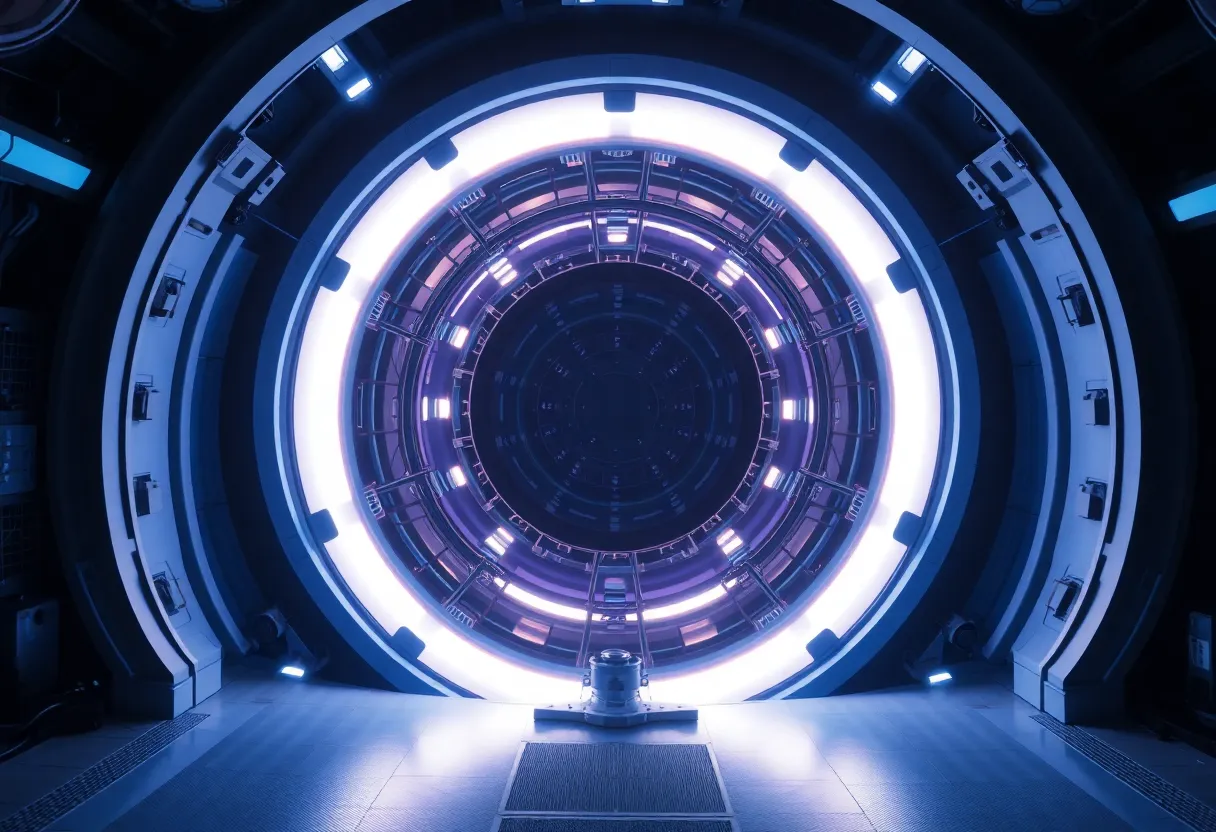
ITER is a tokamak: a donut-shaped magnetic confinement device that holds plasma in a powerful magnetic field while it heats to temperatures exceeding the center of the sun. The physics is well-understood. The engineering is where the delays live. The 23,000-ton machine requires manufacturing tolerances measured in fractions of millimeters, components sourced from member nations that must fit together seamlessly, and superconducting magnets that behave differently in practice than simulations predicted. The project has survived its schedule slippage, and the science it will eventually produce — if it works as designed — will be genuinely important for understanding whether a fusion power plant is feasible. But ITER was never a power plant. It’s an experiment, and it won’t produce net electrical energy even when it runs at full capacity.
The follow-on to ITER, called DEMO, is a proposed fusion demonstration power plant that would actually put electricity on the grid. Optimistic estimates put its operation in the 2050s. That timeline is why the private sector started looking at alternatives.
The Private Boom and the Survival Reckoning
Between 2020 and 2023, private fusion investment was enormous. Venture capital and strategic investors poured billions into startup companies promising faster timelines, smaller devices, and commercial fusion within a decade. The Fusion Industry Association tracked over $6 billion in private investment by 2023 across more than 40 companies globally.
By 2025 and into 2026, that landscape has thinned considerably. The companies that had credible physics, working hardware, and plausible milestones have survived and in some cases raised additional rounds. The companies that were primarily story — big claims, small evidence — have largely faded or pivoted.
Commonwealth Fusion Systems (CFS), spun out of MIT, is the most-watched private tokamak company. Their key bet is on high-temperature superconducting (HTS) magnets — a technology that has actually worked in demos. In 2021 they demonstrated a 20-tesla magnet using HTS tape, which is the enabling technology for their SPARC experiment. Higher magnetic fields mean stronger plasma confinement, which means a smaller, cheaper device for the same physics performance. If the magnets work at scale — and the indications so far are that they do — it’s a meaningful step toward a tokamak that fits in a building rather than requiring one the size of a cathedral. SPARC is currently under construction. The milestone is to demonstrate net energy from the plasma (ignoring the rest of the power budget) in the late 2020s.
TAE Technologies takes a different approach: field-reversed configuration rather than tokamak geometry, and a hydrogen-boron fuel cycle rather than deuterium-tritium. Hydrogen-boron doesn’t produce neutrons, which is appealing from an engineering standpoint — neutrons irradiate and damage reactor materials. The downside is that hydrogen-boron requires plasma temperatures roughly 10 times higher than deuterium-tritium. TAE has raised significant capital and has been running plasma experiments, but has also shifted its shorter-term revenue strategy toward medical and industrial applications of their technology while continuing fusion R&D.
Helion Energy made headlines in 2023 with a power purchase agreement with Microsoft — the first fusion power purchase agreement ever signed. Helion’s approach is a pulsed system that directly converts fusion energy to electricity without a steam cycle. Their roadmap calls for commercial power in the late 2020s, a timeline that independent experts almost uniformly consider optimistic. But they have operational hardware, they’ve reached plasma temperatures of 100 million degrees Celsius, and they have institutional backing that gives them runway to keep developing.
Inertial Confinement: After NIF
The NIF approach — laser-driven inertial confinement, where a tiny pellet of fuel is compressed by symmetrical laser blasts until it ignites — has seen continued progress since the 2022 ignition milestone. Subsequent shots have improved on that result, confirming that ignition was repeatable and that there’s parameter space to explore. But inertial confinement for commercial power faces a fundamental challenge: you need to fire thousands of shots per second to produce meaningful amounts of electricity, which requires both an extremely fast-cycling driver (the lasers, or alternatives like magnetic coils) and a system for pellet injection and exhaust at that rate. NIF fires a handful of shots per day. The gap between NIF as a physics experiment and inertial fusion as a power source is measured in engineering generations, not milestones.
Private inertial confinement companies like Marvel Fusion and Focused Energy are attempting different approaches — using different laser types and targeting strategies — but are still in early experimental phases. Inertial fusion is further from commercial viability than the magnetic confinement tokamak approaches, even given the excitement around the NIF results.
What the Timelines Actually Look Like
The honest answer in 2026 is that fusion electricity on the grid before 2035 is extremely unlikely. The most optimistic credible scenario — CFS’s SPARC demonstrates ignition, ARC (their planned commercial plant) gets built and permitted, and operates — puts first commercial fusion power in the mid-2030s under a scenario where everything goes right. That’s a best case, not an expected case.
The more likely scenario is that the 2030s are a decade of further demonstrations — first commercial plants coming online experimentally, learning cycles informing better designs, with widespread grid-scale fusion deployment being a 2040s story at the earliest. That is still enormously faster than the ITER-DEMO government pathway, which stretches into the 2050s.
For context: climate scientists generally want significant decarbonization of the electricity grid by 2035–2040. Fusion, on any current timeline, is not that solution. Wind, solar, grid-scale batteries, and existing nuclear are the decarbonization tools for that window. Fusion is a potentially transformative energy technology for the second half of the 21st century — and that framing, rather than “fusion in 10 years,” is the honest one.
Why It Still Matters
Even with the timeline caveats, the developments of the last five years in private fusion are genuinely significant. HTS magnets work. Private capital has funded experiments that public programs moved too slowly to run. The physics understanding is advancing. The engineering challenges are being identified and in some cases solved.
The question of whether fusion will ever be commercially viable has moved from “almost certainly no” to “quite possibly yes, given enough time and continued investment.” That’s not nothing. Energy technologies that work at all often eventually get cheap and scalable — solar panels and lithium-ion batteries both followed that curve in ways nobody expected. Fusion might too, on a longer timescale than the hype suggested.
What the 2022 NIF result and the subsequent private funding climate established is that fusion isn’t permanently 30 years away in the old joke sense. Some form of commercial fusion is probably achievable this century. Whether the projects still standing after the hype wave are the ones that will get there is the question that 2026 is starting to sort out — and the answer is becoming clearer, even if it’s slower than anyone wanted.