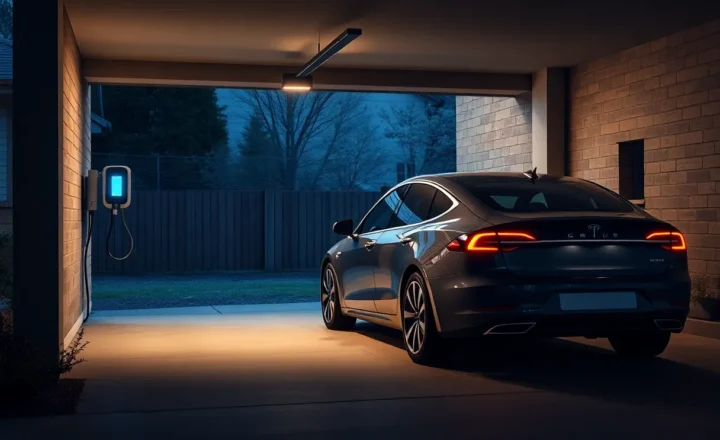
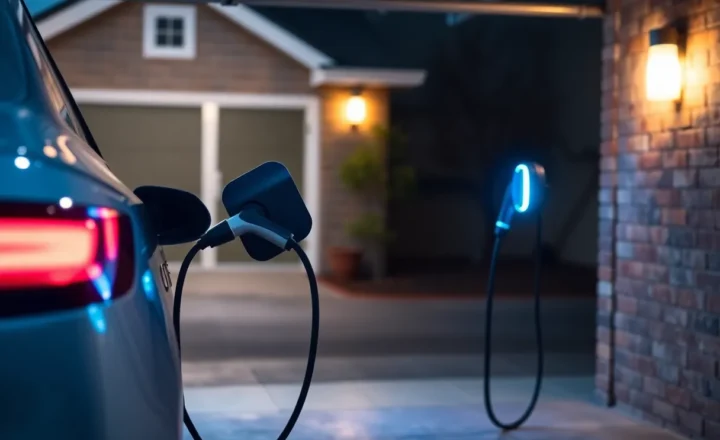
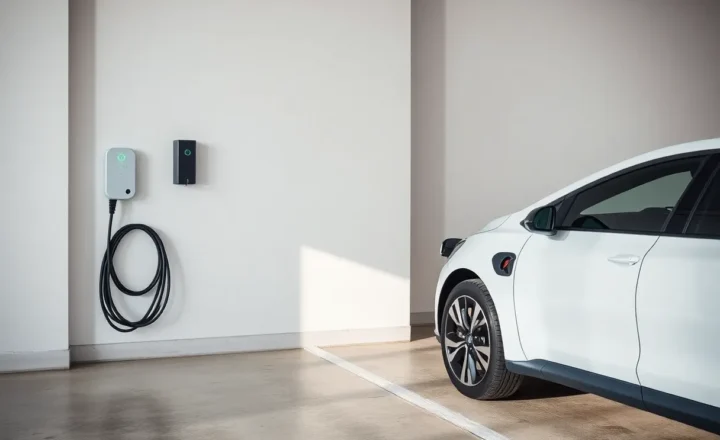
A home charger on a shared panel vs a subpanel: the breaker that trips when the oven and the car run together

Sofia Reyes
September 23, 2026
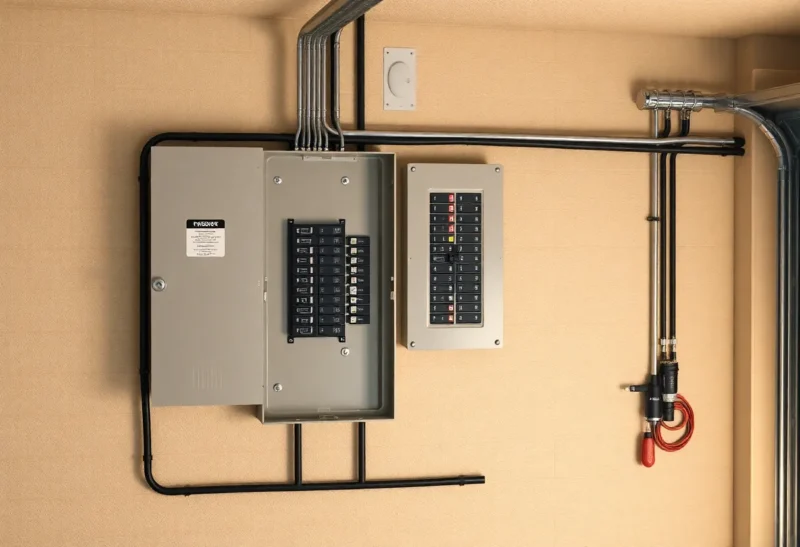
The scene is familiar: lasagna at 400°F, dryer tumbling, EV quietly asking for 32–48 amps in the garage — then the kitchen goes dark. Somewhere in the main panel, a breaker did its job. The car and the oven were never enemies. They were two large loads that your service was not asked to host at the same time.
When people say “shared panel versus a subpanel,” they are usually arguing about where to land a home EV charger and how to keep cooking night from becoming a reset ritual. The right answer starts with load math, not with which metal box looks more serious.
What “shared panel” means here
Most houses have one main service panel. Adding an EVSE breaker beside the range, dryer, and HVAC breakers is a shared-panel install: all branch circuits compete for the same service capacity (often 100 A or 200 A total).
A subpanel is a second panel fed by a feeder breaker from the main. Garage subpanels are common when the main is in a basement and the garage needs several circuits — EV, lights, opener, maybe a heater. The subpanel does not create free amps. It relocates breakers. The feeder and the main service still limit how much you can pull at once.

Why the oven and the car collide
Electric ranges and ovens spike hard. Dryers are continuous-ish loads. EV chargers are continuous loads by code practice — electricians size them with continuous-load factors. Stack a 40 A EV circuit (often needing 50 A breaker space in planning terms depending on settings) with cooking and laundry and a 100 A service starts looking small fast.
The breaker that trips might be:
- The EVSE breaker (if the charger or wiring is unhappy)
- A feeder breaker to a garage subpanel (shared garage loads)
- Rarely the main — which feels like the whole house died
More often than a hard trip, people live with nuisance near-trips, warm panels, or an electrician who derates the EVSE to 16–24 A so dinner and charging can coexist. That derate is a valid shared-panel strategy: slower overnight charge, fewer dark kitchens.

Shared main panel: when it is enough
A 200 A service with gas range/dryer, modest HVAC, and a scheduled EVSE at 24–32 A often works without drama — especially if the car charges after 11 p.m. when cooking is done. Load calculation by a licensed electrician (not a forum vibe check) is the real gate.
Shared-panel wins when:
- Main has spare capacity and breaker spaces
- You can schedule EV charging off peak kitchen hours
- You accept a lower EVSE amperage setting
- Run length to the garage is reasonable without a subpanel for other reasons
Shared-panel fails when the panel is already full of double-tapped creativity, the service is 100 A with electric everything, or someone insists on a 48–60 A charger “because the car can.”
Subpanel: what it fixes and what it does not
A garage subpanel fixes organization and voltage drop / circuit count in the garage. It can make future circuits cleaner. It does not increase the utility transformer’s gift to your house. If the feeder is 60 A and you try to run EV + garage heater + welder fantasies, the feeder breaker becomes the new oven-and-car villain.
Subpanel helps when:
- Main panel is physically full but service capacity exists for a feeder
- Garage needs multiple circuits and short local runs
- You want EV + garage loads grouped for maintenance
Subpanel does not help when the constraint is the main service size. Then you need service upgrade, load management, or lower EV amps — not another enclosure.
Load management beats bigger stickers
Modern solutions include:
- EVSE amperage dial-down in the installer menu — cheapest fix
- Scheduled charging in the car or charger so kitchen hour is quiet
- Energy management systems that shed EVSE when the house approaches a limit
- Service upgrade when calculations say the service is genuinely short
People skip to “subpanel” because it sounds like progress. Scheduling the charge for midnight is often the entire fix for the oven collision.
How to talk to the electrician
Bring: service amperage, panel photos, whether range/dryer/HVAC are electric, how many miles you need overnight, and whether you can charge only at night. Ask for a load calculation and options at 16 / 24 / 32 / 40 A EVSE settings. Ask whether a feeder/subpanel is for garage convenience or for capacity — those are different sentences.
If they propose a subpanel without discussing service limits, ask what happens when oven + dryer + EV overlap. The answer should include numbers.
Symptoms checklist
- Trips only when cooking + charging → diversity / capacity / schedule problem
- Trips whenever EV starts → EV circuit, settings, or wiring issue
- Lights dim without trip → investigate; do not ignore
- Only garage dies → feeder or subpanel branch issue
Repeated main trips are not a lifestyle. Get a pro before you “just reset it” forever.
Renters and panel politics
Renters rarely get to choose subpanel versus main. You get permission for a circuit or you live with Level 1 / public charging. Owners should still prefer recoverable strategies when resale and future loads matter — but capacity math does not care about your feelings either way.
If you are choosing between a portable cord and a wall install because the panel is scary, that is a signal to price the electrician conversation before the charger purchase — the same “permission and infrastructure first” mindset that applies when weighing a portable 120-volt cord against a 240-volt install.
Bottom line
The breaker that trips when the oven and the car run together is telling you the house ran out of simultaneous capacity — not that subpanels are magic. A shared main panel with scheduled, possibly derated EV charging solves many kitchens. A subpanel organizes garage circuits but still obeys the feeder and service. Start with load calculation and charge scheduling; add a subpanel when the garage needs it; upgrade service when the math says the pipe from the street is the real bottleneck.
Cook dinner. Charge after. Or install management that enforces that peace without you thinking about it.
Continuous loads and why EVSE sizing feels “bigger than the sticker”
EV charging is treated as a continuous load in residential practice: it can run for three hours or more. That is why a charger set to draw 32 A often wants a 40 A breaker and appropriately sized wire — you are not “wasting” capacity for fun; you are following how continuous loads are planned. When homeowners see “40 A breaker” they imagine 40 A of cooking headroom disappearing forever. In reality the car may only pull hard at night, but the panel design still reserves that circuit’s share of the service calculation.
This is why derating the EVSE in software is such a powerful shared-panel tool. Dropping from 40 A to 24 A freezes a smaller continuous claim and often ends the oven drama without a subpanel or a service upgrade. You still get overnight miles for a typical commute; you lose the fantasy of a one-hour full refill at home, which most people did not need anyway.
Full panels, tandem breakers, and fake capacity
A main panel can look “open” because of tandem breakers while the service is already busy. Spaces are not amps. An electrician who starts by counting empty slots is not done; they still owe you a load calculation against the service size and the large appliances you actually own.
Likewise, a shiny garage subpanel fed by an undersized feeder is cosplay capacity. Label stickers do not change physics. If dinner trips the feeder, you have reinvented the shared-panel problem one box to the left.
Generator interlocks, solar backfeeds, and battery inverters add more constraints. Tell the electrician about those up front. EVSE installs that ignore existing power-electronics can create code and trip mysteries that look like “oven vs car” but are really “too many large systems on one service.”
A practical night-of-cooking protocol
Until hardware catches up, use a household protocol: if the oven is on, pause the charge from the car app; resume after cleanup. Teach everyone who cooks. It sounds petty; it prevents dark refrigerators. If pausing manually fails because teenagers exist, spend on scheduled charging or a load-management EVSE before you spend on decorative panel upgrades.
Keep a flashlight in the kitchen anyway. Breakers teach humility. If trips continue after scheduling and derating, stop resetting and start upgrading — repeated thermal stress on connections is not a personality quirk, it is a maintenance debt.
Write the final settings on a tape label inside the charger cover: amps, schedule window, and the electrician’s name. Future you will otherwise “turn it up” one weekend and reinvent the lasagna outage.