What Fine-Tuning Your Own AI Model Actually Takes

Casey Holt
February 25, 2026

Fine-tuning is everywhere in AI marketing: take a base model, add your data, get a model that speaks your domain. The pitch is simple. The reality is messier. If you’re weighing whether to fine-tune your own model—for a product, a research project, or just to understand the stack—here’s what you’re actually signing up for.
It’s Not Just “Add Data and Run”
Fine-tuning means continuing training on a pre-trained model with new data. You’re not training from scratch; you’re shifting the model’s behavior toward your task. That shift depends on three things: the base model, the data you use, and how you run the training. Get any of them wrong and you end up with a model that’s worse than the one you started with—or one that’s barely different at all.
Base models are big. Even “small” ones like Llama 3 8B or Mistral 7B have billions of parameters. Full fine-tuning—updating every weight—would require enough GPU memory to hold the model, gradients, and optimizer state, which for a 7B model can mean 40GB or more. That’s why techniques like LoRA (Low-Rank Adaptation) and QLoRA (quantized LoRA) have become the default. Instead of touching every parameter, you train a small set of low-rank matrices that sit alongside the frozen base model. At inference time you either merge those matrices into the base weights or load them as an adapter. That keeps memory and cost down, but you’re still dealing with loading the model, managing checkpoints, and handling out-of-memory errors when you push batch size or sequence length too far.
So the first thing fine-tuning actually takes is hardware and tooling. You need a GPU with enough VRAM (or access to a cloud instance that has one), and you need a training stack you’re comfortable with. A consumer 24GB card can run QLoRA on 7B models; 8B and above often need 40GB or cloud. Hugging Face Transformers, PEFT, and frameworks like Axolotl or Unsloth have made this much more approachable, but you’re still debugging CUDA, dependency versions, and config files. Expect to spend time getting the pipeline running before you see a single improved metric.
There’s also a learning curve. You’ll need to understand basics like learning rate, gradient accumulation, and how many steps or epochs make sense for your dataset size. Too aggressive and you overfit or catastrophically forget; too conservative and the model barely moves. Most people start with a recipe from the community and then tune from there.
Data Is the Bottleneck
Once the pipeline runs, data dominates. Fine-tuning works when your dataset is relevant, consistent, and large enough to shift the model without wiping out what it already knows. “Large enough” varies: for narrow tasks, a few hundred high-quality examples can help; for broad behavioral change, you might need tens of thousands. Quality beats quantity, but you still need enough quantity for the model to generalize.
That means you’re in the business of curating and labeling. If you’re adapting a model for customer support, you need representative dialogues. For code generation, you need code plus instructions or feedback. For a specific tone or style, you need examples of that style. Someone has to create or collect that data, clean it, and format it for the training framework (e.g., instruction templates, chat format). This is often the most time-consuming and underrated part of the project.
You also have to worry about licensing and provenance. Training on data you don’t have rights to can create legal and ethical risk. Many teams use synthetic data—generated by another model—to expand the dataset. That can work, but it can also bake in that generator’s biases or mistakes. So “what fine-tuning actually takes” includes a clear picture of where your data comes from and who’s allowed to use it.
Format matters too. Instruction-tuned models expect input in a certain structure (e.g., a system message, user message, and sometimes assistant response). Your dataset has to match that structure and the tokenizer’s expectations. Mismatched formats lead to weak or inconsistent behavior. So part of the data work is pipeline work: converting your raw examples into the format your chosen framework and base model expect.
Training Loops, Checkpoints, and Evaluation
Training itself is a loop: run forward and backward passes, update parameters, save checkpoints, repeat. With LoRA you’re not updating the full model, so each step is cheaper, but you still have to choose learning rate, number of steps or epochs, and possibly learning-rate schedules. Too many steps and you overfit or “forget” the base model; too few and you underfit. Most practitioners rely on validation loss and a small eval set to decide when to stop. There’s no universal formula—you’ll run a few experiments and see how loss and eval metrics behave.
Checkpointing is important. You don’t want to train for hours and then realize the last checkpoint is worse than one from two hours ago. Saving every N steps or at the end of each epoch gives you a set of candidates to compare. Some teams also run a quick eval (e.g., on a small prompt set) after each checkpoint and keep the best performer rather than the final one.
Evaluation is where fine-tuning gets honest. Accuracy on a held-out set is one signal, but for language models you usually care about qualitative behavior: Does it follow instructions? Does it stay in character? Does it avoid toxic or off-topic output? So you need a mix of automated metrics (perplexity, task-specific accuracy, or custom scores) and human review. That implies more tooling and process: eval datasets, scripts, and at least a light review workflow. Without it, you’re flying blind.
From Checkpoint to Deployment
When training is done, you have a checkpoint—often a base model plus a LoRA adapter. Deploying that means either merging the adapter into the base model (so you have a single model file) or serving the base model and loading the adapter at runtime. Each approach has trade-offs: merged models are simpler to serve but larger; adapter-only keeps one base and many small adapters but requires support for dynamic loading. Tools like vLLM, TGI, and Llama.cpp support both patterns, so your choice depends on how many variants you plan to serve and how you want to manage updates.
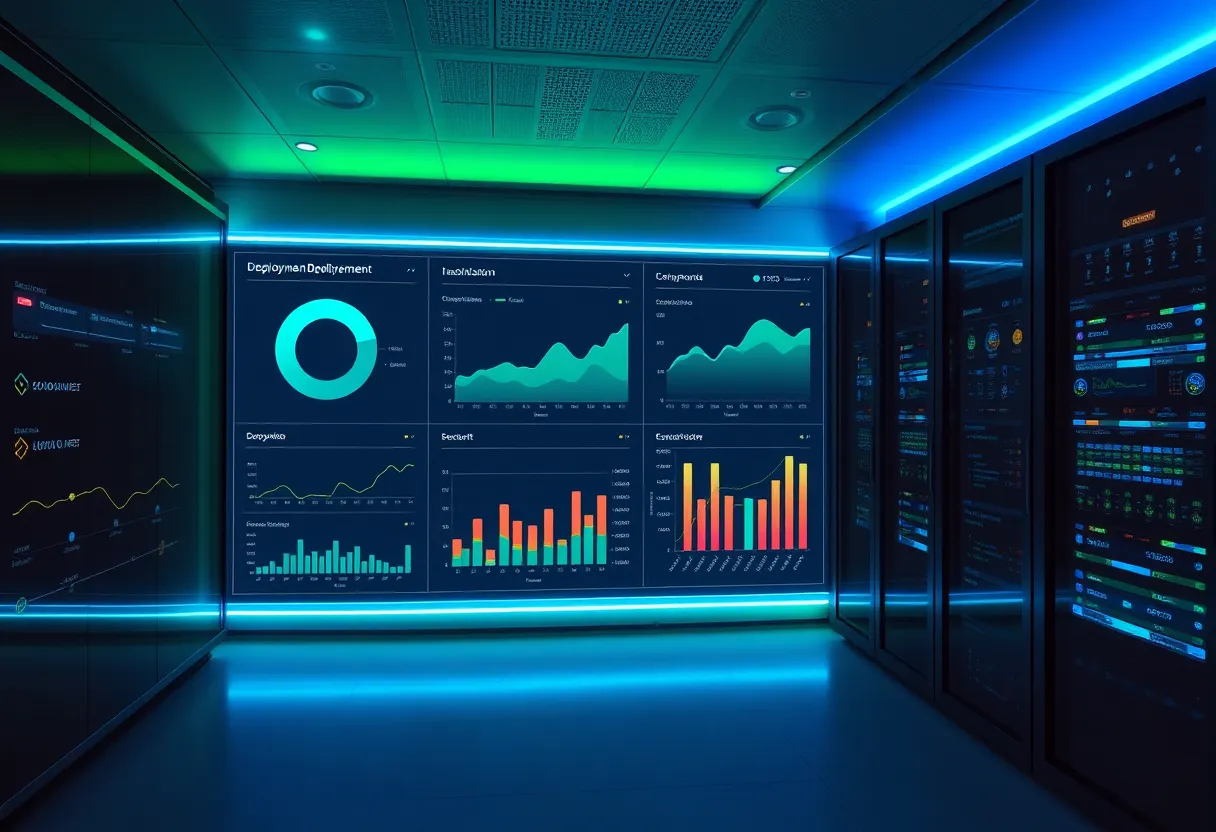
Then you’re back in the same infrastructure world as any other model: API or app server, GPU or CPU inference, batching, latency, and cost. Fine-tuning doesn’t remove the need for solid deployment and monitoring; it just means the model you’re deploying is one you’ve tailored. You’ll want to log usage, track latency and errors, and have a plan for rolling back if a new checkpoint behaves worse in production. A/B testing fine-tuned vs base model in real traffic is the only way to know if the extra effort paid off.
Cost and Time: What to Expect
Fine-tuning has real costs. Compute: a few hours on a single A100 or equivalent for a 7B model with LoRA can run tens of dollars in the cloud; iterating multiple times multiplies that. Time: data prep and eval often take longer than the actual training run. And opportunity cost: the same engineering hours could go into better prompts, better RAG, or a different product feature. The decision to fine-tune should be explicit—you’re investing in a model that’s yours to improve and redeploy, at the cost of owning the full pipeline.
When Fine-Tuning Is Worth It
Fine-tuning makes sense when (1) off-the-shelf models don’t match your task or style well enough, (2) you have or can create the data to teach the model, and (3) you’re willing to own the full pipeline—data, training, eval, and deployment. It’s not a one-week project for a first-timer; it’s a commitment to understanding the stack and iterating.
If you need a quick win, prompt engineering and RAG (retrieval-augmented generation) often get you most of the way. If you need a model that truly reflects your domain, your voice, or your product’s constraints, fine-tuning is the right lever—as long as you go in with eyes open. The real cost isn’t just compute; it’s data, tooling, evaluation, and the patience to get all of it right.