If you only code software, the physical world can feel like someone else’s problem. But a little electronics goes a long way: you understand how your code meets reality, you can prototype hardware ideas, and you get a different kind of debugging muscle. Here’s the case for learning electronics even if you never plan to be a hardware engineer.
Your Code Runs on Something
Every program runs on a machine. That machine has a CPU, memory, buses, and often sensors and actuators. When you only think in software, you treat the hardware as a black box: “the OS handles it” or “the driver does it.” But when something is slow, flaky, or power-hungry, the cause is often at the boundary—how the software talks to the hardware, or how the hardware is wired. Learning a bit of electronics (voltage, current, pull-ups, signal integrity) doesn’t make you an EE—but it gives you a model. You start to ask: is this a software bug or a timing issue? A driver bug or a bad connection? That mental model pays off in debugging, in system design, and in talking to hardware people. You don’t have to do the layout; you just have to know enough to know what’s possible and what’s not. When a PM says “can we add a sensor?” or a designer says “the device resets when you unplug the USB,” you’ll have a frame for the answer instead of a blank stare.
Prototyping and Side Projects
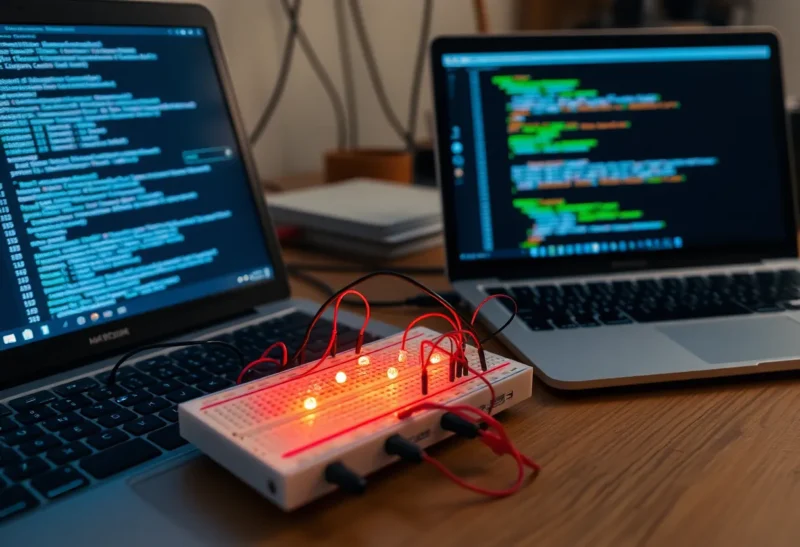
Software-only projects live in the cloud or on a device. Electronics lets you add buttons, sensors, LEDs, and motors—so you can build things that interact with the real world. A Raspberry Pi or Arduino with a few components is enough to do home automation, a custom input device, or a small robot. You don’t need a degree; you need a breadboard, a starter kit, and a few tutorials. The payoff is projects that feel tangible: you wrote the code and you wired the circuit. That’s satisfying and it broadens what you can build. Even if you never ship hardware, the ability to mock up an idea with real inputs and outputs is valuable for product thinking and for understanding what “embedded” and “IoT” actually mean in practice. Plus, hardware projects are a great way to learn: you can’t Ctrl+Z a solder joint, so you learn to plan and test incrementally. That discipline carries back into software.
Embedded and IoT Are Software-Heavy—But Not Only Software
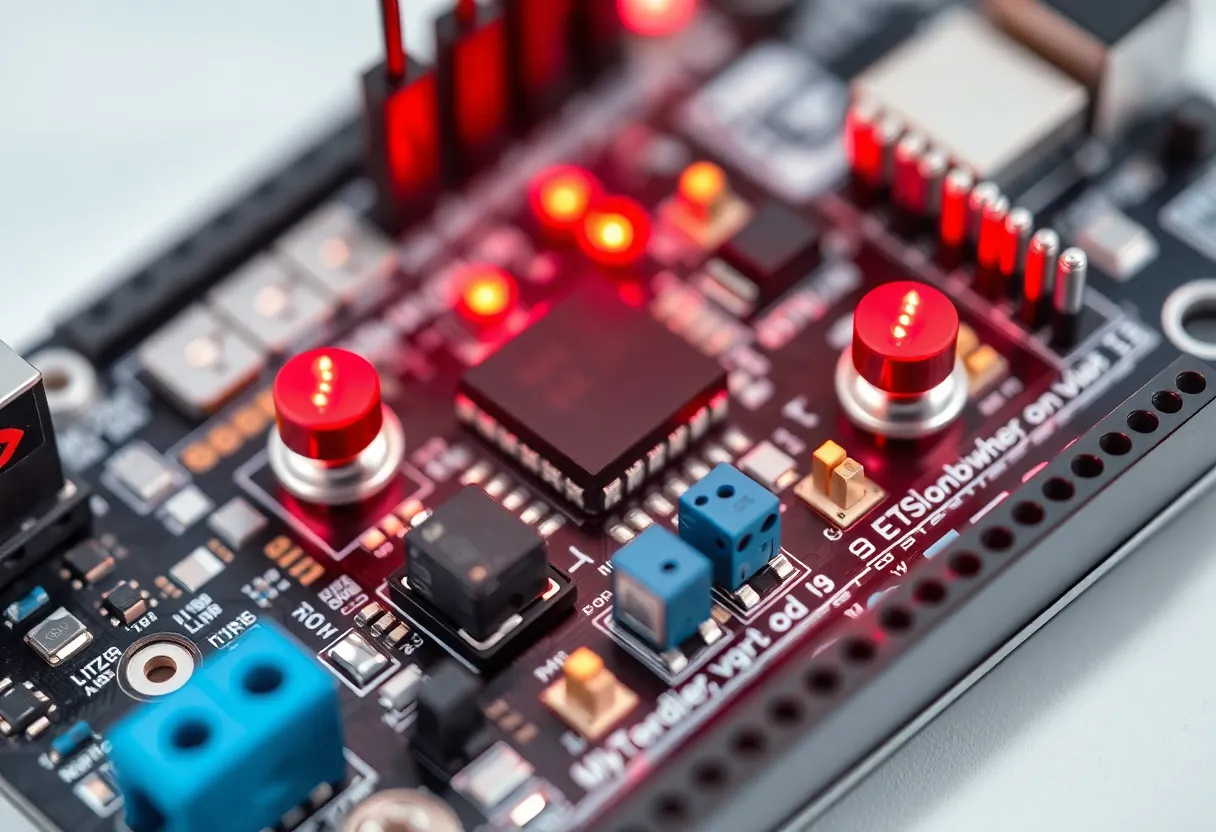
Embedded and IoT jobs often list “C/C++” and “real-time” and “low-level”—but they also list “sensor integration,” “power,” and “hardware bring-up.” If you only code software, you’re dependent on someone else for the hardware side. If you know a little electronics, you can read a schematic, follow a data sheet, and wire a sensor to a dev board. You become the person who can own the full stack from pin to cloud. That doesn’t mean you’re doing PCB design—but it means you’re not blocked when the hardware doesn’t behave. For career and for side projects, that’s a real advantage. The “software person who gets hardware” is rare enough to be valuable. Startups and small teams especially need people who can cross the boundary; if you can debug both the firmware and the wiring, you’re a multiplier. And even in big companies, the ability to sit in a bring-up meeting and understand what the hardware lead is saying will make you a better collaborator.
Debugging Gets a New Dimension
Software debugging is mostly logic and state. Hardware adds time and physics: signals that bounce, power that sags, noise that flips a bit. Learning electronics teaches you to think in terms of “what could be wrong with the physical setup?” That mindset transfers. When your app is flaky on one device, or your embedded code only fails when the room is warm, you start to consider the system. Multimeters, oscilloscopes, and logic analyzers are the hardware equivalent of a debugger—and knowing when to reach for them (or when to ask a colleague to) saves time. So the case isn’t “become an engineer”; it’s “add one more way to reason about failure.”
How to Start
You don’t need a lot. An Arduino or Raspberry Pi starter kit, a breadboard, some jumper wires, and a few components (LEDs, resistors, buttons, a simple sensor) are enough. Follow a few “blink an LED” and “read a sensor” tutorials. Then try to make one small project: a temperature logger, a custom macro pad, or a simple robot that follows a line. You’ll hit issues—wrong pin, wrong resistor, loose wire—and fixing them is where the learning happens. Online resources (Adafruit, SparkFun, Arduino docs) are plentiful. The goal isn’t to get a second degree; it’s to get comfortable enough that “hardware” isn’t a black box. A weekend or two can get you there. If you already know a language like Python or C, you’re most of the way there on the code side; the new part is the physical layer. A multimeter is cheap and useful for checking connections and voltage; you can add a simple logic analyzer or scope later if you get into it. The barrier to entry is low—and the return on that small investment is high.
Bottom Line
If you only code software, learning a little electronics is worth it. You understand where your code meets the world, you can prototype ideas with real inputs and outputs, and you get a better mental model for debugging and system design. You don’t have to become a hardware engineer—just enough to talk to the hardware, read a schematic, and wire a circuit. The case is simple: the world is physical, and your code eventually runs on and interacts with it. A small investment in electronics makes you better at both. So pick up a kit, blink an LED, and see where it takes you. Your future self—debugging a weird bug or pitching a hardware-enabled product—will thank you.