Starlink V3 on Starship vs Falcon 9: The Cadence the IPO Still Has to Fund

Zara Nkosi
September 18, 2026
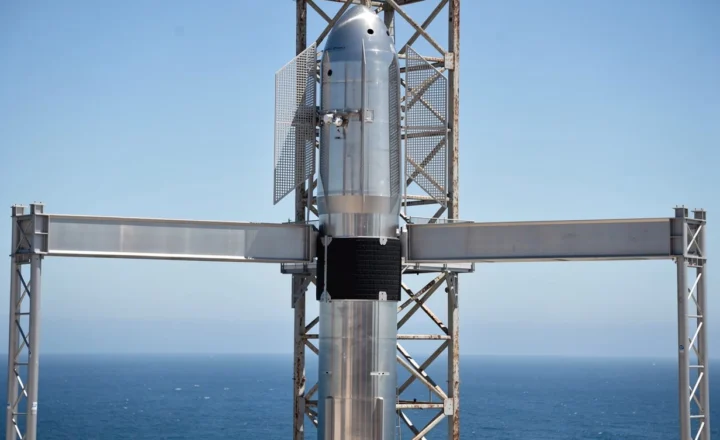
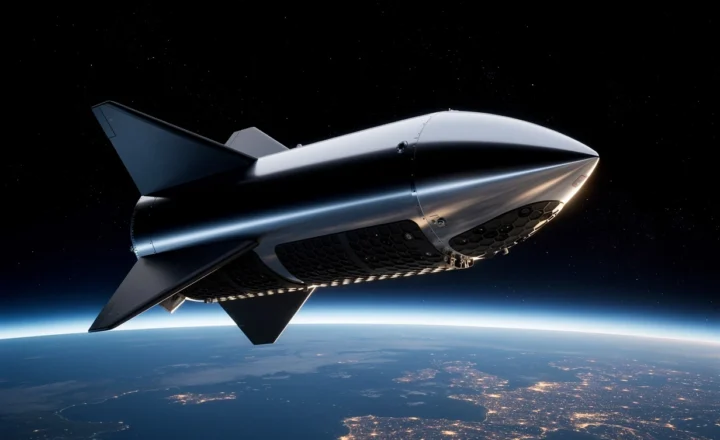
Falcon 9 is the factory. Starlink V3 is a satellite that assumes the factory changes shape. One Starship stack is supposed to put something like 26 V3s on orbit and add on the order of a terabit each — SpaceX’s own comparison is roughly ten times the capacity of a single Falcon 9 ride of V2 Mini birds. That sentence is a slide. The cadence that makes the slide a network is still a Super Heavy that comes home, a ship that can fly again, and a 10-Q that did not spend the IPO on a different hall in Tennessee.
I have worked satellite links long enough to distrust a capacity multiple that is not attached to a weekly pad. Capacity per launch is a physics brag. Capacity per month is a business. Falcon 9 already sells the second number. Starship is still selling the first.
What V3 is for
V2 Mini exists because Falcon 9’s fairing and performance said so. V3 exists because Starship’s bay said so: bigger bus, more throughput, a constellation math that wants fewer launches if the launches are huge and boring. If Starship is not boring, V3 is an expensive inventory problem. You do not build a generation of spacecraft around a vehicle that flies twice a quarter unless you like warehouses.
The first operational drop is tied to Flight 14’s orbital attempt. A prior V3 outing on a suborbital path was a handshake, not a fleet. I will not count handshakes as cadence. I will count objects that stay, raise, and pass traffic. Until that is a rhythm, Falcon 9 is still how most of the 11,000-class constellation got there and how most of it will get replacements.
What Falcon 9 still wins
A week you can circle. A booster you have caught so often it is a union job. A fairing that is a known headache. A customer stack that is not only Starlink. When a Starship window slips, Falcon 9 can still loft Mini-class metal and keep cells from rotting. That is not nostalgia. That is how you do not bet the network on a first orbit.
Falcon also wins the unglamorous refill: spare sats into planes that already have neighbors, planes V3 will not immediately replace. A constellation is a mix of generations for years. People who say “V3 therefore Falcon dies” have never watched a plane of mixed buses share a gateway. The gateway does not care about your press kit. It cares about a modem that still speaks.
Cost per bit on a good Starship day should crush Falcon. Cost per bit on a quarter with one failed insertion and a lot of V3s in a hangar does not. The IPO is supposed to fund the hangar and the retries. The first public print also funded Colossus-scale capex that was larger than the quarter’s sales. That is the tension in the title. Cash arrived. Cadence still has to be chosen.
The cadence the raise did not automatically buy
Eighty-five billion dollars buys tanks, Raptors, a second pad’s appetite, and time. It does not buy a weekly Starship until the ship returns as a habit. Two V3 flight tests in ninety days is a campaign tempo. Falcon 9’s Starlink manifest has been a utility tempo. Utilities are how you sell enterprise and government circuits. Campaigns are how you sell a ticker a story.
If SPCX holders want V3 economics, they have to fund the boring middle: splashdowns that are allowed to stay splashdowns, ships that are walked, boosters that are caught on the pad that launched them, and a refusal to retire Falcon because a slide said 10x. The street will ask why you still fly the old truck. The answer is that the new truck is not a truck. Say that on the call. The multiple will sulk. The network will live.
Ground, gateways, and the bit that never launches
I have commissioned links that died on a gateway firmware hold, not on a missing satellite. V3’s terabit story assumes user terminals and landing stations that can drink it. A Falcon-sized drop is easier to absorb because the ground already learned V2 Mini. A Starship-sized drop is a provisioning event. If the IPO funds sats and not gateways, you will have a beautiful plane and a congested earth. Fund the earth. It is unfilmed and it is the product.
Enterprise and Starshield circuits make this ruder. Governments buy calendars. They do not buy a 10x slide. A slipped Starship and a paused Falcon “because V3 is coming” is how you miss a delivery date you already signed. Keep the old truck on those manifests until the new truck has a year of dullness.
Spectrum, cells, and why one fat launch is not a month
A 26-satellite drop is a lot of antennas in one orbital neighborhood if they work. It is also a coordination event: planes, raising, avoiding the junk you already own. Falcon 9’s smaller drops are easier to digest. Starship-sized drops will stress the same catalog and the same gateway rollout. I have seen operators treat a big launch as a coverage miracle and then wait on ground firmware. V3 will wait on ground firmware. Budget that wait. Do not budget a press conference.
Mobile and the EchoStar-shaped spectrum story in the S-1 are another reason Falcon still matters. You can have V3 capacity in the sky and still need a year of earth stations and rights. Launch cadence is one pipe. Licensing is another. The IPO funds both only if someone allocates it that way. AI halls do not file FCC updates.
Manufacturing two buses at once
V2 Mini lines do not turn into V3 lines overnight. Fixtures, solar, phased arrays, a dispenser that only fits one bay — that is a factory argument. If you starve Mini too early, you cannot fill Falcon when Starship slips. If you never start V3 at rate, Starship flies empty of the payload it was sold to carry. The IPO has to fund a messy overlap. Overlap looks inefficient in a segment note. Overlap is how you do not create a hole in the sky. I have watched operators create holes by “simplifying” to one bus. Simplifying is a synonym for hope.
A honest 10-Q would show Mini units and V3 units and launch assignments without forcing a winner. A dishonest one would show only V3 capacity per Starship and a footnote that Falcon “continues.” Continue is a verb that needs a number.
How I would fund the next eight quarters
Keep Falcon 9 Starlink flights on a utility calendar even if V3 works. Use Starship for fat V3 inserts when the vehicle has a written recovery you believe. Do not starve Raptor and ship production to make a compute campus prettier. Publish, if you must publish, cost per successful V3 that reached an operational slot — not capacity per hypothetical launch. Let the Space segment lose money on purpose while Connectivity pays groceries. If AI is the growth story, say so, and stop pretending V3 cadence is the same slide.
I would also fund a warehouse that can sit. A generation change always sits. Sitting is cheaper than flying a ship that is not ready because the inventory is embarrassing. Embarrassment is not a flight rule.
Failure modes I am already tired of
One good orbital drop, then a six-month gap, then a narrative that Falcon is the bottleneck. Falcon is not the bottleneck. The ship is. One catch rehearsal, then a model that assumes weekly reuse in 2027. Reuse is a carcass count. Zero ship catches is zero reuse. A 10x capacity slide used to justify retiring the only weekly launcher you have. That last one is how a constellation starves in public.
The opposite failure is cowardice: never hanging V3s until the ship is a 737. Flight 14’s choice to carry operational metal on a first long-duration orbit is aggressive and I understand it. Aggressive is allowed if the next flights can still be water. Aggressive plus a catch plus a Falcon stand-down is how you write off a generation.
What I will count after Flight 14
Not the livestream. Operational V3s that stay. Falcon 9 Starlink missions that still flew. Days between Starship attempts that ended as planned. Capex footnotes that still mention South Texas after they mention Memphis. If those four numbers are healthy, the 10x can wait. If only the livestream is healthy, the IPO funded a trailer.
The decision
V3 on Starship is the right satellite for a reusable heavy. Falcon 9 is the right cadence for a network that already exists. The IPO still has to fund both, on purpose, in the same 10-Q, without letting AI capex or a trailer eat the truck that works. Count operational V3s per month, not terabits per manifesto. Keep Falcon on the calendar until the ship comes home as a habit. I will believe the 10x when it is a dull week. Until then it is a beautiful number waiting on a vehicle that has not yet chosen to stay up and come back.