Catching Starship vs Super Heavy: Why Pad 2 Rehearsals Don’t Mean the Next Flight Is Ready

Alex Vance
September 18, 2026
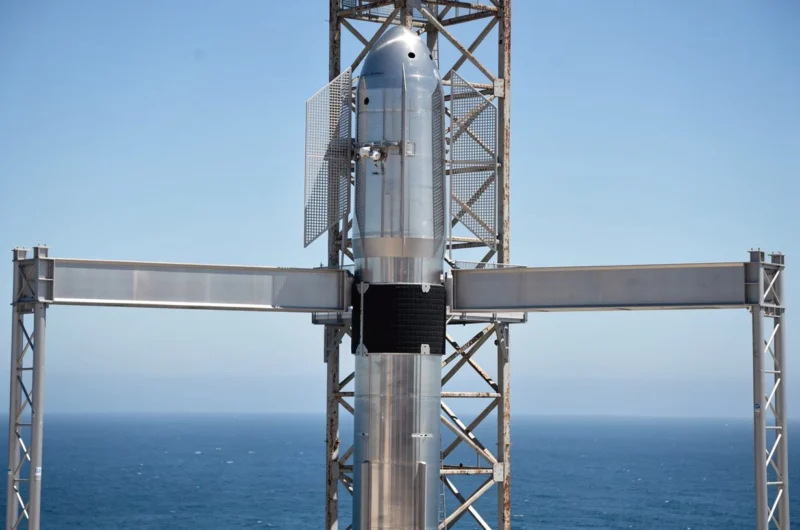
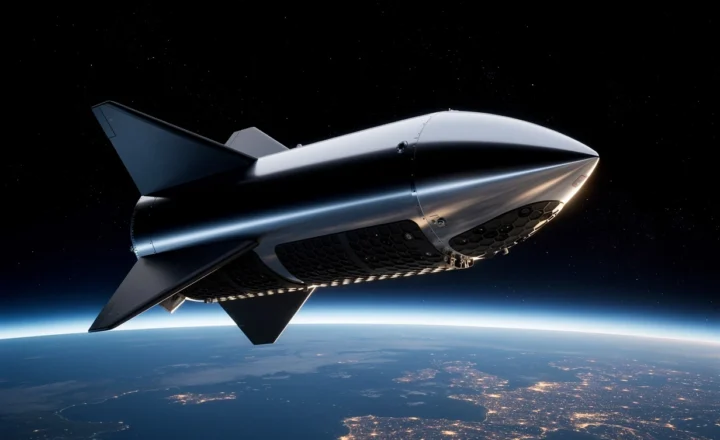
Super Heavy has been caught. Starship has been hung. Those are not the same verb. In the second week of September 2026, Pad 2’s chopsticks lifted unflown Ship 42, moved it through catch-like geometry, kissed the quick-disconnect, and held it aloft like a proof. The next stack off that pad is still Flight 14, and Flight 14’s recovery plan is still water. A rehearsal is how you learn the arms. It is not how you declare the next flight ready to thread a 52-meter cylinder that has just come from orbit.
I used to sign off hardware when the press kit was already printed. The test is whether the system works when the kit is gone. Pad 2’s kit is gorgeous. The system that returns a ship through orbital energy is not the system that lifts a clean ship off a stand.
What a booster catch already proved
A Super Heavy catch, the ones on the older tower, proves you can guide a first stage back from a brutal climb, kill residual velocity, and let steel arms take a load that was a rocket two minutes ago. That is an extraordinary closed loop. It is also a loop that never saw orbital heating. The booster does not spend hours as a spacecraft. It does not need a deorbit burn to exist. It comes home on a path that was always coming home.
People flatten “we catch rockets now” into one skill. Guidance, propulsion, and a tower are shared vocabulary. The energy, the thermal, the mass properties, the time since liftoff — those are different novels. I will not grade a ship catch as a sequel. I will grade it as a new book that stole a cover.
What Ship 42’s weekend actually was
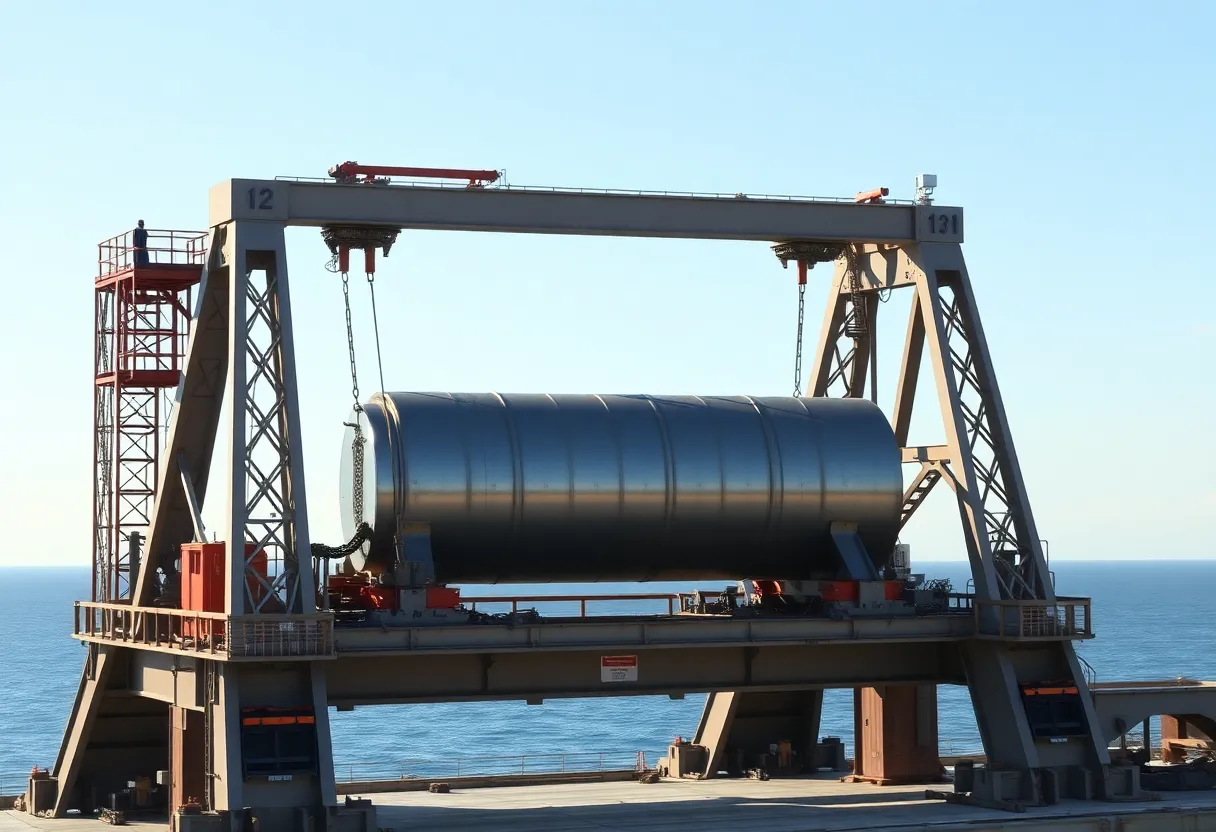
Ship 42 is Flight 15 hardware in most public trackers’ mouths. It rolled to Pad 2 without a full flight engine set, got lifted, cycled, aligned, and rolled back toward production and a static fire in its future. The useful data: can the arms find the hard points; can the software command pushers and pins; can the Ship Quick Disconnect find a ship that is not on the stand; can the tower hold a ship for a boring amount of time. That is catch-adjacent. It is not a catch. Nobody flew. Nobody reentered. Nobody hovered with missing tiles.
I like that they did it on Pad 2, the pad that has not yet caught a booster or a ship. Heritage from Pad 1 is a cousin. Cousins do not share load paths. First dedicated ship-catch geometry on the new tower is a real milestone. Milestones are not flight readiness. Flight readiness is a stack with engines, a license, and a recovery mode that matches the vehicle you are about to abuse.
Why the next flight can still be a splashdown
Flight 14’s official job is orbit and a V3 drop. The ship has to earn a deorbit. The heat shield has to earn a carcass. Adding a tower intercept on the first long-duration return is how you stack a pad hazard on an insertion exam. SpaceX has already said the catch is later. Believe them when they are conservative. Doubt them when they are cinematic.
A rehearsal the week before a no-catch flight is not a last-minute add. It is parallel work on the next vehicle. Programs that cannot walk and chew look indecisive. Programs that walk and chew look like they might catch next time. “Next time” is still a flight rule, not a vibe from a Saturday lift.
The energy the rehearsal cannot fake
A ship that left a stand is cold, aligned, and forgiven. A ship that left orbit is a thermal argument with flaps. Catching it means the guidance still works after plasma, the landing burn still has margin, and the arms still want a vehicle that is not shedding. Super Heavy’s successful catches do not simulate that. A crane-like lift of Ship 42 does not simulate that. The only simulation is a return. Water is how you buy the return without betting the tower.
If they ever catch a ship, I want the rehearsal plus a boring entry plus a hover that looks late and polite. I do not want the first catch to be the first orbit. That pairing is a trailer. Trailers blow up on this pad’s social media already.
Mass properties and the ship that is not empty
A rehearsal ship can be a tank farm with the right hard points. A returning ship may still hold residuals, a wounded header tank, a payload-bay door that did not behave, a set of sats that left late. The arms catch a vehicle whose mass you predicted on a good day. Super Heavy catches have already taught people that residuals and engine-out cases move the problem. The ship adds a bay that was full of V3s an hour ago. I want to see a model of that, not a lift of a dry body that never opened a dispenser.
If Flight 14 deploys cleanly, the next catch candidate still has to prove the empty-bay return. Empty-bay is kinder. It is still not Ship 42 on a crane. Do not skip the kindness and go straight to a catch with a stuck dispenser. That is how you write an accident report that starts with “the rehearsal went well.”
Software that has not seen plasma
Tower software can be beautiful on a Saturday. It has not yet closed the loop on a ship that is late, off-angle, and missing a flap’s authority. Super Heavy’s successful catches bought a lot of that loop for boosters. Copying the state machine onto a ship is a reasonable engineering act and an unreasonable press act. I want aborts that send the ship to water when the corridor is ugly. A rehearsal that always succeeds because the ship is already in the arms does not train the abort. Train the abort. Then film the success.
Readiness is a stack, not a clip
Ready means: engines installed and fired; cryo and proof in the past, not the future; flight software that has seen the pad it will use; a license that names the recovery; a booster that matches the tower’s catch history or an honest splash; a ship whose tiles you would sit under. Ship 42 after chopsticks week was closer to a static fire than to a catch attempt. Booster 22, in the same gossip, was weeks out. Flight 14’s B21 and Ship 41 are a different pair. Do not assign Ship 42’s weekend to Ship 41’s Monday.
I have watched GNC groups treat a successful ground test as a permission slip. Permission slips are how you skip the energy. The energy always collects.
Pad 2 still has to catch a booster, too
The new tower’s first catch, when it happens, might be a booster. That would be the conservative order: prove this pad’s arms on the vehicle class that has already been caught elsewhere, then try the ship. Or they skip and go ship-first because the calendar is loud. I know which one I would sign. I also know which one films better. Public companies film. Engineers should still sign the conservative order unless the flight rules say otherwise in ink.
Until Pad 2 has caught something that was flying, it is a launch site with a practiced crane. That is not an insult. Cranes that will someday catch need practice. Practice is not “the next flight is ready.”
What I tell people who only saw the clip
The clip is a crane that will become a catch. It is not a catch. The next flight can be ready to launch and unready to catch. Those readiness statements must be allowed to diverge or you will fly the clip. I would rather a ready launch with a written splash than an unready catch with a written dream. If your timeline needs the dream this month, your timeline is a trailer. Trailers do not hold tiles on.
If Flight 15’s description someday names a ship catch, I will grade Flight 15 on the corridor, the abort, and the hang. I will not grade it on Ship 42’s Saturday. Saturday was necessary. Necessary is not sufficient. Aerospace is a pile of necessary tests that still lost vehicles because someone declared sufficient too early.
The decision
Catching Starship is not catching Super Heavy with a longer vehicle. Pad 2 rehearsals with a clean ship teach the arms. They do not teach orbital entry, and they do not make the next splashdown flight a catch attempt. Keep the exams split: orbit and cargo on the flight that says water; catch on a flight that says catch after the carcasses have been walked. I will get excited when a flown ship hangs on purpose, after a flight that named the catch in ink. I will not get excited because an unflown one did homework. Homework is how you avoid a crater. It is not a countdown.