Starship Flight 14: First Orbit and Starlink V3 — Why There’s Still No Ship Catch

Robin Hayes
September 18, 2026
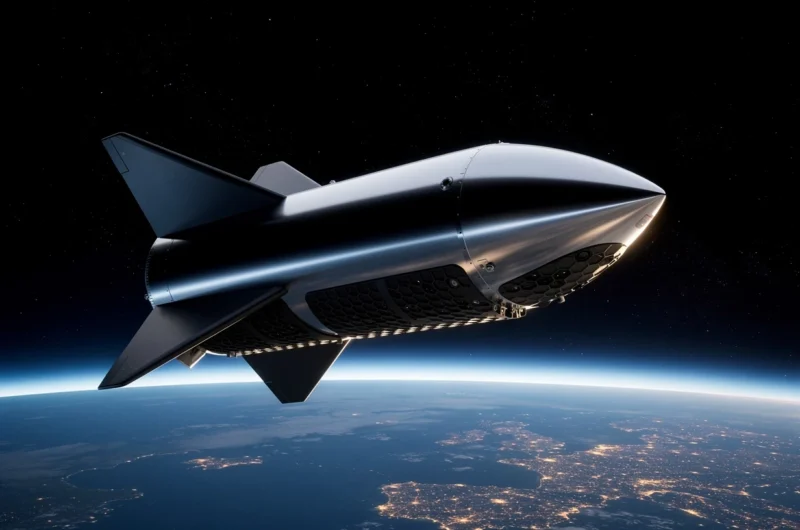
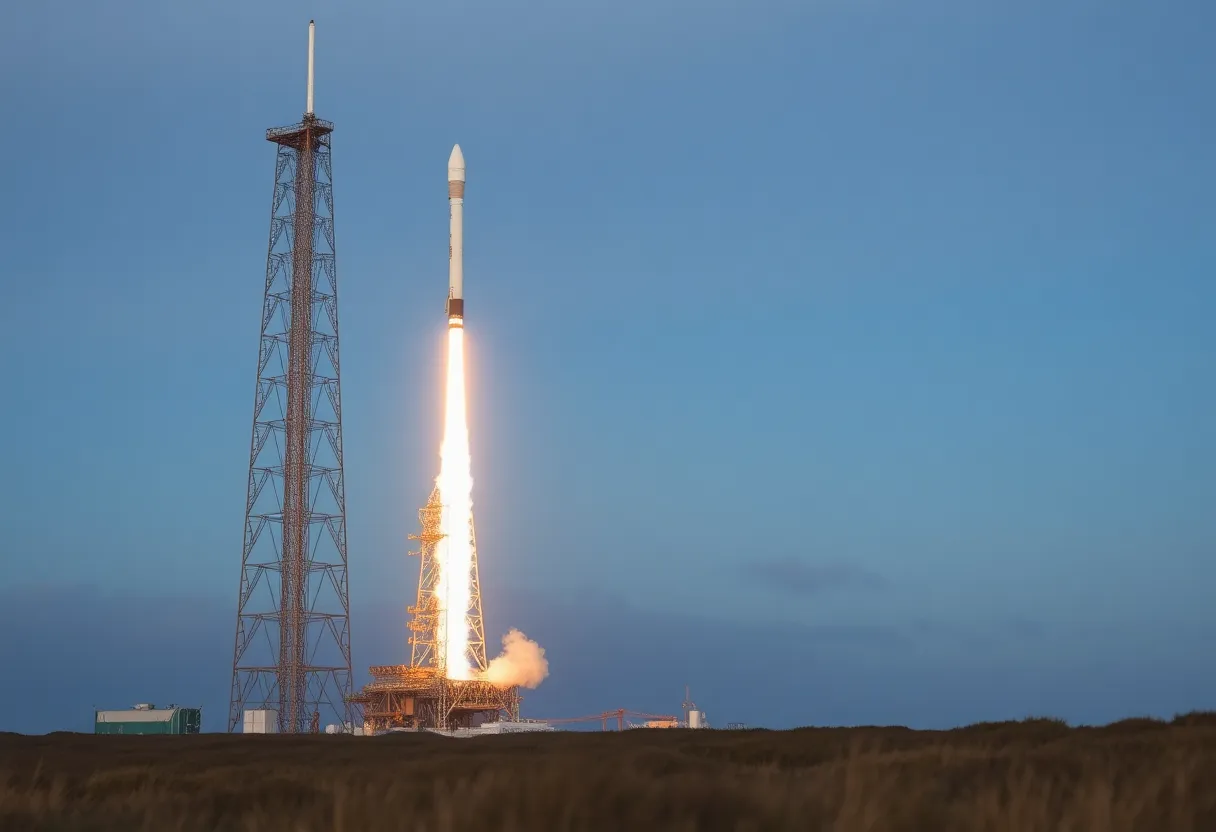
Flight 14 is the first time SpaceX has said Starship should stay in orbit on purpose. That is not a catch. That is a different exam. The stack is supposed to put Ship 41 on a sustained trajectory, drop 26 Starlink V3 birds into the constellation, fly for hours, then come home into the Pacific. Super Heavy is supposed to splash in the Gulf. The chopsticks will watch. Pad 2 can rehearse a hanging ship all week and still not be the recovery plan for this one.
I write launch calendars, not trailers. A trailer wants a tower catch because the footage is better. A calendar wants an insertion burn that only happens after the team believes they can still deorbit. SpaceX has said that last part out loud: they will not circularize unless the hardware that does the later burn still has redundancy. That sentence is why there is no ship catch. Catching is a third exam. They are sitting the second.
What “first orbit” actually asks
Flights 1 through 13 were, by design, suborbital enough to be called passively safer. You can learn a lot on a path that is already coming down. You cannot learn a deorbit from a trajectory that never needed one. Orbit means the ship has to choose to come home. It means attitude, power, and a single-Raptor deorbit story after hours of coast. It means a heat shield that sees energy the splash tests only approximated.
If they hold the insertion because a redundant path looks sick, the internet will say they failed to “reach orbit.” The useful read is that they refused a zombie ship they could not bury on purpose. I prefer that refusal to a catch attempt with a dying power budget. Public markets will not prefer it. That is not Flight 14’s problem until the 10-Q writes it up.
Six orbits, something like 275 kilometers, on the order of ten hours, splash west of Chile — those are the published bones. The bones can move. NET dates have already moved. A no-earlier-than of September 22 is a floor. I do not print a countdown as a personality.
V3 is a payload, not a factory yet
Twenty-six V3 satellites are the first time Starship is supposed to deliver operational Starlink metal that stays. Flight 13’s V3 drop was a suborbital hello. Contact, then the Earth takes them back. Group 31-1 is the sentence that turns the vehicle into a truck — if the sats deploy, unfold, raise, and join. SpaceX has claimed each V3 is about a terabit of capacity, a stack that would dwarf a Falcon 9 V2 Mini ride in one go. Claims are not a constellation. A few weeks to service, if checkouts are kind, is still a demo fleet.
I will not call Flight 14 the week Falcon retires. I will call it the first time the truck theory has a cargo manifest that matters if it works. If the ship reaches orbit and the sats fail to deploy, you still learned insertion. If the sats deploy and the ship tears up on entry, you learned a factory day and you still do not have a reusable upper stage. Those are different grades. Grade them separately. The catch is not on the rubric.
Why the ship catch waits
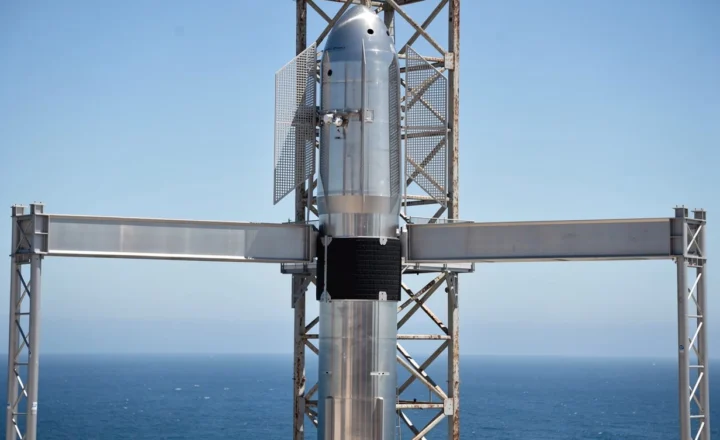
Super Heavy has been caught. The booster comes back from a climb that is violent and still not orbital-entry violent. The ship returns from orbital energy. Tiles, flaps, a flip, a landing burn, and then — someday — a hover into arms that have to be right in meters and milliseconds. They have not attempted that with a flown ship. They have hung an unflown Ship 42 in Pad 2’s chopsticks to learn alignment and the quick-disconnect after a hypothetical catch. That is homework. Homework is not the next launch’s recovery mode.
Musk has already walked the catch off this flight in public, after floating it. “A few months” is not a date. Ocean landings are the date. I treat a walked-back catch as good engineering communication and bad trailer discipline. The trailer people are already mad. Let them be mad. A missed catch on the first long-duration ship would write a quarter.
There is also the simple stacking problem. Flight 14’s job is to prove the ship can live in orbit and still be steered into a box of ocean. Adding “and also thread the tower” is how you fail two exams with one stack. I have watched programs do that. I have also watched programs that refused and then looked slow for a year and then looked inevitable.

Heat shield after a real day in space
Suborbital reentries have already punished tiles. Orbit adds time, attitude, and a deorbit that sets the energy you then have to survive. I care less about a pretty plasma clip than about whether the flaps still bite after the plasma, and whether the landing burn has a vehicle that is still a vehicle. A catch attempt on a ship with a wounded shield is how you turn a learning flight into a pad hazard. Water is a courtesy to the tower.
If they get a ship down intact and ugly, they have a carcass to walk. That carcass is worth more to Flight 15 than a heroic hover into arms that then drop a burning cylinder on concrete. I have seen recovery programs skip the carcass and go straight to the highlight. Those programs bought new vehicles in silence.
Range, FAA, and the hours in orbit
A ten-hour profile is a different conversation with people who close airspace and ocean boxes. Suborbital flights are a short pain. An object that stays up is a catalog object with a planned burial. That is why the insertion gate exists. It is not timidity. It is how you do not create a piece of Starship that you cannot steer. I will take a scrubbed insertion over a headline that says “uncontrolled.” Public companies hate scrubs. Ranges hate debris. The range should win.
If the window slips again, that is the calendar working. I do not treat a slipped NET as a failed catch. There was no catch on the paper.
Pad 2 is the launch site, not the catch proof
OLP-2 is where this stack is expected to leave. It is also where the pretty rehearsal footage came from. People will smash those facts together. A pad can launch a no-catch mission and still practice catching the next ship’s body. That is allowed. It is also how a rehearsal becomes a rumor that Flight 14 will “try it if things look good.” If the flight rules say water, believe water until a flight rule changes in writing. I do not believe a tower arm on launch day because a crane held a clean ship last Saturday.
Pad 1’s booster catches do not commute. Different tower, different software, different loads. Heritage is a cousin. It is not a stamp.
What I will call success
Insertion when they meant to insert. A deploy that produces a set of objects in the right neighborhood. A deorbit that happens on purpose. A ship that is in the splash box, even ugly. A booster that does the same in the Gulf. If they skip insertion for a safety reason they can explain, I will not call the flight empty. If they insert and lose the ship on the way home, I will call orbit a real first and reuse still fiction. If they catch nothing, I will not write “disappointing” unless they promised a catch in the official description. They have not.
V3 service in a few weeks would be extra credit, not the pass mark. Extra credit does not move the catch.
What I am not asking this stack to prove
Rapid reuse. Same-day booster. A ship that flies twice. Propellant transfer. A crew. A lunar lander. Those are later papers. Hanging them on Flight 14 is how a useful orbital first becomes a public failure even if the Pacific box is perfect. I will not ask the chopsticks to show up in the livestream so the comments stay kind. Kind comments are not a flight rule.
If they later add a catch to a different flight’s official description, I will grade that flight on catching. This one still says water. Believe the description.
The decision
Flight 14 is orbit and a V3 manifest. It is not a ship catch, and treating Pad 2 homework as a catch attempt is how you misread a calendar. Let the ship stay up, let the sats leave, let both stages make planned water. Catch later, on a flight whose exam is catching. I will watch the insertion gate and the deorbit, not the chopsticks. The chopsticks can wait a few months. Orbit has already waited three years of suborbital dress rehearsals. Sit the exam that is on the paper.