Wearable AI Endpoint vs the Phone NPU: Cloud Inference When the Watch Hits 20%

Dex Hartmann
September 18, 2026
The pitch for a 2026 watch is that it is an AI endpoint: raise a wrist, speak a sentence, get a summary, a translation, a note that files itself. The pitch for a 2026 phone is that the NPU will keep that sentence on the device. Then the watch hits 20 percent, or the phone is in a bag on a table, or the model does not fit in the watch’s SRAM, and the same sentence goes to a datacenter that was never on the box art.
I have worn the optimistic glasses and the optimistic watches long enough to treat “on-device” as a weather report, not a spec. The endpoint is whoever still has battery, thermal headroom, and a radio. When the watch is the endpoint, that is often the phone. When the phone is cool and cheap, that is often the cloud. The user-facing feature does not change name. The trust model does.
What a watch can actually run
A modern Apple Watch or Pixel Watch or Galaxy Watch can do small things locally: wake words, a tiny speech-to-intent model, always-on sensor classification, a canned reply. Apple Intelligence on the watch is still, in practice, a satellite of the iPhone. Samsung’s Galaxy AI features on the watch lean on the phone or on Samsung’s servers depending on the feature and the firmware week. Google’s Gemini bits on Wear are the same shape with different branding.
The constraint is not marketing TOPS. It is a 300–500 mAh battery, a wrist that gets warm, and a radio that costs more than the inference if you keep the LTE modem up. A watch that “does AI” without the phone in Bluetooth range is either a toy demo or a cloud client with a pretty crown.
I care about the 20 percent moment because that is when firmware gets honest. Low Power Mode kills the fancy always-listening path. The complication stays. The “just ask” button starts a shorter pipeline or a “connect the phone” toast. If you are on a run with the phone at home, you find out whether the watch was an endpoint or a remote control.
The phone NPU is the real on-device story
Apple’s Neural Engine, Qualcomm’s Hexagon, Google’s Tensor edge TPU — these are why a Pixel or iPhone can summarize a notification stack or clean a photo without an immediate round trip. The models are still bounded. They are bigger than a watch’s. They are smaller than the cloud’s. When the on-device model refuses a task, the OS offers to send it “to Apple” or “to Gemini” with a privacy label you will not read on a sidewalk.
That handoff is the product. The watch asked. The phone could not, or would not, run the larger model. The cloud did. Your wrist still showed a typing indicator. You did not get a dialog that said “this left the building.” Some vendors are better about the badge than others. None of them make the badge as loud as the demo.
I will take a phone NPU over a watch NPU for anything that looks at my mail, my photos, or my microphone buffer for more than a command. The phone is the device I already unlock. It is also the device with a battery I can see as a percentage I respect. The watch percentage is a costume. People will drain it to 15 percent for a restaurant translation and then act shocked that the translation was a cloud feature the whole time.
Cloud inference is what happens at 20 percent
Watch at 20 percent: CPU capped, radios polite, sensors sampled slower. Any feature that needed a local model in RAM may unload it. The next request is cheaper as HTTPS. Phone at 20 percent: same story, plus iOS and Android will background-kill the helper process that was keeping a model warm. The next request is colder, slower, and more likely to take the network path “just this once.”
Airplane mode plus low battery is the lab test I actually run. If the feature dies, it was never on-device. If it lives and gets worse, it was on-device and starved. If it lives and stays good, you found the rare small model. Most “AI watches” fail the first test as soon as the paired phone is out of range.
LTE watches complicate the graph. They can reach the cloud without the phone. That is independence and it is a bill. It is also a different privacy surface: the watch is now a cellular client with its own identifiers. I have used LTE for a run so I could leave the phone. I did not use it so I could pretend the inference was local. The watch became a thin client with a better pedometer.
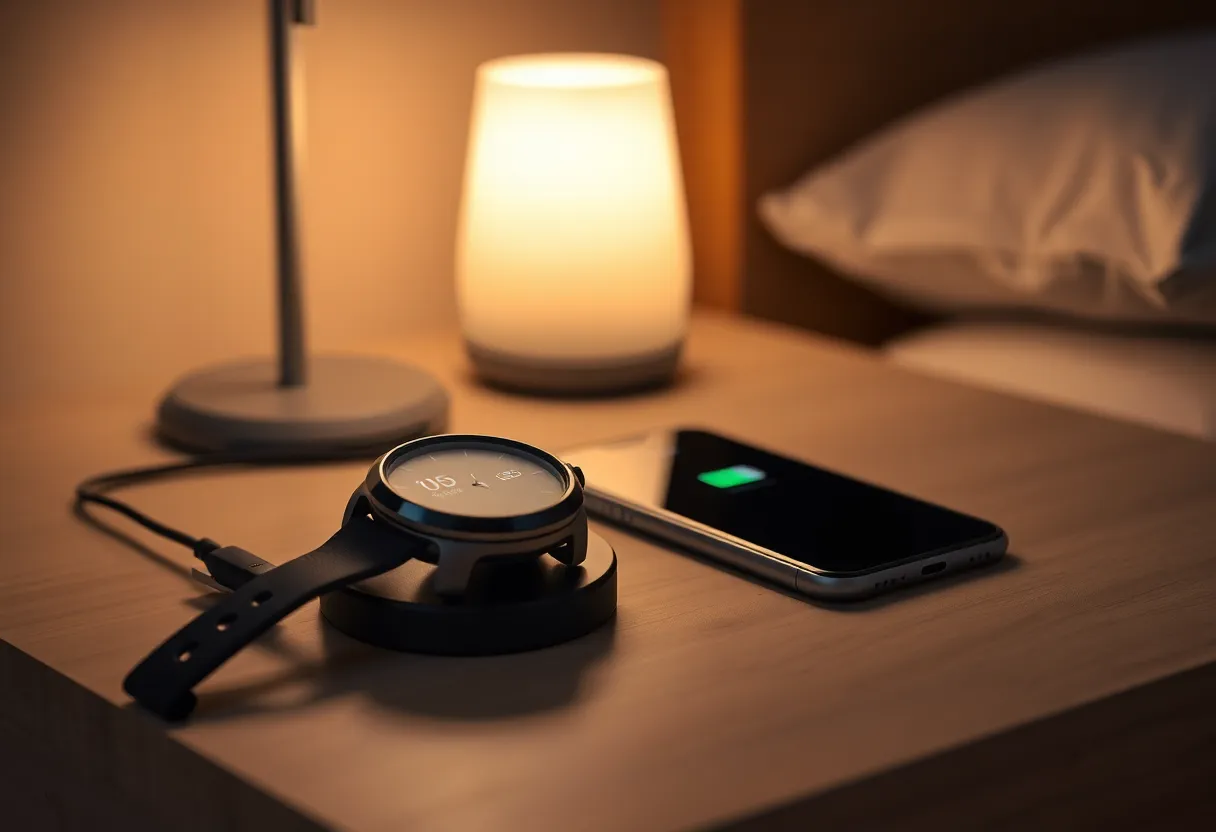
Named stacks, same diagram
Apple Watch Ultra plus iPhone: the interesting language features still prefer the phone, and several still prefer Apple’s private cloud compute when the on-device model shrugs. The watch is a superb remote and a mediocre brain. Pixel Watch plus Pixel: Recorder and Gemini live where Google already lives, which is often a server. Galaxy Watch plus a mid-range Galaxy that does not have the current NPU: you bought a watch feature that was tested on a flagship. The mid-ranger will cloud more, or the feature will grey out.
Chinese-market watches with “offline LLM” badges are the exception that proves the battery math. They run a tiny model, they get warm, they last a short day if you actually talk to them. I will take a short day for a real offline demo. I will not take a spec sheet that says 48 hours and also says “full assistant.” Those two sentences do not cohabit without a radio.
Audio is the other named product. AirPods hearing features and live translate look like ear endpoints. They are phone endpoints with a pretty stem. Pull the phone out of range and you will learn it again. Same architecture, nicer aluminum.
When I want the watch to be the endpoint anyway
Timers, heart-rate alerts, a fall detect, a short voice note that queues until the phone is back — those are watch jobs. A language model that wants a paragraph of your calendar is not a watch job. Vendors blur them because one crown is easier to advertise than a system diagram.
If you commute with the phone in a bag and you want a glanceable summary, you are asking the watch to be a display for the phone NPU. Fine. Keep the phone awake enough to help. If you want the watch to work in a Faraday locker room, you want a feature that was designed for offline, not a cloud badge with a wrist UI.
Glasses are worse and more honest. They have no battery story that survives a real model. They are cloud microphones with a prescription. I will write about them when they last a workday without a puck. Until then they are the same architecture as a 20 percent watch, all the time.
What I tell people who “want AI on the wrist”
Buy the watch for sensors and glances. Buy the phone for on-device models you actually care about staying on-device. Read which features list a cloud fallback. Assume low battery enables the fallback. If that fallback is unacceptable — medical, legal, a job that cannot leak a transcript — do not invoke the feature from the watch. Invoke it from a machine you have set to airplane mode and tested.
I am cautiously optimistic about the category for reasons I can explain: the sensors are good, the radios are good, the small models will get smaller. I am not optimistic that a watch at 20 percent will remain an endpoint. Physics will send that request to the phone or to Virginia. The honest product would say so in the same type size as the demo headline. Until it does, treat the wrist as a remote. Treat the phone NPU as the local brain. Treat the cloud as what happens when either battery gets honest. I still wear the watches. I just stop asking them questions after the battery warning that used to mean “find a charger” and now also means “find out who is listening.”
Work watches make this less abstract. A warehouse or a hospital that wants wrist AI is usually asking for a push-to-talk skin on a phone in a locker. If the locker is a Faraday story, the feature is dead or it is a dedicated radio you paid enterprise money for. Consumer watches will not grow that radio because the SKU is a fitness loop.
The search is “wearable AI versus the phone.” The answer is that they are one system with a power budget. When the watch is full and the phone is near, you can pretend the wrist is magic. When the watch hits 20 percent, you will meet the architecture. I would rather meet it on purpose than in a locker room with a sentence I did not mean to upload.