How Fusion Energy Went From “30 Years Away” to Breaking Even

Jordan Lee
February 24, 2026
For decades, fusion energy was the joke that wrote itself: “Fusion is 30 years away—and always will be.” Then, in late 2022, the National Ignition Facility (NIF) in California announced something that had never happened before: a fusion reaction that produced more energy than the laser pulse that triggered it. Net energy gain. Break-even. The milestone didn’t mean fusion power plants were suddenly around the corner—but it did mean the old punchline was finally wrong. Here’s how we got there and what it actually implies.
The Old Problem
Fusion is what powers the sun: light nuclei (like hydrogen) slam together and release energy. On Earth, we have to heat a plasma to absurd temperatures—tens or hundreds of millions of degrees—and hold it together long enough for reactions to occur. The two main approaches are magnetic confinement (tokamaks like ITER, using giant magnets to hold the plasma in a ring) and inertial confinement (NIF’s approach: blast a tiny fuel pellet with lasers so hard and fast that it implodes and fuses before it can blow apart).
Neither had ever achieved “ignition” in a lab: more energy out than the energy directly used to heat and confine the fuel. So fusion stayed in the “promising but unproven” bucket. Funding came and went; timelines slipped. “30 years away” became shorthand for “we have no idea.”
What NIF Actually Did
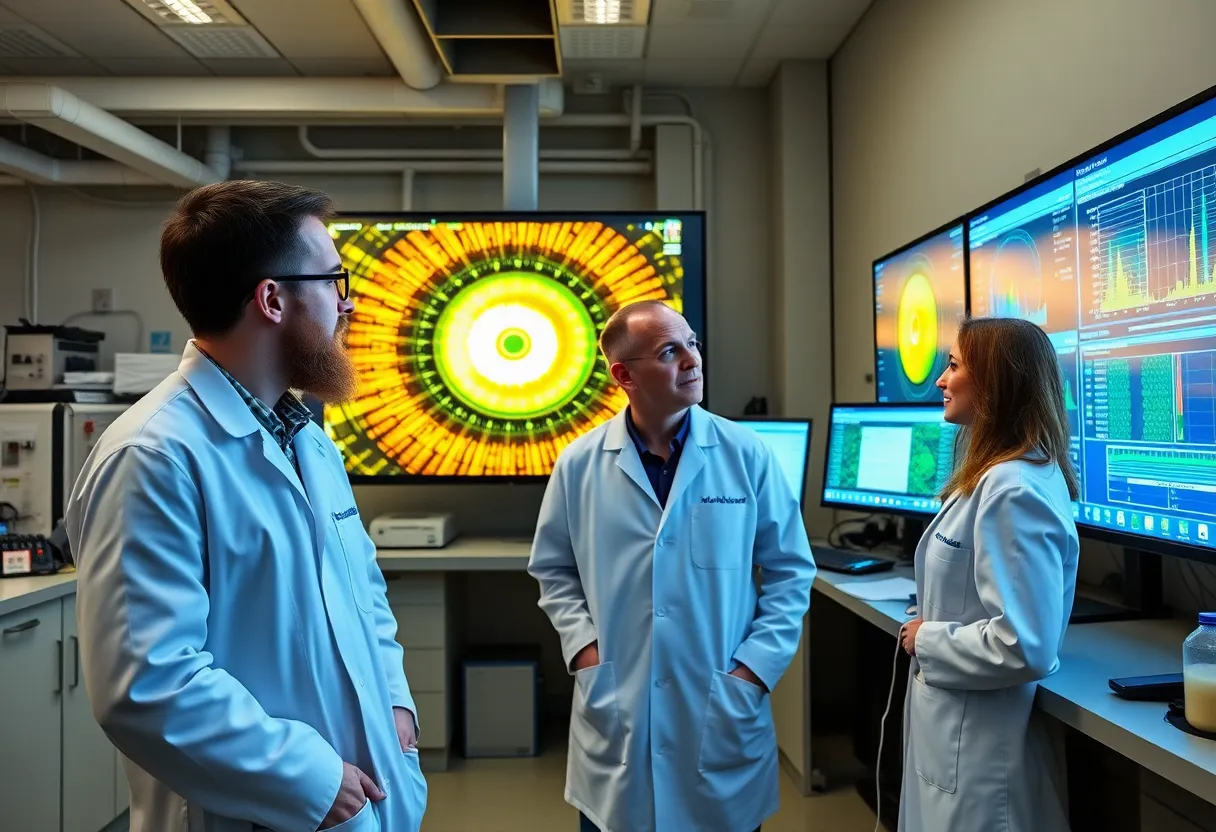
NIF uses 192 lasers to deliver a pulse of light to a gold cylinder (a hohlraum) that holds a peppercorn-sized pellet of deuterium and tritium. The lasers heat the inside of the hohlraum to x-ray temperatures; the pellet implodes, and for a fraction of a second, the fuel gets hot and dense enough to fuse. In December 2022, one of those shots put about 2 megajoules of laser energy in and got about 3 megajoules of fusion energy out. Gain greater than one. That’s “scientific break-even”: energy from the fusion reaction exceeded the energy absorbed by the target from the lasers.
Important caveat: the lasers themselves are inefficient. Only a fraction of the wall-plug electricity becomes laser light. So the facility as a whole still used far more power than the fusion reaction produced. “Engineering break-even”—where the whole plant makes more electricity than it consumes—is a different, much harder target. NIF also isn’t designed as a power plant; it’s a physics and weapons-relevance facility. So the result was a proof of principle, not a blueprint for a reactor.
What It Means
Proof of principle still matters. We now know that inertial confinement can reach ignition in a lab. That validates decades of modeling and engineering and gives private fusion companies and national programs a clearer target. It also shifts the conversation from “can we ever get net gain?” to “how do we scale it and make it efficient?”
Magnetic confinement is still the path most big projects (ITER, SPARC, Commonwealth Fusion) are betting on. They’re chasing a different kind of break-even: a burning plasma that sustains itself. NIF’s result doesn’t make tokamaks obsolete—it just proves that fusion ignition is physically achievable. That’s a morale boost and a scientific milestone, not a shortcut to the grid.
What Happens Next
Fusion power on the grid is still a long way off. Engineering break-even, then net electricity, then cost-competitive power—each step is huge. But “30 years away and always will be” is no longer true. We’ve crossed the first line. The next decade will be about repeating and improving on NIF-style results, advancing tokamaks and alternative designs, and seeing whether any approach can get close to something that could one day plug into the grid. Fusion isn’t here yet. But it’s no longer never.
The Bottom Line
Fusion went from perennial joke to real milestone when NIF achieved scientific break-even in 2022. That doesn’t mean fusion power plants are imminent—but it does mean the field has finally proven that ignition is possible in a lab. The rest is engineering, funding, and time. For the first time in a long time, “30 years away” might actually mean something.