What Makes Restoring Vintage Film Stock So Technically Difficult

Futurion Editorial
July 9, 2026
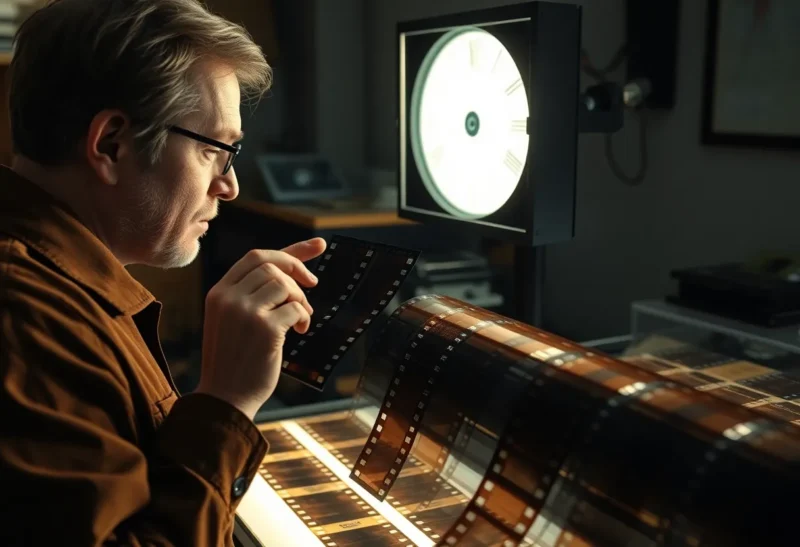
Restoring a decades-old film to something approaching its original theatrical quality involves far more than simply scanning old film reels into digital form. Vintage film stock, particularly material shot on cellulose nitrate or early cellulose acetate film base common through much of the twentieth century, degrades in specific, often severe ways that make faithful restoration a genuinely difficult technical and archival challenge, one that has produced an entire specialized field of film preservation science dedicated to addressing it.
Why Old Film Stock Physically Deteriorates in the First Place
Cellulose nitrate film, the dominant film base used through roughly the first half of the twentieth century, is chemically unstable over long time periods and is famously flammable, decomposing gradually even under reasonably good storage conditions into a state that becomes increasingly brittle, discolored, and in advanced stages of decomposition, physically sticky or even fully disintegrated into a fragile, unusable state, a genuine and well-documented archival crisis that has resulted in the permanent loss of a substantial share of films made during the nitrate film era.
Cellulose acetate film, which largely replaced nitrate stock as a safer alternative starting around the mid-twentieth century, solved nitrate’s flammability problem but introduced its own distinct degradation issue commonly called vinegar syndrome, where the acetate base chemically breaks down over time, releasing acetic acid (producing the characteristic vinegar smell that gives the syndrome its common name) and causing the film to shrink, warp, and become brittle in ways that, once advanced, are generally considered irreversible using currently available preservation techniques.
Why Physical Handling of Deteriorated Film Requires Extreme Care
Film restoration work on genuinely deteriorated material has to begin with careful physical handling and stabilization before any actual image restoration or digitization can occur, since brittle, shrunken, or warped film stock can be further damaged or even destroyed by handling and equipment designed for film in normal physical condition, requiring specialized, often custom-adapted scanning and handling equipment specifically designed to accommodate deteriorated film’s altered physical properties without causing additional damage during the restoration process itself.

This physical fragility is a major reason why film preservation specialists generally treat every handling and scanning pass of significantly deteriorated original film material as a genuinely limited-opportunity event, since each physical handling pass carries real risk of further damaging already-fragile material, meaning restoration teams typically try to capture the highest-quality possible scan in as few handling passes as practically achievable rather than treating rescanning as a low-cost, freely repeatable option.
How Digital Restoration Addresses Visible Image Defects
Once film material has been carefully scanned into high-resolution digital form, restoration specialists use specialized digital restoration software and techniques to address a range of visible defects accumulated through the film’s physical aging and prior handling history, including scratches, dirt and debris marks, color fading and shifting (since film’s color dyes degrade at different rates over time, often producing a distinctive, uneven color shift in aged film rather than a uniform fade), and frame-to-frame flicker or instability issues.
This digital restoration work requires substantial specialized expertise and remains only partially automatable, since distinguishing an actual film defect that should be corrected from an intentional original artistic or technical choice present in the original film requires genuine film-historical knowledge and careful, often frame-by-frame human judgment, meaning fully automated restoration approaches tend to produce demonstrably inferior results compared to restoration work that combines automated defect-detection tools with expert human review and correction.
Why Establishing an Authoritative Original Version Is Often Its Own Challenge
Beyond addressing physical and visual degradation, film restoration projects frequently face a genuinely difficult research challenge in determining what the film’s original theatrical release version actually looked like, since surviving film elements for many older films exist across multiple different physical print sources (original negatives, release prints, foreign distribution versions) that may differ from each other due to studio editing decisions, censorship cuts made for specific markets, or simply different physical condition and completeness across the surviving elements.

Reconstructing an authoritative version from these sometimes incomplete or conflicting surviving elements requires genuine film-historical research and archival detective work, comparing available surviving prints, contemporary documentation, and historical records to determine which specific edit and specific visual and audio characteristics most accurately represent the film’s actual original theatrical release, work that’s fundamentally a research and scholarship exercise as much as a technical restoration task.
Why This Combination of Challenges Has Made Preservation a Race Against Time
Film preservation organizations and archives have treated the restoration and digitization of vulnerable original film material as an urgent priority precisely because of how much material has already been permanently lost to nitrate decomposition and vinegar syndrome, and because remaining original film elements continue deteriorating even under good archival storage conditions, meaning every year of delay in restoring and properly digitizing at-risk original material increases the real risk that some films will reach a state of degradation from which no currently available restoration technique can meaningfully recover them. This combination of chemical instability, physical fragility, technically demanding digital restoration work, and genuine historical research complexity is precisely why film restoration has developed into its own specialized, technically sophisticated field rather than remaining a comparatively simple scanning and cleanup exercise.