The Hidden Complexity of Translating Sign Language With AI

Futurion Editorial
July 9, 2026
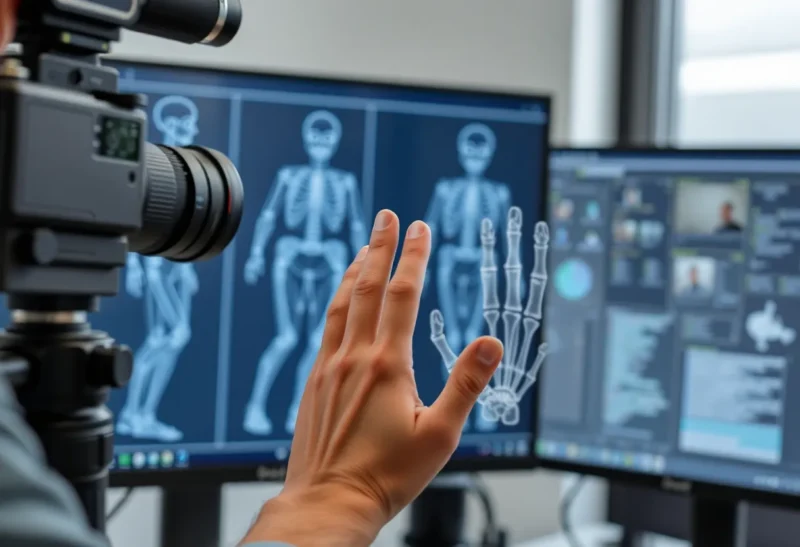
Machine translation between spoken and written languages has improved so dramatically over the past decade that real-time, reasonably accurate translation between major world languages now runs on an ordinary smartphone. Sign language translation has followed a dramatically slower, rockier development path, and understanding why reveals something important about the specific technical assumptions embedded in most language AI research, which turn out not to transfer cleanly to sign languages at all, despite sign languages being complete, grammatically sophisticated human languages in every linguistic sense that matters.
Why This Isn’t Just “Translation With a Camera Instead of a Microphone”
The most common misconception about sign language AI, one that has led several well-funded startups and research projects to underestimate the problem badly, is treating it as essentially the same technical challenge as spoken language translation, just swapping audio input for video input. Sign languages are not visual representations of spoken language at all — American Sign Language, British Sign Language, and the hundreds of other distinct sign languages used around the world each have their own independent grammar, syntax, and vocabulary that developed separately from any spoken language, including the spoken language used in the same country or region. ASL grammar, for instance, differs substantially from English grammar in word order, question formation, and how it handles verb tense and aspect, meaning a system that “translates” ASL by mapping directly to English word-for-word would produce grammatically broken output even if every individual sign were recognized perfectly.
Compounding this, sign languages encode a substantial amount of grammatical and semantic information through channels that have no clean equivalent in spoken language processing at all: facial expression, eyebrow position, and mouth shape can carry grammatical meaning, not just emotional tone; the specific spatial location where a sign is made relative to the signer’s body can indicate who or what is being referred to, functioning similarly to pronouns; and the speed, size, and repetition of a hand movement can modify a sign’s meaning in ways roughly analogous to how spoken language uses adverbs or verb conjugation, but with no direct one-to-one mapping that a translation system can simply learn as an equivalent audio feature.
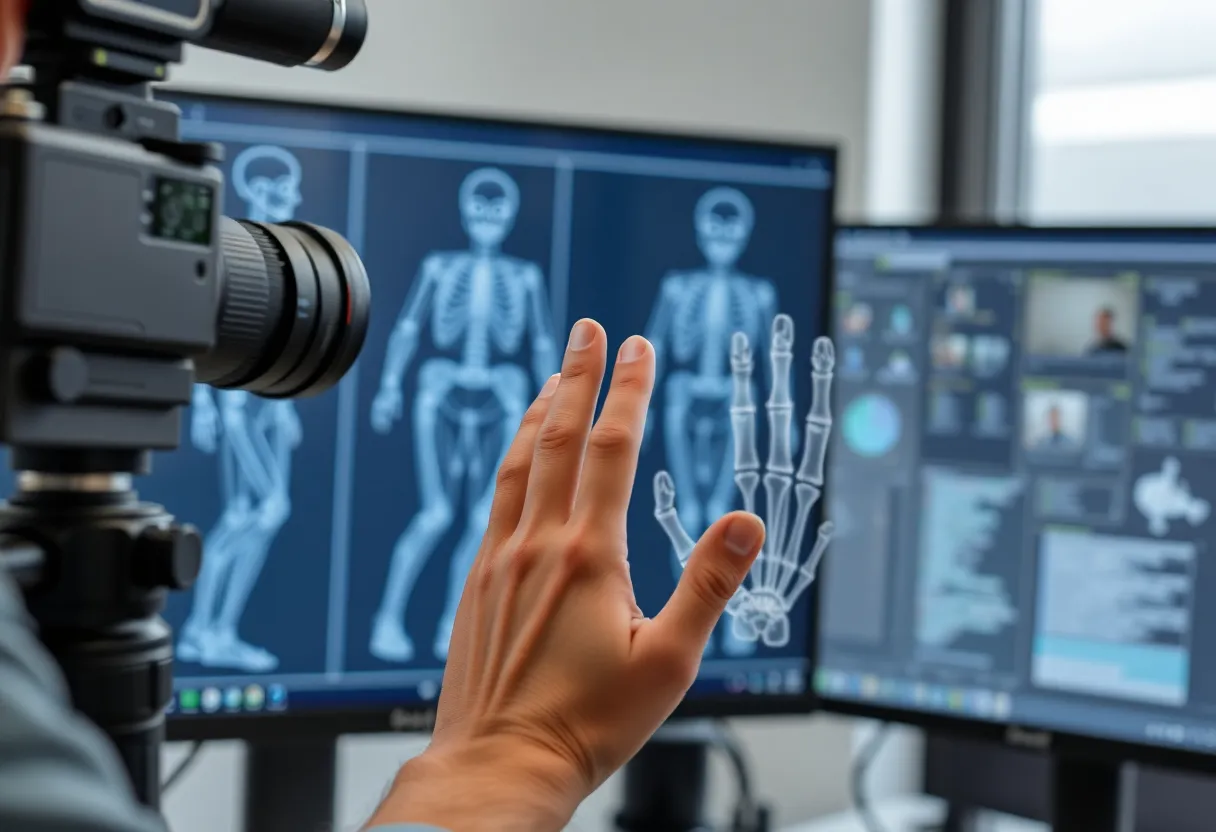
The Data Scarcity Problem That Dwarfs Anything in Spoken Language AI
Modern spoken language machine translation systems achieve their impressive performance substantially because of the enormous volume of parallel translated text and audio data available for major world languages, accumulated from decades of digitized books, subtitled media, and multilingual web content. Sign languages have nowhere close to comparable data availability, for several converging reasons that are difficult to solve simply by throwing more computing resources at the problem the way spoken language AI has often been able to.
Large-scale annotated sign language video datasets are considerably rarer and more expensive to produce than text datasets, because creating them requires filming fluent signers, then having other fluent signers or linguists carefully annotate the video with detailed linguistic information at a level of granularity current sign language research still hasn’t fully standardized across different research groups. Written sign language notation systems do exist, including systems like SignWriting and various academic transcription notations, but none has achieved anything close to the universal, standardized adoption that written text has for spoken languages, meaning researchers building training datasets are often working with less consistent, less standardized annotation practices than spoken language AI researchers take almost entirely for granted.
Regional and individual variation compounds the data problem further: sign languages, like spoken languages, have distinct regional dialects and significant individual variation in signing style, and unlike widely used written spoken languages, there’s typically no single standardized “written form” of a sign language that the way most people encounter and produce content in that language converges toward, meaning training data is both scarcer and more variable than a comparable spoken language dataset would be.
Why Deaf Community Involvement Has Become a Central Technical and Ethical Issue
A pattern that has emerged clearly across sign language AI research, and one that deaf linguists and community advocates have pushed hard on, is that projects developed primarily by hearing researchers and engineers without deep, sustained involvement from fluent deaf signers and deaf linguists have repeatedly produced systems with significant, sometimes embarrassing accuracy and cultural-appropriateness problems, ranging from grammatically incoherent output to systems that failed to account for regional sign variation in ways that made them functionally unusable for large segments of the deaf community they were nominally built to serve.
This has led to a specific and increasingly emphasized methodological standard within the more credible parts of sign language AI research: meaningful collaboration with deaf linguists and community members throughout the entire research and development process, not merely as end-stage testers evaluating an already-built system, but as active participants in dataset design, annotation standards, and system evaluation criteria from the earliest stages. Organizations like the National Technical Institute for the Deaf and various academic sign language linguistics programs with deep deaf community ties have become important, sought-after research partners specifically because of this recognized need, and projects lacking this kind of substantive engagement have, in several documented cases, drawn direct and pointed public criticism from deaf community advocates upon release, precisely for repeating avoidable mistakes that earlier, better-integrated research had already identified.

Where the Technology Has Actually Made Real Progress
Despite these substantial challenges, meaningful technical progress has occurred in more narrowly scoped applications than full, general-purpose conversational translation. Isolated sign and fingerspelling recognition — identifying individual signs or letters rather than translating full continuous, grammatically fluent sentences — has reached genuinely useful accuracy levels in research settings and some deployed educational and accessibility tools, since this narrower task doesn’t require solving the full grammatical and contextual translation problem that continuous sign language interpretation demands.
Sign language avatar and generation research, which focuses on the reverse direction — generating sign language output from written or spoken input, useful for making content accessible to deaf sign language users — has also seen genuine progress, though researchers and deaf community reviewers have consistently noted that avatar-generated signing frequently still reads as noticeably unnatural or “robotic” to fluent signers compared to human interpretation, a gap that echoes, in some ways, the uncanny-valley criticism that early text-to-speech systems faced before that technology matured considerably over subsequent years.
Why Full Solutions Remain Genuinely Far Off
Researchers actively working in this field are, almost universally, considerably more cautious and measured about near-term full conversational sign language translation capability than the broader public conversation about AI translation technology sometimes assumes, precisely because the specific combination of challenges — genuine linguistic complexity distinct from spoken language, severe data scarcity, and the ethical necessity of deep, sustained deaf community involvement throughout development — doesn’t have an obvious shortcut the way some other AI translation challenges have found through simply scaling up existing techniques with more data and computing power. The field’s own experts generally frame current progress honestly as meaningful but partial, solving specific narrower problems well while the fuller challenge of natural, culturally appropriate, fully conversational sign language translation remains a genuinely open, multi-year research problem rather than something close to a solved, deployable capability today.