Why Community Solar Programs Struggle to Reach the Renters Who Need Them Most

Futurion Editorial
July 9, 2026
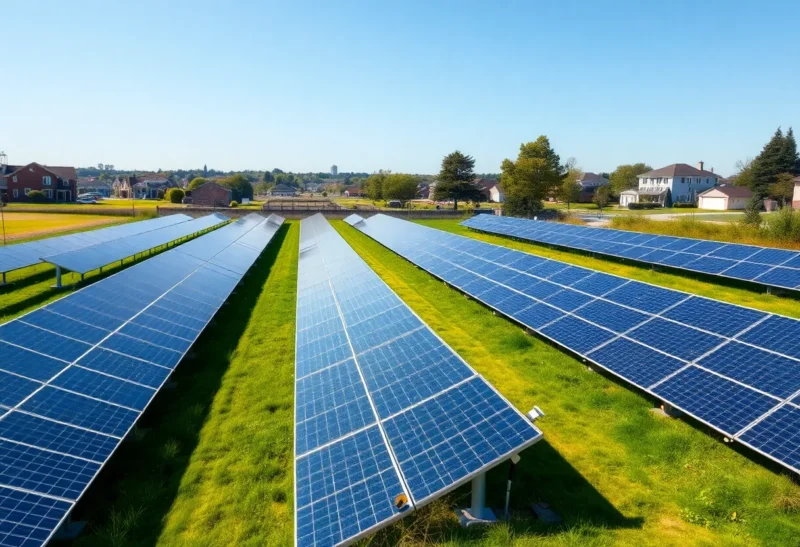
Community solar was designed to solve an obvious equity gap in the rooftop solar boom: most households can’t put solar panels on a roof they don’t own, don’t control, or don’t have suitable sun exposure for, which historically shut out renters, apartment dwellers, and anyone with a shaded or poorly oriented roof from directly benefiting from falling solar costs. The model lets subscribers buy or lease a share of a larger, offsite solar array and receive a corresponding credit on their utility bill for the electricity that share generates, with no rooftop installation required at all. Over a decade into meaningful community solar deployment across the US, the model has grown substantially, but a specific, well-documented problem has persisted stubbornly throughout that growth: the renters and lower-income households who arguably stand to benefit most from access to cheaper solar power remain significantly underrepresented among actual subscribers, relative to their share of the population.
Why the Basic Model Should Work for Renters in Theory
Community solar subscriptions are structurally well suited to renters in a way rooftop solar simply cannot be, because the subscription itself is tied to a person’s utility account rather than to ownership of a specific property, and most programs allow subscribers to transfer their subscription to a new address within the same utility service territory if they move — a genuinely important feature given how much more frequently renters relocate compared to homeowners. Subscription costs are also typically structured to be lower, at least on paper, than the significant upfront capital investment rooftop solar installation requires, since a subscriber is paying only for a proportional share of an already-built, utility-scale or mid-scale array rather than financing an entirely new installation on their own property.
Several states have specifically built low-income community solar carve-outs and requirements directly into their program regulations, recognizing this equity gap explicitly rather than leaving it purely to market forces, requiring a defined percentage of a project’s subscriber base or generation capacity to be reserved for low-income households, often at additional discounted rates beyond what market-rate subscribers pay, precisely because policymakers in these states recognized that community solar wouldn’t naturally reach lower-income and renter populations without deliberate structural requirements pushing developers in that direction.
Where the Actual Barriers Show Up
Despite these structural features and policy carve-outs, research from organizations tracking community solar program outcomes, including work published by the National Renewable Energy Laboratory and various state energy offices, has consistently found that program subscriber bases still skew meaningfully toward homeowners and higher-income households relative to renters and lower-income populations, even in states with explicit low-income set-aside requirements, revealing that the barriers preventing broader access run deeper than simply the basic economics of the subscription model itself.
Credit and income verification requirements represent one of the most concretely documented barriers. Many community solar developers historically required credit checks, minimum credit scores, or income documentation as part of subscriber enrollment, similar to a utility deposit or rental application, specifically to manage the developer’s own financial risk around subscriber non-payment or churn — but this creates a direct, structural exclusion for exactly the lower-income households that low-income carve-out programs are ostensibly designed to reach, since a meaningful share of that target population may not clear standard credit-check thresholds regardless of income level or ability to pay a modest monthly subscription fee reliably.
Awareness and outreach gaps compound this problem substantially. Community solar marketing and subscriber acquisition have often relied heavily on direct sales channels, online marketing, and word-of-mouth referral patterns that tend to reach homeowners and higher-income renters more effectively than lower-income renter populations, who may have less exposure to the specific marketing channels community solar developers have historically used, and who in some documented cases have reported simply never having heard that community solar was an option available to them at all, despite technically qualifying and having a program with available capacity operating in their utility territory.

The Landlord Problem Nobody Fully Anticipated
A specific structural barrier that has gotten increasing attention from researchers and program administrators is the split-incentive problem that arises for renters whose utility accounts, particularly for larger multifamily buildings, are managed or consolidated by a landlord or property management company rather than held individually by the tenant. In these arrangements, a tenant often doesn’t have their own direct-billed utility account to attach a community solar subscription credit to at all, meaning the actual decision to participate in community solar effectively shifts to the landlord, who typically has much weaker direct financial incentive to pursue a program whose savings would primarily benefit tenants rather than the property owner, particularly in buildings where utilities are bundled into rent rather than billed separately and transparently to each tenant.
This landlord-tenant split-incentive problem is a well-documented and persistent barrier across multiple categories of residential energy efficiency and clean energy programs beyond just community solar, and several state programs and nonprofit clean energy advocacy organizations have begun experimenting with structural fixes specifically targeting multifamily and rental housing — including specialized subscription models designed for building owners to enroll on behalf of tenants with savings structured to flow through more transparently, and in some cases direct outreach and technical assistance programs aimed specifically at property management companies and affordable housing developers rather than relying on individual tenant-level marketing and enrollment, which the underlying data suggests simply hasn’t been reaching this population effectively on its own.
What Program Design Changes Have Actually Moved the Needle
Programs that have demonstrated meaningfully better outreach and enrollment success among renters and lower-income households, according to comparative program evaluations that several state energy offices and research organizations have published, have generally shared a common pattern: replacing or supplementing credit-check-based enrollment with alternative eligibility verification methods, such as automatic qualification based on enrollment in existing means-tested public assistance programs, and pairing program marketing with trusted local community organizations and social service agencies already working directly with lower-income populations, rather than relying primarily on the commercial marketing channels that have historically driven most community solar subscriber acquisition.
The clearest lesson emerging from the programs that have moved past this equity gap most successfully is that simply building the low-income eligibility requirement into program regulation, while a genuinely necessary policy step, isn’t sufficient on its own — closing the actual participation gap has required deliberate, additional investment in outreach infrastructure and enrollment process redesign specifically built around the real practical barriers, credit checks, landlord-controlled accounts, and marketing-channel mismatches, that a purely eligibility-focused policy fix doesn’t automatically resolve by itself.