What It Takes to Keep a 1980s Mainframe Running in Production Today

Futurion Editorial
July 9, 2026
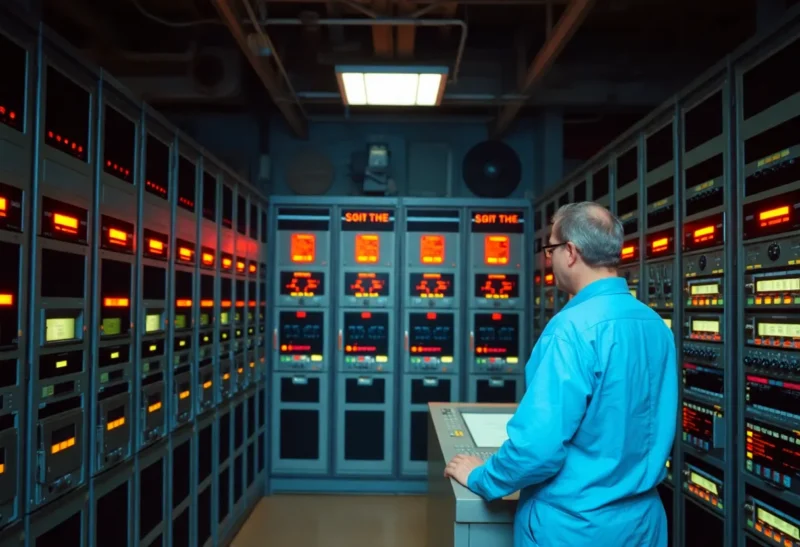
Somewhere in a data center, a mainframe running COBOL code first written in the 1980s is currently processing a meaningful share of the transactions that keep a major bank, insurance company, or government agency operating. This isn’t a rare curiosity — mainframe technology, and the decades-old software running on it, remains genuinely load-bearing infrastructure across banking, insurance, airlines, and government systems worldwide, and the specific, unglamorous work of keeping that infrastructure operational reveals a lot about how much of the modern digital economy quietly depends on technology most engineers assume was retired decades ago.
Why This Software Never Actually Got Replaced
The common assumption is that mainframes persist purely out of institutional inertia or an unwillingness to modernize, but the more accurate explanation is considerably more specific: mainframe systems, particularly IBM’s z/OS platform and its predecessors, were built from the ground up around a specific set of engineering priorities — extreme reliability, backward compatibility across decades of hardware generations, and transaction processing throughput at massive scale — that remain genuinely difficult and expensive to replicate on distributed, commodity hardware architectures, even with decades of subsequent cloud and distributed computing advancement.
Banking core systems represent the clearest example of why replacement has proven so difficult in practice. A bank’s core transaction processing system has typically accumulated decades of incremental modification, encoding not just basic account logic but an enormous, often poorly documented accumulation of specific business rules, regulatory compliance logic, and edge-case handling for scenarios that emerged gradually over thirty or forty years of real-world operation. Rewriting that system isn’t primarily a technical translation problem — it’s a knowledge archaeology problem, requiring institutions to fully rediscover and correctly reproduce decades of accumulated business logic that, in many documented cases, no single living employee fully understands anymore, since the people who originally wrote and understood the reasoning behind specific rules retired long ago.
The Talent Pipeline Problem That Actually Keeps People Up at Night
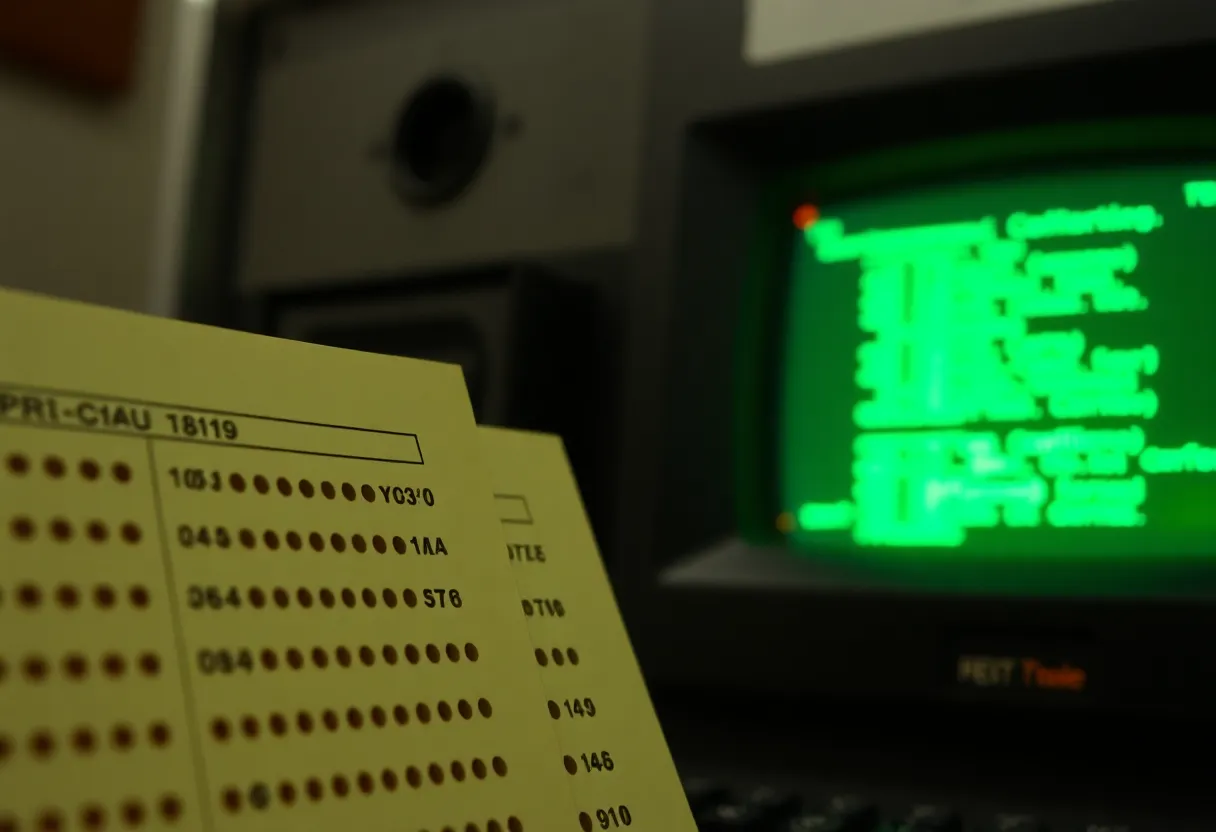
The single most cited operational concern across organizations running legacy mainframe systems isn’t the hardware or software itself — modern mainframe hardware is regularly refreshed and is, ironically, often more technically current than the software running on it — it’s finding people who actually know COBOL, the programming language most mainframe business logic was originally written in, well enough to maintain and extend decades-old codebases safely. COBOL was never a fashionable language even at its peak, and computer science curricula largely stopped teaching it decades ago, creating a genuinely severe talent pipeline problem as the generation of programmers who learned COBOL as their primary professional skill in the 1970s and 1980s has been retiring steadily for years, taking irreplaceable institutional knowledge about specific legacy systems with them.
Industry surveys of large COBOL-dependent organizations have repeatedly found a significant and, by most accounts, worsening skills gap, with many organizations reporting genuine difficulty finding qualified COBOL maintenance staff and, in some documented cases, resorting to rehiring retired former employees as contractors specifically to maintain institutional knowledge about systems that current staff don’t fully understand. Some universities and community colleges, along with a few dedicated corporate training partnerships, have specifically reintroduced COBOL coursework in recent years directly in response to this employer demand, treating it as a genuine, if unglamorous, career niche precisely because so few new programmers are entering the field relative to ongoing institutional demand for the skill.
Documentation, or the Profound Lack of It
Beyond the raw talent shortage, a huge amount of legacy mainframe maintenance work involves reverse-engineering the actual behavior and intent of existing code, because original design documentation is frequently incomplete, outdated relative to decades of subsequent modification, or simply lost entirely over a system’s operational lifetime. Organizations running critical legacy systems have increasingly turned to automated code analysis tools specifically designed to parse and map dependencies within large COBOL codebases, generating documentation and dependency visualizations that the original development process never produced, essentially performing archaeological reconstruction of a system’s actual logic from the code itself, since the people and documents that once explained that logic directly are no longer reliably available.
This documentation gap creates real, ongoing operational risk that goes beyond simple inconvenience: making even a modest change to decades-old business logic requires genuine confidence that the change won’t have unintended consequences elsewhere in a codebase that may span millions of lines of code with intricate, poorly documented interdependencies built up over decades of incremental modification by many different programmers, most of whom are long gone from the organization. Several high-profile system failures at major financial institutions and government agencies over the past decade have been traced, at least in part, to exactly this kind of unintended consequence from a change to poorly understood legacy logic, which has made institutions running these systems understandably conservative and risk-averse about any modification that isn’t strictly necessary.
The Modernization Middle Ground Most Institutions Actually Choose
Given both the difficulty of full replacement and the genuine risk of continuing to run increasingly poorly understood legacy systems indefinitely, most large institutions have settled on an incremental modernization strategy rather than either extreme. This typically involves building modern application programming interfaces and middleware layers around the legacy mainframe core, allowing new customer-facing applications, mobile banking apps, and modern integrations to be built using contemporary development practices and languages, while the actual core transaction processing logic continues running, largely untouched, on the mainframe underneath — an approach often described in the industry as wrapping rather than replacing legacy systems.
This strategy has allowed institutions to modernize the parts of their technology stack that customers and employees actually interact with directly, capturing most of the user-experience benefit of modernization, while deferring or entirely avoiding the far riskier and more expensive project of actually rewriting core transaction logic that, in many cases, still works correctly and reliably, just in a language and on a platform that has become progressively harder to staff and maintain over time. IBM itself has leaned into this reality commercially, continuing to invest in modern mainframe hardware, integrated AI-assisted COBOL code analysis tools, and Linux compatibility layers on its z-series mainframe line specifically to support this hybrid, incremental modernization pattern that the majority of its large enterprise customers have actually chosen, rather than betting its mainframe business on customers eventually abandoning the platform entirely.
Why Full Replacement Remains the Exception, Not the Rule
Organizations that have attempted full legacy mainframe replacement projects have frequently encountered project timelines and costs dramatically exceeding initial estimates, and a number of well-documented, publicly reported replacement projects at government agencies and large financial institutions have been delayed by years or ultimately abandoned partway through after cost overruns became politically or financially untenable, which has made the remaining large mainframe-dependent institutions understandably more cautious about attempting the same kind of full-replacement project themselves, having watched peers struggle with exactly this transition.
The realistic long-term trajectory for most of these systems is not a dramatic replacement event, but a slow, multi-decade process of the wrapping-and-modernizing pattern gradually extending further and further into what were previously considered untouchable core systems, as institutions build up enough confidence, tooling, and documentation over time to more safely modify or eventually retire specific pieces of legacy logic incrementally, rather than all at once. For the foreseeable future, a meaningful and largely invisible share of the transactions underpinning modern banking, insurance, and government services will keep running through code originally written for a very different technological era, maintained by a shrinking, increasingly specialized, and increasingly well-compensated group of people who understand a skill most of the industry has otherwise moved past.