The Actual Bottleneck in Recycling Lithium-Ion Batteries at Scale

Futurion Editorial
July 9, 2026
The math behind lithium-ion battery recycling looks, on paper, like an obviously good idea that should already be happening at massive scale: electric vehicle batteries reaching end of life contain genuinely valuable materials — lithium, cobalt, nickel, and copper — that are otherwise mined at real environmental and geopolitical cost, and recovering them from old batteries should reduce demand for new mining while solving a growing waste problem simultaneously. The reality, several years into a genuine wave of investment and new recycling capacity, is that the actual bottleneck limiting how much recycling happens isn’t collection, and it isn’t extraction technology. It’s something far less discussed: sorting and characterizing an enormously heterogeneous stream of batteries before any recycling process can even begin.
Why “Just Recycle the Batteries” Undersells the Problem
Battery recycling technology itself, at the core chemical extraction level, is genuinely mature and well proven. Both major recycling approaches — pyrometallurgy, which uses high-temperature smelting to recover metals, and hydrometallurgy, which uses chemical leaching processes to dissolve and separate valuable materials — have been refined over years of operation at real commercial recycling facilities, and recovery rates for key materials like cobalt and nickel from these processes are now quite high, often exceeding 90% for the most valuable materials when the process runs on a well-characterized, consistent battery input stream.
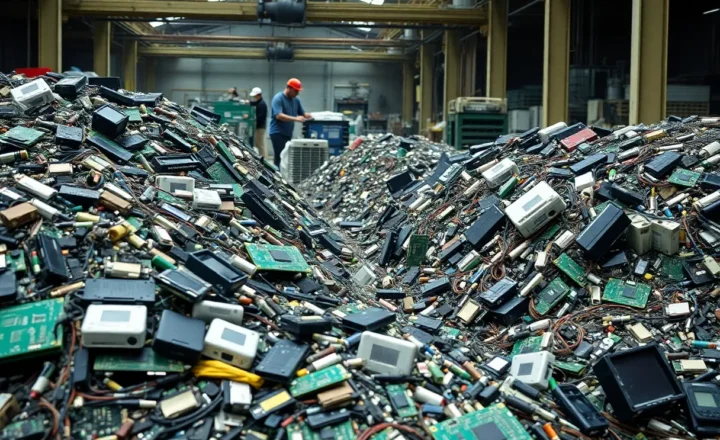
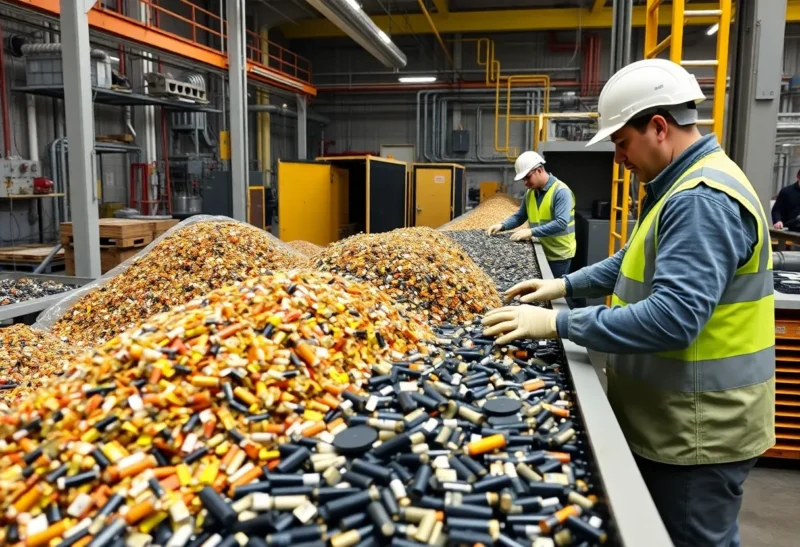
That last qualifier — a well-characterized, consistent input stream — is exactly where the industry’s actual bottleneck lives. Unlike, say, aluminum can recycling, where the input material is remarkably uniform regardless of source, lithium-ion batteries arriving at a recycling facility come in an enormous variety of chemistries (lithium iron phosphate, nickel manganese cobalt in several different ratios, nickel cobalt aluminum, and others), form factors (cylindrical cells, prismatic cells, pouch cells), states of charge, and states of physical damage or degradation, and each of these variables meaningfully affects both the safety of processing that specific battery and the optimal extraction process for recovering its materials efficiently.
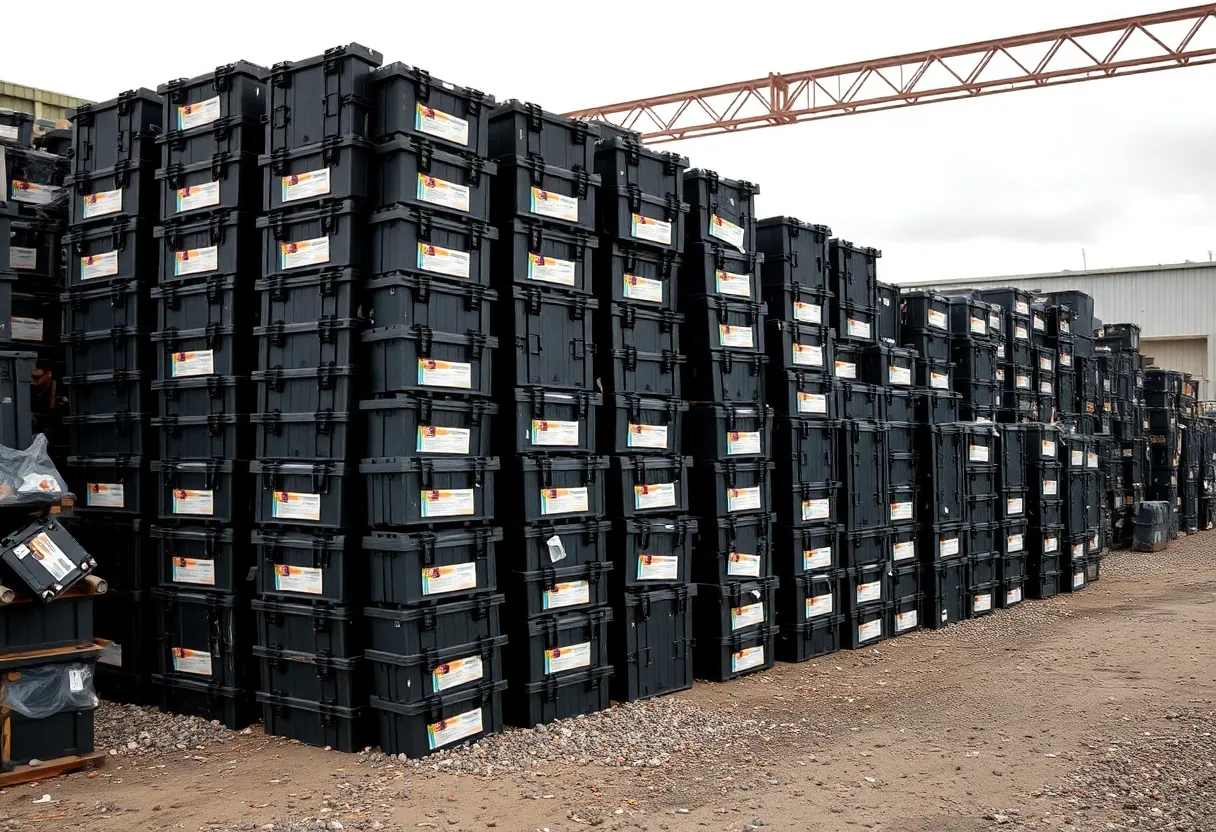
Why Sorting Batteries Is Genuinely Dangerous Work
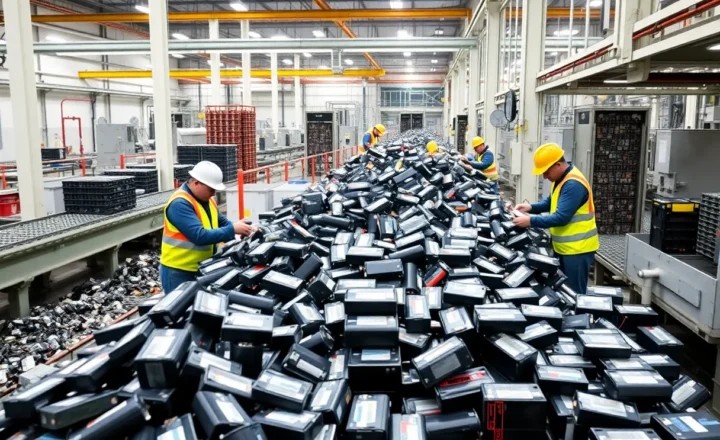
Before any material recovery can happen, batteries need to be safely discharged, disassembled to the appropriate level, and sorted by chemistry and condition, and every step of that process carries real safety risk that most people outside the industry don’t fully appreciate. A damaged or improperly discharged lithium-ion battery can enter thermal runaway — a self-sustaining, rapidly escalating overheating reaction that can produce intense fires difficult to extinguish with conventional firefighting methods, since the reaction can continue generating its own oxygen internally. Battery recycling and storage facility fires, including several high-profile incidents at facilities in the US and Europe over the past several years, have repeatedly demonstrated that mishandled batteries in the sorting and pre-processing stage represent a genuine, sometimes catastrophic, operational risk, not a theoretical one.
This safety risk directly drives cost and throughput limitations that are easy to underestimate from outside the industry. Facilities need to invest heavily in fire suppression infrastructure, careful battery state-of-charge verification before processing, and often manual or semi-manual sorting steps precisely because fully automating battery identification and safe handling across such a heterogeneous, unpredictable input stream remains a genuinely difficult and unsolved robotics and sensing problem, especially for the loosely characterized, mixed-source battery streams that come from consumer electronics recycling programs and end-of-life vehicles with unknown damage histories, as opposed to a cleaner, better-documented stream coming directly from an EV manufacturer’s own production scrap or from batteries the manufacturer has tracked from installation to end of life.
The Chemistry Diversity Problem Is Getting Worse, Not Better
A genuinely counterintuitive aspect of this bottleneck is that it’s becoming more difficult over time rather than easier, because battery chemistry diversity in the market has been increasing, not converging toward a single standard. The rapid growth of lithium iron phosphate (LFP) batteries — which contain no cobalt or nickel at all, and therefore have a fundamentally different, generally lower economic recovery value than nickel-cobalt-based chemistries — alongside continued use of various nickel-cobalt-manganese formulations in different ratios, plus emerging chemistries like sodium-ion entering the market at the low end, means recyclers now need to handle and correctly sort an expanding, rather than narrowing, range of input material types, each requiring somewhat different downstream processing to maximize material recovery and each carrying a different economic value proposition that affects whether a recycler can even profitably process a given batch at all.
This creates a genuinely awkward economic dynamic: LFP batteries, increasingly common in newer EVs specifically because they’re cheaper and don’t depend on cobalt supply chains, are also currently less economically attractive to recycle than nickel-cobalt chemistries, because they lack the high-value metals that make recycling profitable without additional subsidy or regulatory mandate. As LFP’s market share grows, driven by exactly the cost and supply chain advantages that make it attractive for manufacturing in the first place, the overall economics of battery recycling as a self-sustaining, profit-driven industry segment become somewhat less favorable on average, even as the sheer volume of end-of-life batteries needing processing keeps growing.
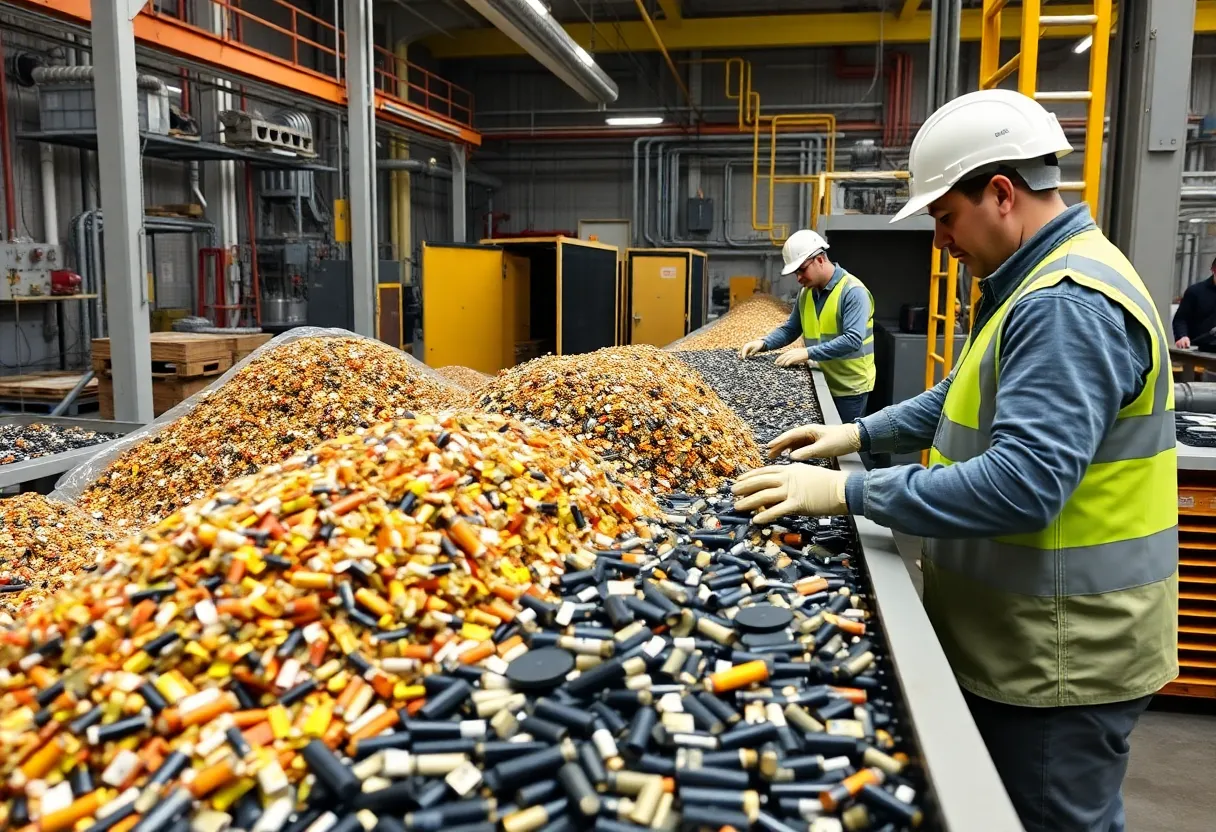
Where the Real Solutions Are Actually Coming From
The industry’s response to this sorting and characterization bottleneck has focused on a few concrete approaches rather than any single breakthrough technology. Battery passport and tracking initiatives — regulatory efforts, including provisions within the EU’s Battery Regulation that took effect starting in 2024 with phased implementation through the rest of the decade, requiring detailed digital records of a battery’s chemistry, manufacturing origin, and usage history to follow it throughout its life — aim to solve the characterization problem at the source, so that by the time a battery reaches a recycler, its chemistry and condition are already known from digital records rather than needing to be determined through slow, potentially hazardous physical inspection and testing at the recycling facility itself.
Automated sorting technology, including approaches using X-ray fluorescence, near-infrared spectroscopy, and increasingly machine-learning-based image recognition systems trained to identify battery types and physical condition from visual and sensor data, has genuinely improved recycling facility throughput in several documented commercial deployments, though full automation of the entire safe sorting and discharge process, end to end without any human intervention, remains a target the industry is still working toward rather than something broadly achieved today.
Design-for-recycling initiatives, where battery and vehicle manufacturers deliberately design battery packs to be easier to disassemble and sort at end of life — standardizing fastener types, improving labeling, and in some cases designing packs specifically around easier separation of different material streams — represent a slower but potentially more durable structural fix, since it addresses the heterogeneity problem partly at its source rather than only downstream at the recycling facility, though this requires manufacturer buy-in on design priorities that don’t directly benefit the manufacturer’s own near-term product goals, and adoption has been correspondingly uneven and gradual across the industry.
Why This Matters More as EV Adoption Grows
The volume of batteries reaching end of life is set to grow dramatically over the coming decade as the first large wave of mass-market EVs sold in the late 2010s and early 2020s reaches typical battery replacement or vehicle retirement age, and the industry’s ability to actually process that growing volume efficiently and safely, rather than simply landfilling or stockpiling batteries because sorting capacity can’t keep pace with collection volume, will meaningfully affect both the environmental case for EV adoption broadly and the raw material supply chain economics that determine future battery costs. The bottleneck being sorting and characterization rather than core extraction chemistry is, in some respects, good news — it means the fundamental technology to recover valuable materials already works well once a battery is properly identified and prepared. The harder, less glamorous problem the industry actually needs to solve is entirely about handling enormous, messy heterogeneity safely and efficiently at a scale that’s growing faster than sorting capacity currently can.