Why Vertical Aquaculture Startups Are Betting Against Ocean Fish Farms

Diego Almeida
July 9, 2026
Salmon farming built its modern industry on ocean net pens — enormous floating enclosures anchored in coastal waters, holding hundreds of thousands of fish in open water exchange with the surrounding sea. That model still produces the overwhelming majority of the world’s farmed salmon, but a growing wave of well-funded startups has bet the opposite direction entirely: land-based, fully enclosed recirculating aquaculture systems (RAS), sometimes stacked in vertical tank arrays inside industrial buildings far from any ocean at all. I spent eight years designing recirculating water systems for commercial fish farms before shifting into writing about this industry, and the bet these companies are making is a genuinely interesting one, with real advantages, real failures already on the record, and a cost structure that hasn’t yet resolved decisively in either direction.
What’s Actually Wrong With Ocean Net Pens
The case against traditional ocean-based salmon farming has built up over decades of well-documented environmental and biological problems. Open net pens allow direct water exchange with surrounding ocean, meaning fish waste, uneaten feed, and chemical treatments used to manage parasites and disease flow directly into the marine environment rather than being contained and treated — a genuine, measurable source of localized nutrient pollution and benthic (seafloor) impact around densely farmed coastal areas, well documented in environmental monitoring studies in Norway, Chile, and other major salmon farming regions.
Sea lice infestation has become perhaps the most costly recurring problem for the industry — these parasites thrive in the crowded conditions of net pen farming and have developed resistance to many chemical treatments over years of exposure, forcing producers into increasingly expensive management approaches (mechanical delousing, non-chemical treatments, cleaner fish that eat the parasites) that add real, escalating cost to conventional net pen operations. Escapes, where farmed fish breach a pen and enter the wild population, carry genetic and disease-transmission risks to wild salmon stocks that have made this a significant regulatory and conservation concern in several major farming regions, adding to a broader case that open ocean farming, while well-established and cost-effective in ways land-based systems still struggle to match, carries environmental costs that land-based systems are specifically designed to eliminate.
How Land-Based RAS Systems Actually Solve This
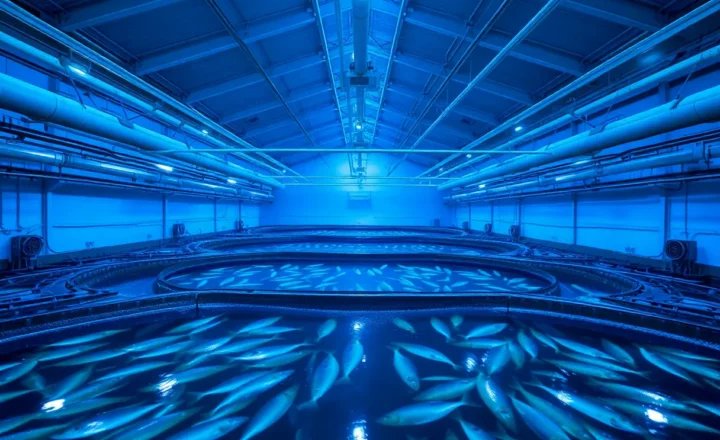
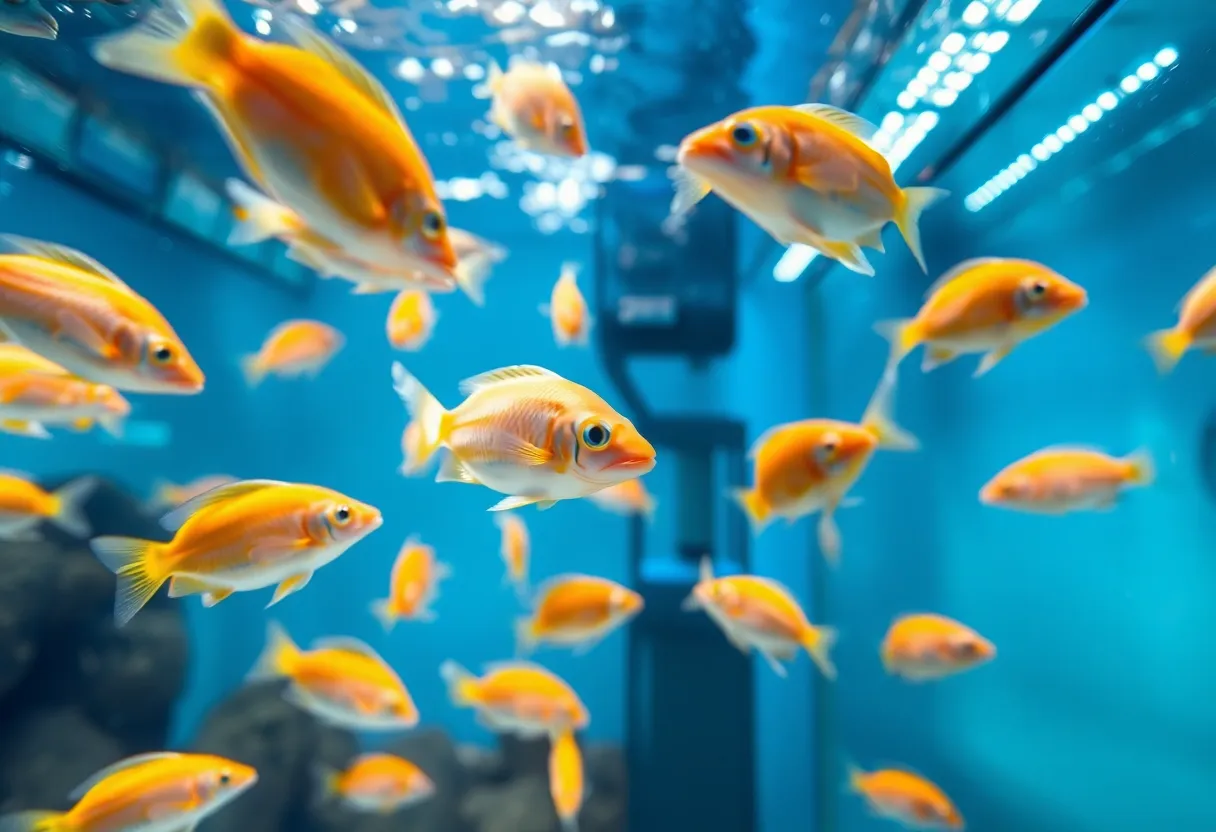
A recirculating aquaculture system works by continuously filtering and treating water within a closed loop rather than exchanging it with the open ocean — mechanical filtration removes solid waste, biological filtration (using beneficial bacteria to process ammonia and other dissolved waste products) manages water chemistry, and the system recirculates the same treated water continuously, needing only a small fraction of fresh water makeup compared to the volume that would be required in an open, non-recirculating system. This containment directly solves the pollution and escape problems inherent to open net pens: there’s no direct discharge into a natural water body, no possibility of farmed fish escaping into wild populations, and disease and parasite management happens in a fully controlled environment isolated from wild fish populations and marine conditions entirely.
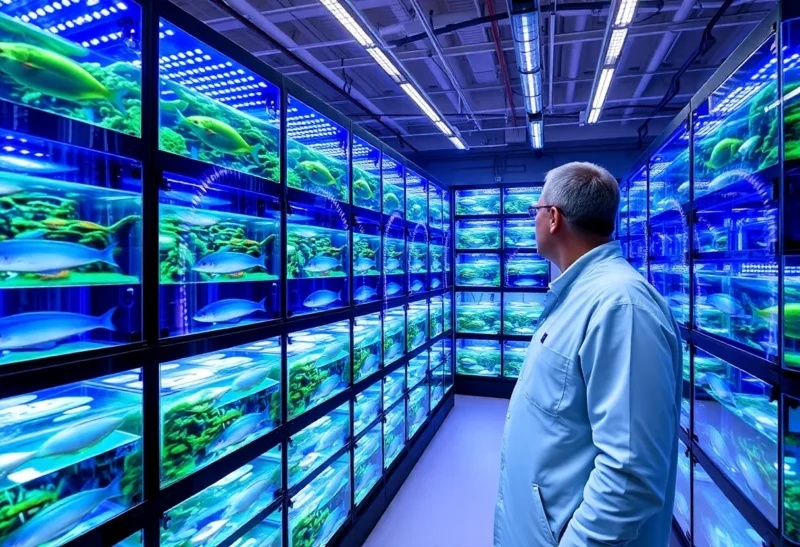
The “vertical” framing that some of the more ambitious startups use refers to stacking multiple tank levels within a single building footprint to maximize production density per square foot of expensive real estate, similar in logic to vertical farming for produce, though the water engineering and life-support system complexity involved in keeping fish alive is considerably more demanding than growing plants, given how quickly water quality problems can become lethal for a dense fish population if any part of the filtration or oxygenation system fails.
Why This Hasn’t Been a Clean Win
The industry’s most prominent land-based salmon venture, Atlantic Sapphire’s Bluehouse facility in Florida, has become something of a cautionary case study for the sector’s real operational risk. The company suffered multiple significant fish die-off events between 2020 and 2022, driven by biofilter failures and water quality problems that killed hundreds of thousands of fish and forced the company to repeatedly revise production targets and raise additional capital to stay operational. These weren’t minor operational hiccups — they were exactly the kind of catastrophic failure mode that RAS critics have long warned about: land-based systems concentrate enormous biological and financial risk into a single facility’s engineering reliability, in a way that distributed ocean net pens, spread across multiple sites, don’t face to the same degree, since a single site’s problem doesn’t necessarily cascade across an entire company’s production.
Capital costs for RAS facilities are also substantially higher than comparable-capacity ocean net pen operations — building an industrial facility with sophisticated water treatment, oxygenation, and monitoring systems, plus the real estate and construction costs of large indoor tank infrastructure, requires significantly more upfront capital per unit of eventual fish production than anchoring net pens in coastal waters. Several well-funded RAS startups have faced serious financial strain balancing this capital intensity against production timelines that, as Atlantic Sapphire’s experience shows, don’t always proceed as smoothly as initial projections suggested to investors.
Where the Economics Actually Favor Land-Based Systems
Despite these real setbacks, the economic case for RAS isn’t purely aspirational — it has genuine advantages in specific circumstances that explain why investment has continued despite visible failures. Proximity to end markets is the most straightforward: a RAS facility can be built near major consumption centers (Atlantic Sapphire’s Florida site was specifically chosen for proximity to the large U.S. East Coast seafood market), dramatically cutting the transportation time, cost, and carbon footprint of getting fresh fish to market compared to farming in Norway or Chile and air-freighting product to American or European retailers and restaurants, a cost and freshness advantage that’s become more commercially significant as consumers increasingly value shorter, more traceable supply chains.
Biosecurity and disease control also cut cleanly in RAS’s favor in a way that partially offsets its higher capital cost — a fully enclosed system with controlled water intake faces essentially none of the sea lice and open-water disease transmission risk that drives significant recurring cost in ocean net pen operations, and companies operating RAS systems don’t need the chemical treatment regimens or face the same regulatory scrutiny around parasite management that has become an escalating cost burden for conventional operations in several major farming regions.
The Species-Specific Reality
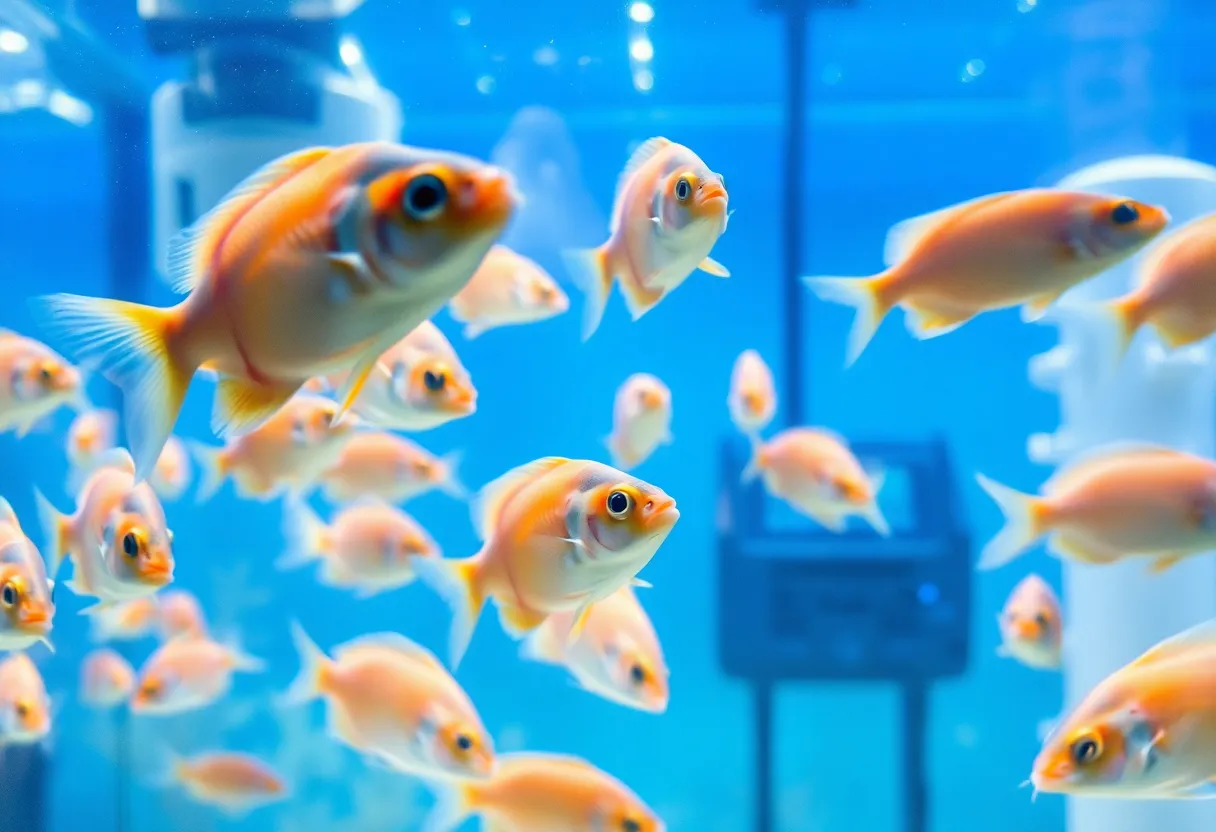
Salmon has attracted the most investment and press attention, but it’s actually one of the harder species for RAS to farm economically, given how large salmon grow and how much biomass and correspondingly demanding water treatment capacity that requires relative to the fish’s market value. Other species have found cleaner economic fits for land-based systems: barramundi, tilapia, and shrimp — species with faster growth cycles, higher stocking density tolerance, and in shrimp’s case, an existing strong market precedent for indoor and semi-controlled farming systems even before the current RAS investment wave — have generally produced more consistent, less dramatic commercial results than the higher-profile, harder salmon bet.
This species-specific variation matters for how to actually read the sector’s overall track record: it’s not accurate to say “land-based aquaculture works” or “land-based aquaculture doesn’t work” as a blanket statement, because the economics vary substantially by species, and some of the sector’s most visible failures have specifically involved the hardest species to make the model work for, while less publicized successes in other species suggest the underlying engineering approach has more consistent commercial viability than the salmon-focused headlines alone would suggest.
Where This Actually Settles
The realistic trajectory isn’t land-based systems replacing ocean net pen farming wholesale — the capital cost and operational risk profile documented by Atlantic Sapphire and others make that an unlikely near-term outcome for salmon specifically, and ocean farming’s lower capital intensity will likely keep it the dominant model for high-volume, cost-sensitive segments of the market for years to come. What’s more plausible is continued growth of land-based systems in a specific niche: proximity-to-market premium products, species with better-suited biology for indoor high-density farming, and markets where environmental regulation or consumer preference for traceable, non-ocean-impact seafood commands a price premium sufficient to offset the higher production cost.
That’s a narrower, more qualified success story than the “future of seafood” framing some of the sector’s investor pitches have used, but it’s the one actually supported by the mixed track record so far — genuine engineering advantages for specific problems, genuine catastrophic failure risk that’s already materialized publicly, and an economic case that works cleanly for some species and struggles for others, rather than a settled verdict on the technology as a whole.