The Engineering Behind Modern Elevators: Why They’re More Complex Than They Look

David Shaw
July 7, 2026
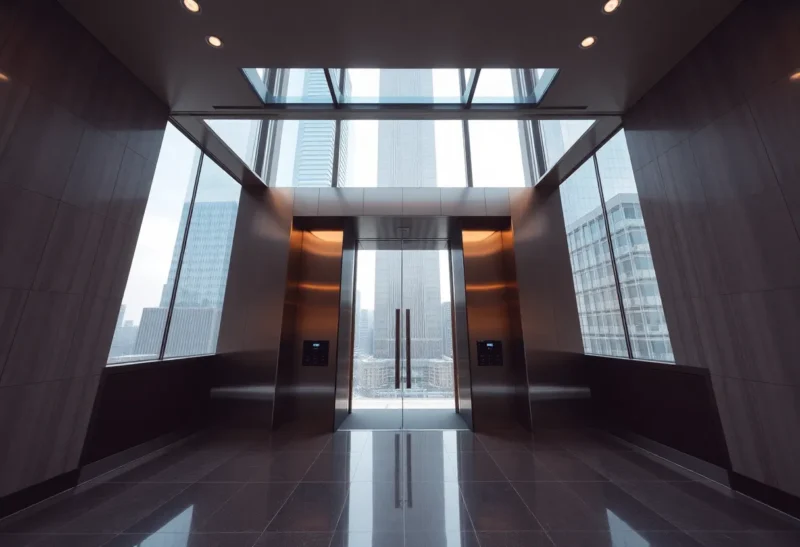
Elevators are among the most used pieces of machinery in urban life—the average person in a city interacts with them dozens of times per week—and almost entirely invisible as engineering objects. They’ve become so reliable and ordinary that most users think of them as simple: a box that goes up and down. The reality involves precision mechanical engineering, multiple independent safety systems, sophisticated scheduling algorithms, complex electrical and control systems, and a history of innovation that stretches from Elisha Otis’s safety elevator demonstration in 1854 to today’s ropeless magnetic levitation systems in supertall skyscrapers.
The Basic Mechanism: Traction vs. Hydraulic
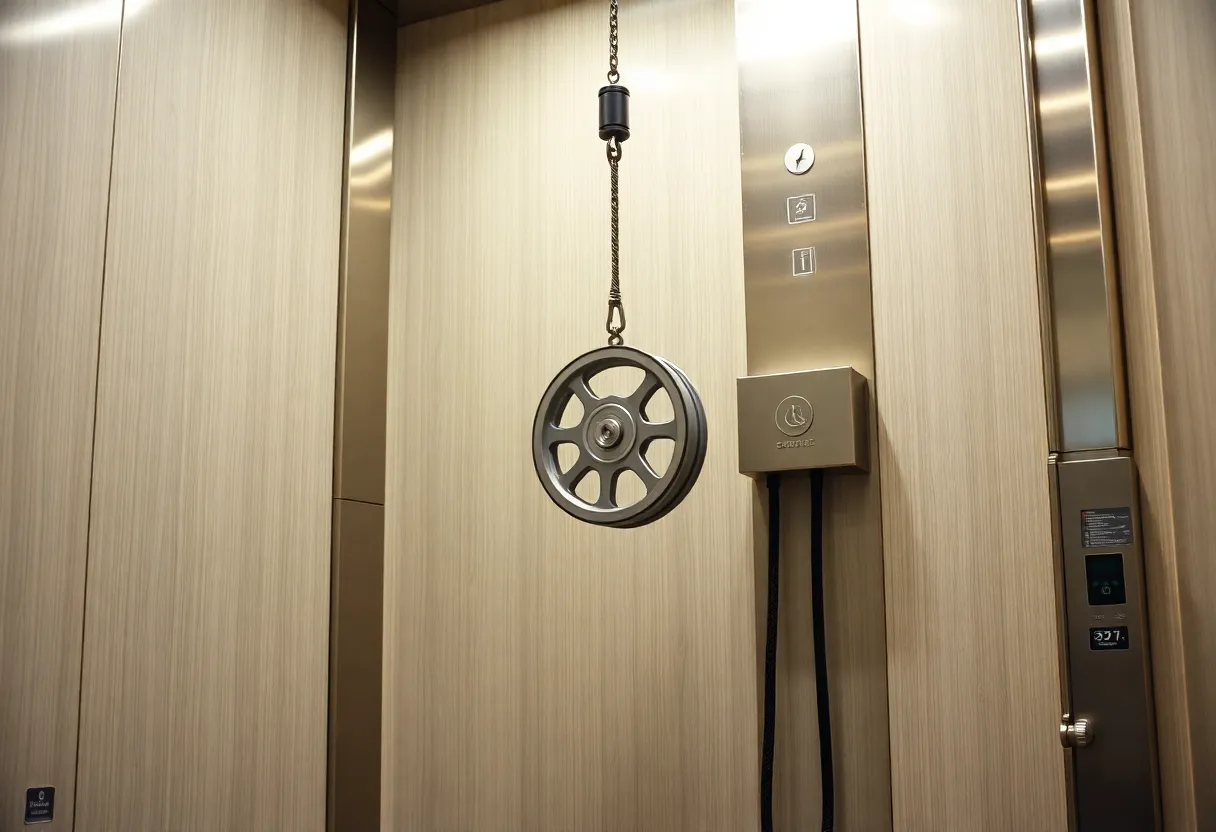
Most elevators in mid-rise and high-rise buildings use traction drive: steel ropes (typically multiple parallel cables for redundancy) run over a grooved sheave (pulley wheel) driven by an electric motor in the machine room above the shaft. The elevator car is connected to the ropes on one side; a counterweight equal to the car’s weight plus approximately 40–50% of the car’s rated capacity hangs on the other side. The counterweight reduces the energy required to move the car—when the car goes up with a full load, the counterweight descends and partially balances the load; when the car goes down empty, the counterweight’s descent helps drive the motor’s regeneration.
Friction between the ropes and sheave grooves provides the driving force—unlike a pulley where ropes slide over a drum, the sheave’s grooves have a specific cross-section that creates a self-limiting friction contact. Modern high-rise elevators use flat, coated steel belts rather than round ropes, which allows smaller sheave diameters, lighter counterweights, and more compact machine rooms.
Hydraulic elevators use a hydraulic cylinder directly driving the car, typically in low-rise applications (up to 5–6 floors). They require a pump room at the base with hydraulic fluid, are less energy-efficient than traction systems, and have practical height limits. They’re common in smaller buildings where the lower installation cost outweighs the efficiency disadvantage.
The Safety System: Multiple Redundant Failsafes
Elevator safety is built around the principle that no single failure should result in an uncontrolled fall. The multi-layer safety system is why elevator failures resulting in falls are extremely rare—the statistics show commercial aviation-class safety levels per passenger-mile traveled.
Governor and safety gear: A separate device (the governor) monitors car speed independently of the drive system. If the car moves faster than the maximum rated speed, the governor triggers a mechanical safety brake (the “safety gear”) clamped to the guide rails—regardless of whether the drive system has failed. The safety gear is a spring-loaded wedge mechanism that engages the guide rails if triggered, bringing the car to a controlled stop.
Buffer system: At the bottom of the shaft, spring or hydraulic buffers absorb the energy of the car in the event of an overrun—if the car passes the bottom floor stop, buffers provide a cushioned final stop rather than a hard impact.
Electromagnetic brakes: The traction drive motor has electromagnetic brakes that engage when power is removed—fail-safe design means the brakes are held open by electrical power and close automatically if power fails. Loss of power causes the brakes to engage, not to release.
Multiple rope redundancy: The elevator industry standard requires sufficient ropes that any single rope’s failure doesn’t cause unsafe loading. Codes typically require ropes to carry several times the maximum load without failure. Testing involves individual rope load-to-failure; the working load is a fraction of the breaking load.
Door interlocks: Elevator doors have interlocking systems that prevent the car from moving unless all doors are fully closed and locked. Landing doors (the floor-level doors) have mechanical interlocks requiring a key or a signal from the car door mechanism to open them—they cannot be opened from the landing while the car is elsewhere in the shaft.
Control Systems and Dispatching
The scheduling logic for elevator systems in high-traffic buildings is a genuinely complex optimisation problem. A single elevator managing a small building’s traffic is straightforward; a bank of 10 elevators in a 50-floor office tower serving variable traffic patterns (morning rush upward, lunch hour two-way, evening rush downward) requires algorithms that minimise average wait time, reduce energy consumption, and handle edge cases without starving any floor of service.
Early elevator control was collective control: pressing a button registered the call, and the elevator responded to all calls in sequence as it passed their floors, reversing direction when no calls remained ahead of it. This works for simple cases but doesn’t optimise across multiple elevators.
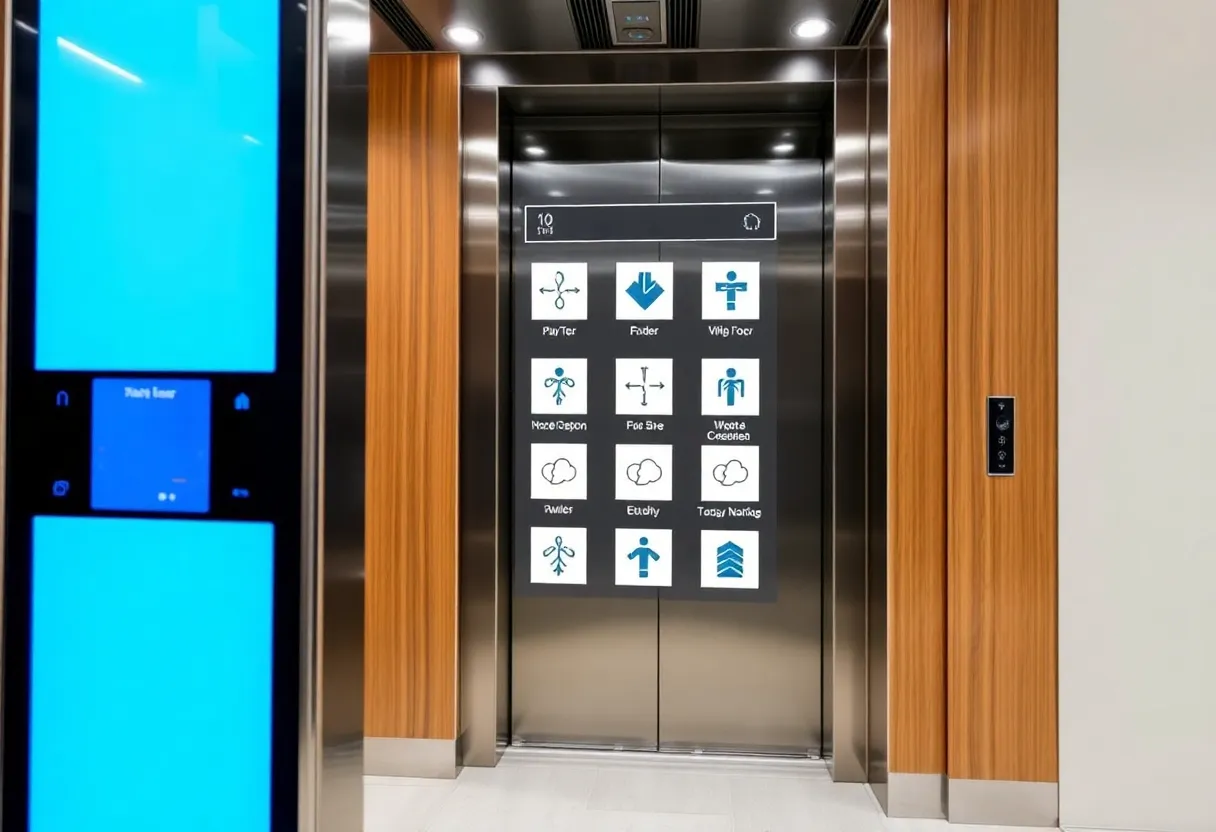
Modern high-traffic systems use destination dispatch: instead of pressing up/down buttons at each floor, passengers enter their destination floor at a lobby kiosk or touchscreen panel. The system assigns passengers to specific elevators based on their destination—grouping passengers going to nearby floors in the same car, reducing the number of stops, and distributing load across the elevator bank optimally. Destination dispatch reduces average wait times and improves throughput substantially compared to conventional control.
Machine learning has entered elevator dispatching in larger installations: systems that learn traffic patterns for specific buildings (Monday mornings are heavy upward traffic; Thursday evenings have high outbound demand; the 15th floor always shows unusual lunchtime traffic) and pre-position elevators accordingly before demand peaks.
High-Rise Engineering Challenges
Supertall skyscrapers (600+ metres, like Burj Khalifa or the under-construction Kingdom Tower in Saudi Arabia) present elevator engineering challenges that mid-rise buildings don’t encounter.
Rope weight becomes significant at extreme heights—a steel rope that serves a 500-metre shaft weighs tons, and the weight of the rope itself becomes a significant portion of the total load. Compensation chains (heavy chains hung below the car and counterweight to equalise rope weight as the car moves) address the changing rope weight distribution. High-strength, lightweight materials (carbon fibre core ropes, flat belt systems) reduce this problem.
Wind sway affects elevator shafts in supertall buildings—the building itself moves, and the elevator shaft moves with it. Elevator guide rails and guide shoes must accommodate this movement without causing uncomfortable ride quality or mechanical stress. Active damping systems and guide rail designs that allow controlled flex address sway in the tallest buildings.
Sky lobbies allow passengers to transfer between low-rise and high-rise elevator banks in supertall buildings rather than running single elevator shafts from ground to peak. KONE’s UltraRope (a carbon fibre elevator rope with a polymer coating) and Otis’s Gen3 system address the weight and length challenges of very tall shafts.
The Ropeless Frontier
ThyssenKrupp’s MULTI system (now owned by TK Elevator) demonstrated a ropeless, linear-motor-driven elevator that can move multiple cars in the same shaft simultaneously, including horizontally. Rather than a single car per shaft limited by rope mechanics, MULTI uses magnetic levitation (linear induction motors driving the cars along the shaft wall) allowing multiple cars per shaft and shaft layout flexibility that rope systems can’t achieve.
MULTI is not yet widely deployed commercially—it’s been demonstrated in a test tower and is being offered for large new construction projects. Its adoption depends on the economics of very tall buildings where the space efficiency gains (fewer shafts serving more traffic) justify the premium. It represents the most significant departure from traction elevator architecture in over a century, enabled by the same maglev technology used in high-speed rail.