How Modern Smart Glasses Work—And What’s Actually Holding Them Back

Dex Hartmann
July 7, 2026
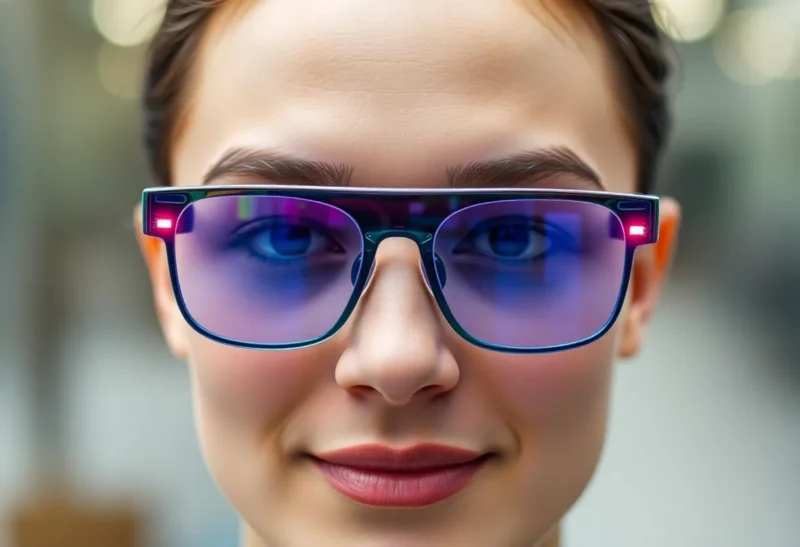
Smart glasses occupy a peculiar position in consumer technology: repeatedly announced as the next major platform, regularly failing to achieve mainstream adoption, but clearly improving every generation in ways that make the eventual tipping point feel plausible rather than hypothetical. Understanding why smart glasses are hard—and why they keep getting closer without quite arriving—requires understanding the specific technical problems they’re solving and which of those problems remain unsolved.
Two Types of Smart Glasses
The term “smart glasses” covers products with fundamentally different approaches, worth separating before discussing what makes each hard.
Camera and audio glasses (what Meta Ray-Ban Smart Glasses represent) integrate a camera, microphones, speakers, and a processor into glasses frames without any display element. They capture photos and video, play audio, and run AI features like real-time scene description and voice assistants. The form factor is close to normal glasses because there’s no display to engineer. These are the devices people actually wear daily in 2026.
AR waveguide glasses (what Apple Vision Pro, Microsoft HoloLens, Google Glass originally attempted, and what companies like Snap, Meta’s Orion prototype, and various startups are working toward) project digital information directly onto the user’s field of view using optical waveguide technology. These are the “true AR glasses” that overlay digital content on the real world. These are the devices that remain genuinely difficult.
How Camera and Audio Glasses Work
The engineering challenge in camera-and-audio glasses is a packaging problem: fitting a camera (and the necessary compute, battery, and communication hardware) into glasses frames without making them look like a device rather than eyewear. The camera is typically mounted in the frame near the temple, with the forward-facing angle providing a first-person view. The compute runs on the glasses’ embedded processor, with heavier workloads offloaded to a paired smartphone or cloud.
Meta’s second-generation Ray-Ban Smart Glasses added a 12 MP camera and integrated Meta AI—allowing users to ask the glasses to describe their surroundings, identify objects, read text aloud, or answer questions based on visual context. This was a meaningful step beyond the first generation’s simpler feature set, and the adoption numbers were substantially higher as a result. The form factor genuinely passes as normal glasses for most wearers, which solves one of the fundamental adoption barriers.

The battery life challenge in camera-and-audio glasses is real but manageable—a full day of moderate use with current hardware. The privacy challenge is more complex: glasses-mounted cameras that can capture video and photos without the conspicuousness of a raised phone are a social and legal concern that hasn’t been resolved cleanly.
How AR Waveguide Displays Work
Projecting digital images into the user’s field of view while they also see the real world through the lens requires light to enter from a projector, travel through the lens, and reach the eye from the correct angle to appear as an image at a specific perceived distance. Optical waveguides are the dominant approach: a transparent substrate with internal structures (diffraction gratings) that couple light from a projector into the waveguide and then redirect it toward the eye at the output side.
The engineering constraints are severe. The waveguide must be optically transparent (you’re still looking through it at the real world), thin enough to fit in normal glasses frames, and able to carry a full-colour image with sufficient brightness across a useful field of view. Each of these constraints fights against the others: wider field of view requires more complex waveguide structures that are harder to manufacture thin; higher brightness requires more light from the projector, requiring more battery; optical colour accuracy in a diffractive structure is difficult because diffraction angle is wavelength-dependent.
Current state-of-the-art waveguide AR glasses (heading into 2026, with products from Snap, prototype disclosures from Meta’s Orion, enterprise glasses from Vuzix and RealWear) achieve field-of-view ranges of approximately 40–50 degrees diagonal for the image overlay, with brightness adequate for indoor use but struggling in direct sunlight. The weight required for the projector module, battery, and compute typically results in glasses heavier than normal frames—pushing devices toward a “sports frame” or “larger frame” aesthetic that many users find conspicuous.
What’s Actually Holding AR Glasses Back
The primary barriers to mainstream AR waveguide glasses in 2026 are: field of view, battery, weight, and compute integration.
Field of view is the most visible limitation in user experience. A 40-degree FOV image overlay feels like looking at a display floating in the periphery of your vision rather than a seamlessly integrated augmented experience. Achieving human-comparable FOV (roughly 120 degrees diagonal) would require waveguide structures that manufacturing technology can’t yet produce cost-effectively at scale.
Battery is constrained by frame weight and the high power demands of the projector and compute. Current AR glasses run projectors and processors that require more battery capacity than can be packaged in lightweight frames without an external battery pack. The result is either short session lengths (1–3 hours) or a tethered setup with an external compute/battery puck.
Compute and AI integration is improving rapidly, specifically because the same advances in edge AI inference that benefit other wearables (efficient neural network inference on low-power chips) reduce the compute required for scene understanding, object detection, and contextual AI features. Apple’s chip work for Apple Vision Pro, Qualcomm’s Snapdragon AR chips, and purpose-built AR SoCs from startups are pushing this forward.
Social acceptability remains an underrated barrier. Google Glass’s failure was partly technical but substantially social—the device looked like a device in a way that marked wearers as conspicuous, and the camera capability created real social friction. The successful path to mainstream AR glasses likely requires the form factor to first become visually indistinguishable from normal eyewear, which demands advances in the display and packaging technology that are still in progress.
The Trajectory
The pattern in smart glasses development is clear: camera-and-audio glasses are already viable and being adopted; AR waveguide glasses are improving measurably each generation but remain constrained by physics and manufacturing challenges that don’t resolve on a single product cycle. The most credible forecasts suggest consumer-ready AR waveguide glasses—with field of view, battery life, and form factor acceptable to non-enthusiast users—are likely 3–5 years out from 2026, contingent on waveguide manufacturing and battery density continuing to improve. That estimate has been given before and will probably be given again. The rate of progress makes it increasingly plausible rather than perpetually optimistic.