How Bluetooth LE Audio Is Quietly Changing Wireless Audio

Soren Bell
July 7, 2026
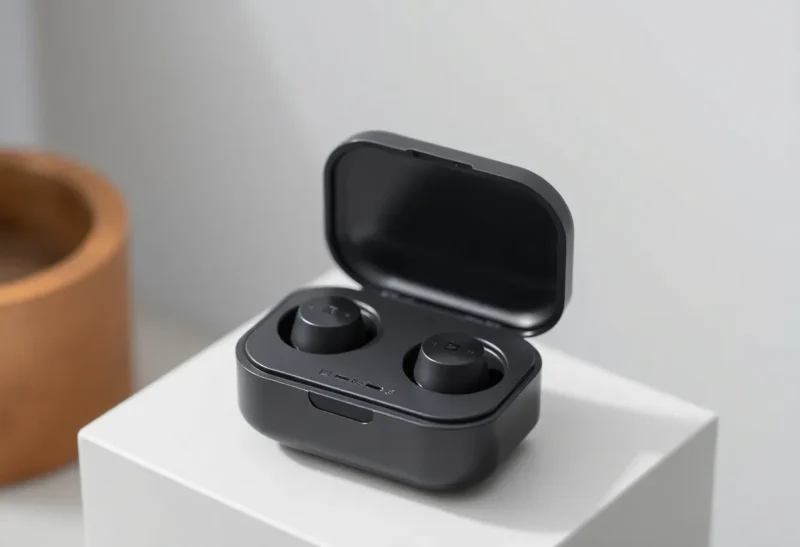
Bluetooth audio has had the same fundamental architecture for most of its existence: a single source device (a phone) connects to a single sink device (a headphone or speaker), audio is compressed using the A2DP (Advanced Audio Distribution Profile) and SBC codec (or optionally aptX or AAC), and delivered through a relatively simple connection. This architecture has worked well enough, but it has limitations—battery drain, audio quality constraints, inability to do certain things at all—that are now being addressed by a new standard: Bluetooth LE Audio.
LE Audio is not an incremental update. It’s a re-architecture of how Bluetooth handles audio, built on Bluetooth Low Energy (BLE) rather than the Classic Bluetooth used by A2DP. The consequences are practical and meaningful, even if LE Audio’s roll-out has been quiet enough that many consumers don’t know it’s happening.
The Core Technology: LC3 and Isochronous Channels
LE Audio introduces two foundational technologies: the LC3 codec and isochronous channels.
LC3 (Low Complexity Communication Codec) is the new baseline audio codec for LE Audio, replacing SBC. At equivalent bitrates, LC3 produces significantly better audio quality than SBC—benchmark testing shows LC3 at 160 kbps matching or exceeding SBC at 320 kbps in perceived audio quality. This means higher quality audio at lower data rates, which translates to lower power consumption for the same perceptual audio quality. For earbuds where battery life is constrained by the size of the case, this efficiency improvement matters concretely.
LC3 also handles packet loss more gracefully than SBC. Wireless environments are inherently lossy—packets are dropped when interference is high or signal is marginal. SBC audio that experiences packet loss produces audible glitches and pops; LC3 includes better error concealment that masks packet loss more smoothly. This is particularly relevant for audio in challenging environments (crowded public spaces, heavy Wi-Fi environments, areas with interference).
Isochronous channels are a new type of Bluetooth connection that provides time-synchronised, periodic data transmission—designed specifically for audio. Classic Bluetooth’s audio delivery was not originally engineered with tight timing guarantees; LE Audio’s isochronous channels provide the synchronisation precision needed for multi-device audio without the timing drift that caused problems in earlier multi-speaker Bluetooth implementations.
Auracast: The Broadcast Audio Standard
The most distinctive new capability enabled by LE Audio is Auracast—Bluetooth’s broadcast audio standard. Auracast allows a single audio source to broadcast to an unlimited number of receivers simultaneously, without pairing. Any Auracast-compatible receiver within range can pick up the stream.
The use cases this enables are genuinely new for Bluetooth. A gym with Auracast-enabled TVs on the floor could broadcast audio from multiple screens simultaneously; gym members could tune their compatible earbuds to any screen’s audio without the gym needing to pair with individual devices. An airport could broadcast gate announcements on an Auracast channel that travellers with compatible hearing aids or earbuds receive directly. A cinema could offer audio description or alternative language tracks on Auracast channels that users opt into. A conference hall could broadcast speaker audio to all attendees without an FM receiver or infrared distribution system.
The “loop” functionality used in many public venues—systems that transmit audio inductively for hearing aid users—is an aging technology with range and quality limitations. Auracast is the modern equivalent with significantly better coverage, quality, and device compatibility, and it’s been designed to integrate with modern hearing aids and earbuds rather than requiring dedicated legacy hardware.
Hearing Aid Integration
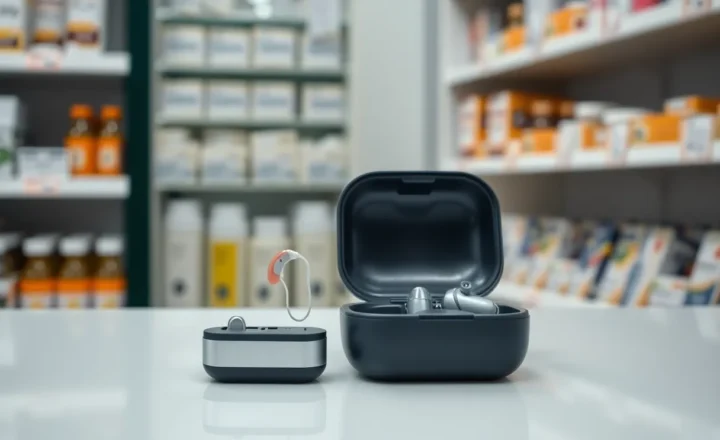
The accessibility dimension of LE Audio is significant. The FDA cleared a category of over-the-counter hearing aids in 2022 in the US, and LE Audio enables a new class of Bluetooth-connected hearing aids that can receive audio directly from phones, TVs, and Auracast sources without requiring proprietary connectivity protocols.
Previously, premium hearing aid brands (ReSound, Phonak, Oticon) had developed proprietary Bluetooth connectivity for their own ecosystems—GN Audio’s ASHA protocol, Phonak’s own approach—which worked with specific phone platforms but wasn’t universal. LE Audio provides a standardised path for hearing aids to connect to any LE Audio source, and for Auracast to deliver broadcast audio directly to hearing devices in public spaces.
This represents a meaningful improvement in accessibility infrastructure: a user with a LE Audio hearing aid walking into an Auracast-equipped venue can receive that venue’s audio without carrying a streamer device, without pairing, and without using a proprietary app. The integration of hearing support into the general wireless audio ecosystem rather than treating it as a separate system is both practically useful and symbolically important.
Multi-Stream and Multi-Device Audio
LE Audio supports coordinated multi-stream audio—allowing a source to deliver synchronised audio streams to multiple independent receivers simultaneously. For true wireless stereo earbuds, this means both earbuds can receive independent synchronised streams directly from the source rather than relying on the primary earbud to relay audio to the secondary earbud over a separate connection. This architecture reduces latency, improves synchronisation between channels, and reduces the battery asymmetry problem (where the primary earbud drains faster because it handles the relay connection).

Multi-device audio—sharing a single audio stream across multiple paired devices, or switching seamlessly between audio sources as activity context changes—also benefits from LE Audio’s isochronous channel architecture. The seamless handoff between devices (phone to laptop to TV) that some premium earbuds now offer becomes more reliable and lower-latency with LE Audio as the underlying mechanism.
The Rollout and Current State
LE Audio adoption has been measured rather than rapid. The specification was finalised in early 2022, and the first consumer devices with LE Audio appeared in 2023–2024. Samsung’s Galaxy Buds2 Pro added LE Audio support via firmware update; several Android flagships added LE Audio support in software; Qualcomm’s QCC5100 and QCC3100 chipsets for earbuds support LE Audio. Apple, notably, has not yet announced LE Audio support in AirPods as of mid-2026—the AirPods ecosystem uses proprietary Apple protocols that deliver many of the same functional benefits through Apple’s own implementations.
Auracast deployment in public venues has begun slowly—some airports, retail locations, and conference venues in Europe and the US have installed Auracast-capable infrastructure, and smartphone support for receiving Auracast broadcasts has been added to several Android flagship devices. The infrastructure build-out that would make Auracast ubiquitously useful will take years.
The trajectory is clear even if the pace is measured: LE Audio addresses real limitations of classic Bluetooth audio with better efficiency, better quality at lower bitrates, broadcast audio capability, and improved accessibility integration. The technology is deployed, actively improving, and will characterise most premium wireless audio over the next five years—whether consumers recognise the name or not.