Thread vs Zigbee in 2026: Which Smart Home Protocol Actually Wins?

Ethan Cole
July 7, 2026
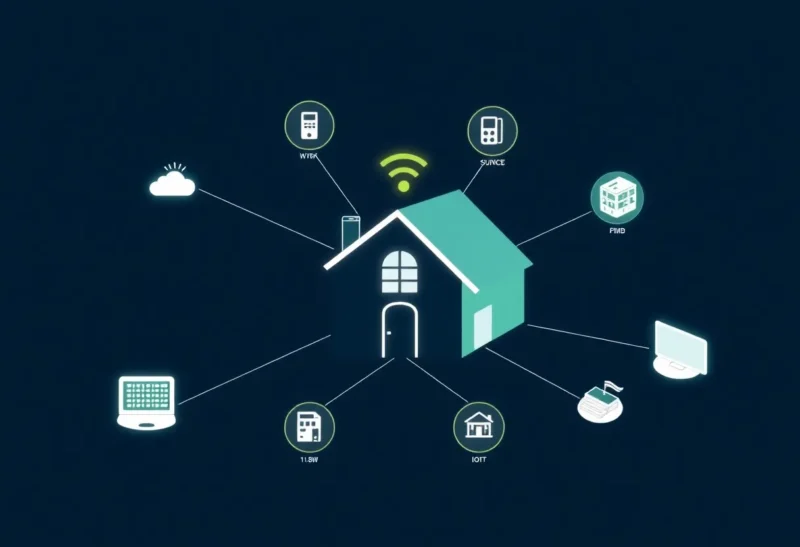
Zigbee has been the dominant local wireless protocol for smart home devices for over a decade. Thread has been coming to replace it—or supplement it, or coexist with it, depending on who you ask—since around 2019. In 2026, with Matter now shipping on Thread-enabled devices and Zigbee ecosystems still growing steadily, the question of which protocol to build a home automation setup around is one that genuinely matters for anyone planning to invest significant money and time into home automation gear.
The answer is not as clean as “one wins.” But the comparison is interesting, and where you land depends on specific priorities.
The Technical Fundamentals
Both Zigbee and Thread operate in the 2.4 GHz ISM band (the same frequency range as Wi-Fi and Bluetooth), and both use mesh networking—devices can relay signals for each other, extending range without requiring every device to be in direct range of a central hub. This is a significant advantage over protocols that require every device to connect directly to a central coordinator.
Zigbee is based on the IEEE 802.15.4 radio standard, with a protocol stack developed by the Zigbee Alliance (now the Connectivity Standards Alliance, or CSA). Zigbee devices communicate directly with a Zigbee coordinator—typically a USB dongle attached to a hub, or a hub with a built-in coordinator radio. The coordinator manages the network, assigns addresses, and serves as the bridge between Zigbee devices and any higher-level home automation software (Home Assistant, SmartThings, Hubitat, etc.).
Thread also uses IEEE 802.15.4 radio, but the protocol stack is different in a critical way: Thread is an IP-based mesh protocol. Every Thread device gets an IPv6 address and communicates using standard internet protocols over the local network. There is no dedicated Thread coordinator in the same sense as Zigbee; instead, Thread networks elect a “border router” device (typically a smart speaker, Apple TV, or dedicated border router) that bridges the Thread mesh to the IP network. The border router can change if the current one becomes unavailable, making Thread mesh inherently more resilient to single-device failure.
The IP-native design of Thread was specifically chosen to enable Matter—the interoperability standard developed by the CSA—to run over Thread without translation layers. Matter over Thread means you can have a Matter-compatible smart lock that talks to any Matter-compatible hub via standard IP protocols, with the Thread mesh providing the low-power local radio transport.
Zigbee’s Strengths: Ecosystem Depth and Device Availability
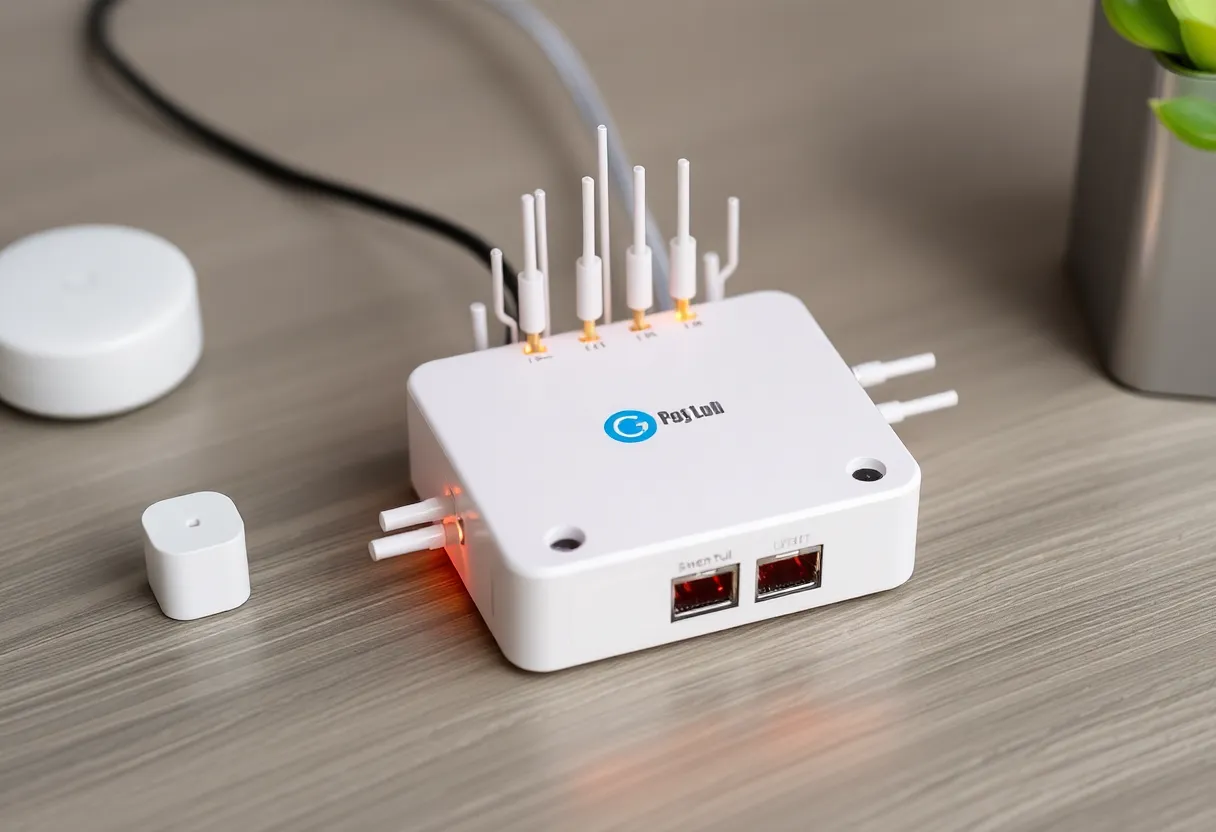
Zigbee’s most significant advantage in 2026 is the sheer breadth of the device ecosystem. Thousands of Zigbee devices exist across every category: smart bulbs, switches, dimmers, motion sensors, door and window sensors, thermostats, smart plugs, climate sensors, smoke detectors, and more. Manufacturers including Ikea, Philips Hue (native), Sonoff, Aqara (also), Tuya, Zemismart, and hundreds of smaller brands have Zigbee device lines. The price-per-device in Zigbee is competitive because the volume has driven manufacturing efficiency at scale.
Home Assistant’s Zigbee support via ZHA (Zigbee Home Automation) or Zigbee2MQTT is mature, extensively documented, and community-maintained. If you want to build a local-first home automation system with no cloud dependency, Zigbee with a USB coordinator and Home Assistant is the most proven and well-supported path available today. The community of people running this stack is large, the documentation is thorough, and troubleshooting resources are plentiful.
Zigbee also handles large device counts well in practice. A Zigbee mesh with 50–100 devices in a medium-sized home is a well-understood configuration; the coordinator hardware (SkyConnect, Sonoff Zigbee 3.0 USB dongle, HUSBZB-1) is cheap and reliable; and the system runs entirely locally once set up, with no vendor cloud infrastructure required.
Thread’s Strengths: IP Native and Future Architecture
Thread’s architectural advantage is its IP-native design, which is the right foundation for where home networking is headed. Because Thread devices are just IP devices on your local network—they have addresses, use standard protocols, and can be reached by any compatible hub—the interoperability picture is fundamentally cleaner than Zigbee’s.
With Zigbee, interoperability depends on profile compatibility—not all Zigbee devices work with all Zigbee coordinators, and some require device-specific “quirks” (workaround definitions that tell the coordinator how to handle non-standard behaviour) to function correctly. With Thread/Matter, if both the device and the hub are Matter-certified, they should work together by specification—the standard governs the application layer, not just the radio.
Thread’s border router architecture means the mesh doesn’t depend on any single device. Apple TV, HomePod, Eero, and other devices that include Thread border router radios mean that in a typical Apple or Amazon ecosystem home, Thread infrastructure is already present without additional hardware. A Thread device added to this environment joins the existing mesh automatically.
Power consumption is similar between Thread and Zigbee for equivalent use cases—both are designed for battery-powered sensors that need to last months to years on small batteries. Thread’s IPv6-native design adds some overhead relative to Zigbee’s simpler stack, but in practice the difference for typical sensor devices is not meaningful.
The Current Reality: Matter Over Thread vs. Reality
Matter’s launch promised a future where device interoperability was solved. The execution has been complicated. Matter over Thread devices exist and are growing in number—Eve, Nanoleaf, Aqara, and others have Matter/Thread devices—but the ecosystem is still small relative to Zigbee. The best Matter/Thread devices as of 2026 are in specific categories (sensors, plugs, some switches) but don’t span the full range of Zigbee’s device library.
The border router situation has also been more complicated than expected. Apple’s HomeKit implementation of Thread is tightly controlled; Thread devices that are Matter-only may not appear in the Apple Home app unless they’ve been certified for Apple’s implementation. Google’s Thread/Matter implementation has had inconsistent support for local operation versus cloud-reliance. Home Assistant’s Thread border router support has been improving but requires additional hardware (the SkyConnect dongle or an Apple TV as a border router accessible over IP) and has had reliability issues that are being resolved incrementally.
The practical verdict for 2026: if you’re building with Home Assistant and want maximum device choice, proven local operation, and low per-device cost, Zigbee remains the better-supported option today. If you’re building around Apple HomeKit or anticipate strong growth in Matter/Thread device availability, Thread has the better long-term architecture and is worth building around despite the smaller current ecosystem.
Can You Run Both?
Yes, and many people do. Zigbee and Thread don’t interfere with each other in any fundamental way, though they share the 2.4 GHz band and should be configured with non-overlapping channels to minimise interference (both protocols can operate on different channels within the band). A Home Assistant installation running ZHA or Zigbee2MQTT for existing Zigbee devices while also supporting Thread devices via a border router is a practical and increasingly common configuration.
Aqara, notably, ships devices in both Zigbee and Thread variants of similar products—this gives you direct comparison data and practical flexibility. If you have existing Zigbee infrastructure, continuing to expand it while gradually adding Thread/Matter devices where they offer clear advantages is a reasonable transitional approach.
The Verdict
Zigbee wins on ecosystem depth, device variety, per-device cost, and current software support in Home Assistant and similar platforms. It’s the right choice if you want to build a capable local home automation system today without waiting for a still-maturing ecosystem.
Thread wins on architecture, long-term interoperability trajectory, and alignment with where the industry is heading via Matter. It’s the right foundation if you’re building for longevity and prioritise avoiding protocol fragmentation over the next decade.
In 2026, the honest answer is that Zigbee is the more practical choice for most home automation builders, while Thread is the better architectural bet for the future. The good news is that you don’t have to choose permanently—the most common real-world configuration is a pragmatic combination of both.