What Makes a Great Mechanical Watch Worth More Than a Quartz One

Julian Hartmann
July 7, 2026
A $20 quartz watch keeps better time than a $10,000 mechanical watch. This is simply true and not in dispute among watchmakers or collectors. A quartz oscillator vibrates at 32,768 Hz, regulated by a crystal that doesn’t change with temperature, position, or wear. A typical mechanical watch movement oscillates at 6 to 10 beats per second, is affected by gravity based on how you orient it, changes rate as the mainspring winds down, and drifts by seconds per day even when serviced correctly. On purely functional timekeeping grounds, quartz wins by an enormous margin.
The case for mechanical watches was never primarily functional, and understanding what it actually is explains both the appeal and the pricing — from $150 entry-level mechanicals up through the hundreds of thousands that fine Swiss movements command. The value is in the making, not the keeping.
What a Mechanical Movement Actually Is
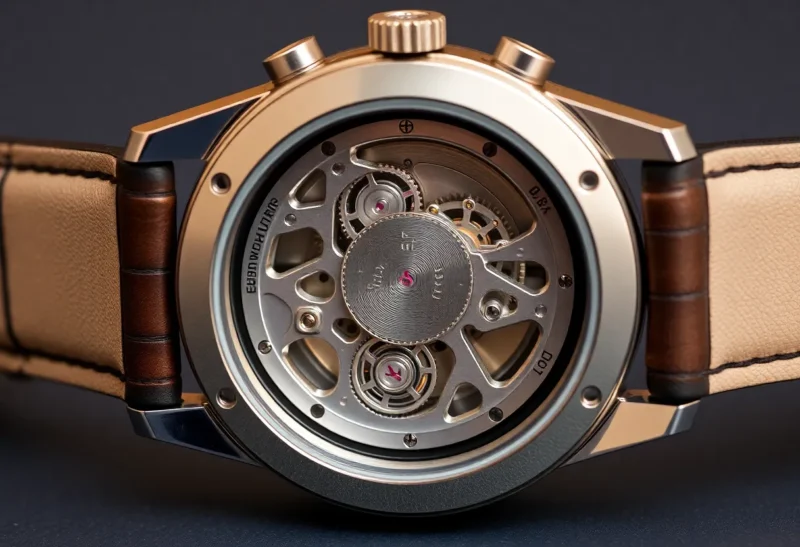
A mechanical watch movement is an entirely mechanical system — no battery, no electronics, no quartz oscillator. The power source is a coiled metal mainspring that the wearer winds by rotating the crown (manual wind) or that winds itself through a rotor that moves with the wearer’s wrist motion (automatic/self-winding). The mainspring’s stored energy unwinds through a gear train, its release regulated by an escapement — a mechanism that allows the gear train to advance in precise, controlled steps rather than running freely. The escapement is controlled by a balance wheel and hairspring, a resonating system analogous in function to a pendulum clock’s pendulum: it oscillates at a consistent frequency that governs the time the movement keeps.
The number of components in a simple mechanical movement is staggering relative to the scale: a basic ETA 2824 automatic movement has roughly 165 parts, many measured in fractions of a millimeter, all working together to convert stored spring energy into timekeeping over a typical 38–48 hour power reserve. More complex movements — chronographs, perpetual calendars, minute repeaters — can have 400 to over 1,000 parts in a package that fits on a wrist.
All of these parts are machined, finished, and assembled by hand to tolerances tighter than a human hair. The watchmaker’s art lies in the making of these components, their finishing (an entirely separate skill from functionality), and their regulation — adjusting the movement to minimize rate variation across positions and temperatures.
The Finishing: Where Much of the Price Difference Lives
The functional difference between a $300 mechanical watch and a $3,000 mechanical watch is real but modest in terms of timekeeping. Both use an automatic movement; both will run for 38–48 hours unworn; both will drift by several seconds per day with normal use. The differences that justify the price gap are largely in materials, finishing, and movement quality — and finishing, counterintuitively, is where the most labor-intensive work happens.
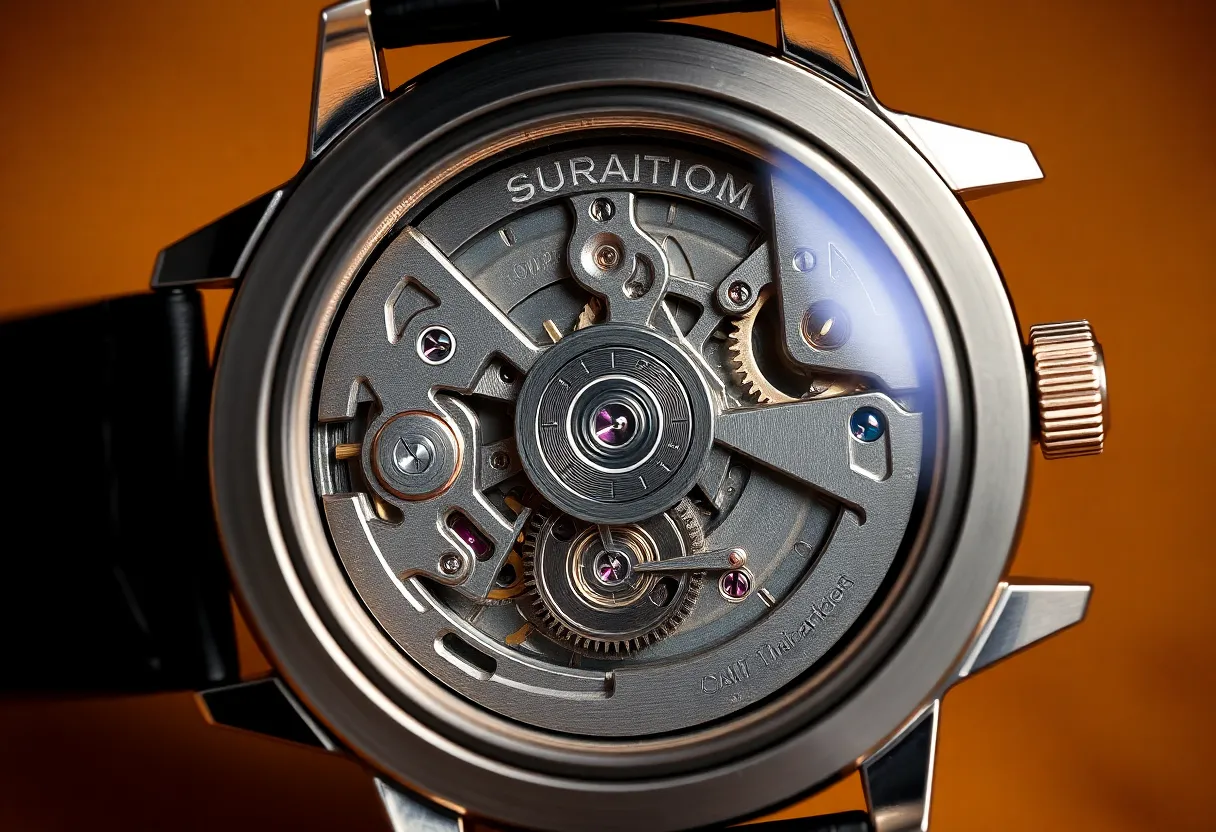
High-end movements are finished to standards that require hours of hand work per component. Beveling (anglage) — the chamfering of component edges to a precise angle, then polishing those bevels to a mirror finish — is done by hand on high-grade movements and takes significant skill to execute consistently. Côtes de Genève (Geneva stripes) — alternating polished and matte bands applied to the bridges and plates — is a decorative finishing technique that takes time but adds no function. Perlage (circular graining) on the undersides of plates adds visual texture. These finishing techniques are invisible in most wearing conditions and serve no mechanical purpose; they exist because watchmaking has historically valued evidence of craft and human labor in a machine that rewards that investment.
The COSC chronometer certification (Contrôle Officiel Suisse des Chronomètres) is a functional quality benchmark — it certifies that a movement achieves an average rate of -4 to +6 seconds per day across 16 days of testing in five positions and three temperatures. Movements achieving this standard are more carefully regulated than uncertified movements. Higher certifications — Rolex’s internal Superlative Chronometer (-2/+2 seconds per day), Patek Philippe’s Seal — impose even tighter rate standards and more comprehensive testing.
Complications: Engineering as Art
A “complication” in watchmaking is any function beyond basic timekeeping — a date display, a chronograph (stopwatch), a moon phase indicator, a power reserve display, a world time complication, or a perpetual calendar that automatically accounts for months of different lengths and leap years. Each complication adds mechanical complexity and typically requires additional space in the movement, which is at a premium in a wristwatch.
The minute repeater is the most celebrated complication in traditional watchmaking: a mechanism that chimes the time on demand through tiny hammers striking gongs inside the case, requiring the wearer to slide a pusher to activate it. The technical difficulty of a minute repeater in a thin wristwatch case — the gongs must be tuned to pleasant harmonics, the strike mechanism must be reliable and smooth, and everything must fit within a few millimeters of case depth — is among the most demanding in horology. A slim minute repeater from a serious maker can take months of a master watchmaker’s time to build and regulate.
The Patek Philippe Caliber 89 pocket watch, constructed for the company’s 150th anniversary, contains 33 complications and 1,728 components. It is not a tool for telling time reliably; it is a demonstration of what the craft is capable of, in the same way a cathedral demonstrates architecture. The value of these objects is inseparable from the knowledge and labor embodied in them.
What Entry-Level Mechanical Watches Are Worth
The accessible tier of mechanical watchmaking — Seiko’s automatics in the $100–400 range, Orient’s movements, Tissot’s ETA-based automatics at $200–500 — represents genuine mechanical horology at prices that make the category accessible without requiring appreciation of the high-end finishing and complications. These watches run reliable Japanese or Swiss movements, keep reasonable time (typically ±10–20 seconds per day), feel meaningfully different from quartz watches on the wrist (the sweep second hand’s smooth motion versus quartz tick is the most immediately perceptible difference), and provide the functional satisfaction of a self-winding mechanism.
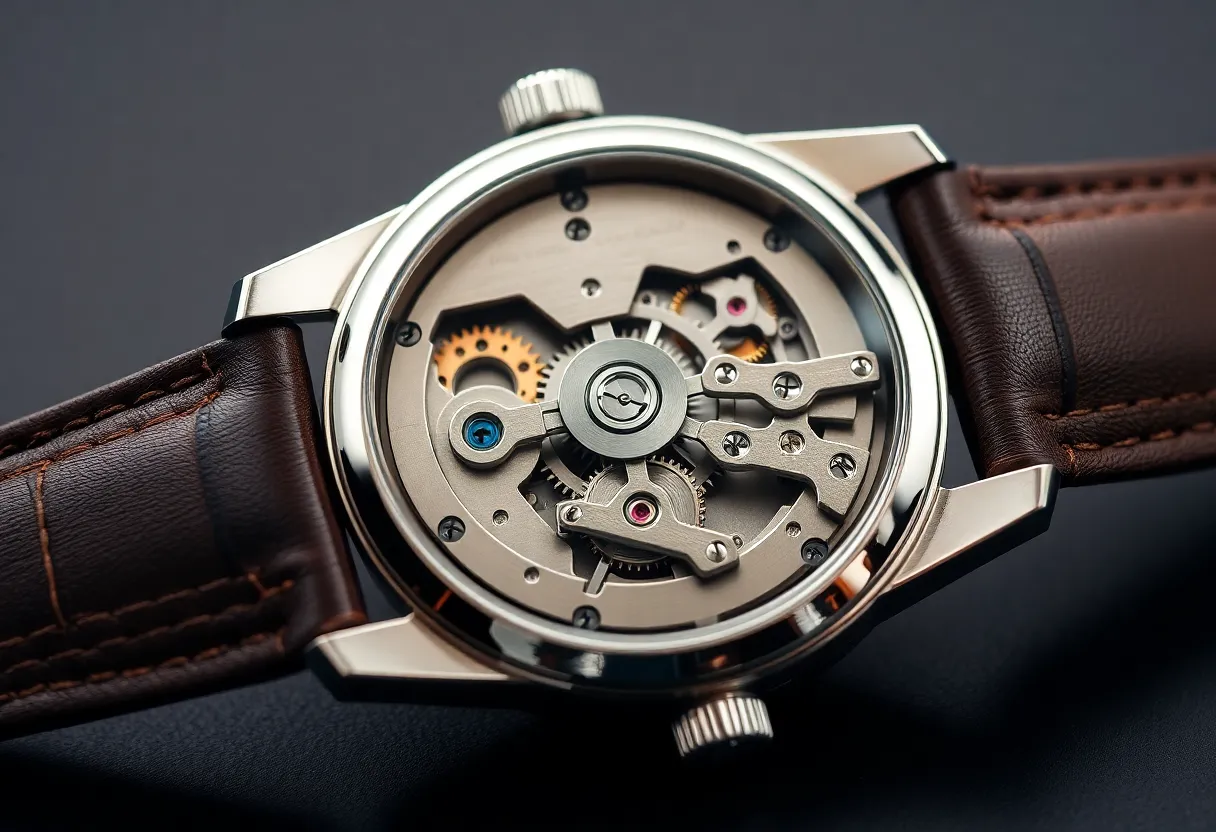
Seiko’s in-house movements at the Presage and Prospex price tiers offer finishing quality that punches well above the price in terms of movement decoration. The 6R35 movement visible through the caseback of a Seiko Presage at $400 is decorated with perlage and beveling in a way that competing Swiss movements at similar prices don’t match. Japan’s watchmaking tradition prioritizes visible quality at accessible price points in a way that has built a devoted international following.
The honest case for mechanical watches at any price point is not that they keep time better, run more reliably, or provide superior functionality to a $50 quartz watch. The case is that they are objects of craft — things made entirely from metal parts by human hands, whose function is an expression of accumulated technical knowledge and aesthetic sensibility going back three centuries. For people who value that, the premium over quartz is justified on the same terms as any other object valued for its making rather than purely its function. For people who don’t, a quartz watch is the rational choice, and that’s a perfectly legitimate position.