How Open Source Hardware Projects Are Changing Product Development

Jamie Torres
July 7, 2026
Open source software changed how software is built—not by eliminating proprietary software, but by creating a parallel ecosystem where shared development accelerates progress, reduces duplicated effort, and creates infrastructure that individual companies couldn’t justify building independently. Linux, the toolchain that underlies virtually all modern computing infrastructure, was built this way. So was the web stack, most AI frameworks, and the majority of developer tools.
Open source hardware is following a similar trajectory at a slower pace—slower because hardware has higher costs for iteration, manufacturing minimums, and physical complexity that don’t exist in software. But the trajectory is real, and the impact on how products are designed, prototyped, manufactured, and improved is becoming significant enough that product developers who aren’t paying attention to the open hardware ecosystem are missing something.
What Open Source Hardware Actually Means
Open source hardware (OSHW) means sharing the design files—schematics, PCB layouts, CAD files, bill of materials, firmware—in formats that allow others to study, modify, manufacture, and distribute the hardware. The Open Source Hardware Association (OSHWA) defines it formally, provides a certification process, and maintains a register of certified open hardware projects.
This is different from open source software in one critical way: making a copy of software costs nothing; making a copy of hardware requires materials, manufacturing, and sometimes significant capital. Open hardware designs can be freely shared, but the manufactured object still costs money to produce. This means the “anyone can contribute” dynamic of open software doesn’t translate directly—the barrier to physical contribution is higher than the barrier to code contribution.
What it does enable: transparent supply chains, community verification of specifications, derivative designs built on existing work without licensing friction, and shared improvements that benefit all users of a design. These benefits are real even if hardware’s economic dynamics differ from software’s.
Arduino and Raspberry Pi: The Template for Accessible Open Hardware
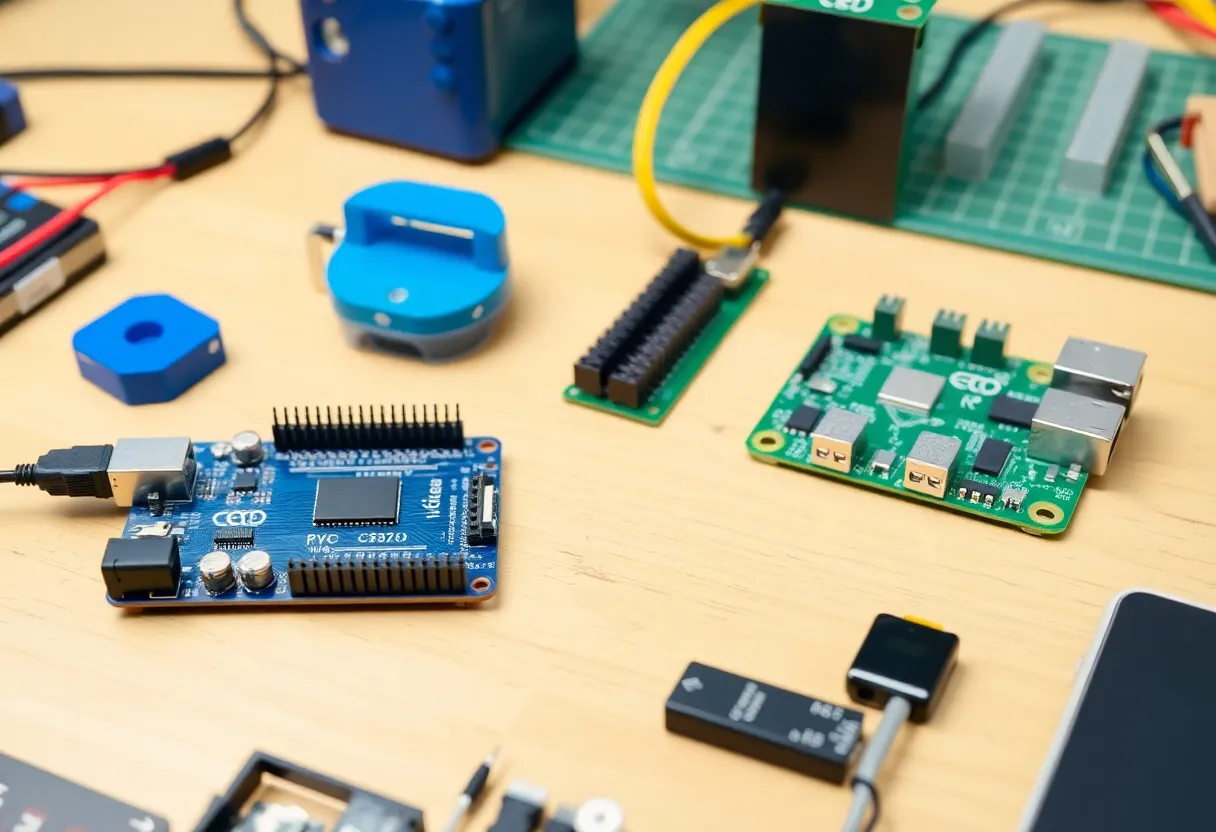
Arduino is the most widely studied example of open hardware’s commercial viability. The original Arduino Uno was designed at the Interaction Design Institute Ivrea in 2003–2005 and released with open schematics and PCB files under Creative Commons licensing. Anyone could manufacture an Arduino-compatible board, and many did—producing a long tail of cheaper clone boards that undercut Arduino’s own prices.
The company’s response to this competition—which could have been its death—was instead to compete on quality, community, and ecosystem. Arduino invested in the IDE, documentation, community resources, and partnerships that made the Arduino ecosystem more valuable than the bare hardware. The clones provided the hardware at lower cost; Arduino provided the ecosystem that made the hardware worth using. This division worked: Arduino remains commercially viable decades after the design was made freely available, because the value is in the ecosystem, not the hardware design exclusivity.
Raspberry Pi took a different approach: the foundation controls the design, manufactures the hardware, and maintains tight supply chain relationships. The software (Raspberry Pi OS and the broader Linux ecosystem that runs on it) is open; the hardware designs are not fully open, though the foundation has released schematics for reference. The Raspberry Pi model shows that “open ecosystem” doesn’t require fully open hardware designs to produce community benefits—the development environment openness is sufficient to enable the maker and education ecosystem that gives Raspberry Pi its value.
Both Arduino and Raspberry Pi have become infrastructure for product development: large companies use them for rapid prototyping; startups build first products on them before moving to custom hardware; students and hobbyists use them to learn electronics. The open ecosystem created adoption and community that proprietary embedded platforms of the same era couldn’t match.
How Open Hardware Changes the Product Development Process
The impact on product development workflows is most visible in three phases: prototyping, manufacturing, and iteration.
Prototyping. Before open hardware ecosystems, developing a prototype for a connected hardware product required either a custom PCB design (expensive, slow) or using whatever evaluation boards were available from chip manufacturers (limited, often poorly documented for general use). Open hardware platforms—Arduino, Raspberry Pi, ESP32 development boards, STM32 discovery boards—created a broad set of well-documented, widely supported starting points that dramatically reduce the time and cost of first-stage prototyping.
A startup building a connected environmental sensor in 2010 might have spent months and significant engineering budget getting to a working prototype. With current open hardware platforms, an engineer with modest embedded experience can have a working prototype in days or weeks, using a well-supported microcontroller (ESP32, nRF52, STM32) with abundant community code, example projects, and troubleshooting resources. The time-to-working-prototype reduction has compressed product development cycles across the entire hardware startup ecosystem.
Manufacturing. Open Bill of Materials and reference designs allow smaller manufacturers to offer modular production services. PCB fabrication and assembly houses (JLCPCB, PCBWay, Aisler) have built their services partly around the open hardware community, offering small-batch production at prices that weren’t available a decade ago. A company manufacturing 500 units of a custom PCB based on an open reference design is ordering from manufacturers who have the tooling and components already in their system—reducing both cost and lead time.
The OSHWA’s community of certified open hardware projects also creates a network effect for component availability. Sensors, actuators, and modules that are widely used in open hardware projects have better distributor availability, more competitive pricing, and more thorough community-produced testing data than proprietary components with small user bases.
Iteration. When hardware designs are open, community feedback on design flaws is faster and more distributed than internal testing can achieve. Defects discovered by hobbyists get posted publicly, discussed, and solutions developed—sometimes before the manufacturer’s own engineering team has characterised the problem. Adafruit, SparkFun, and similar open hardware companies explicitly lean into this: they treat community reports as free external QA, acknowledge issues publicly, and release revision history with the design files.
The Business Model Challenge: How Companies Sustain Open Hardware
The sustainable business models around open hardware have taken several forms, none of which exactly mirrors the commercial software or commercial hardware business:
Ecosystem monetisation (Arduino model). Give away the hardware design; charge for the ecosystem, official hardware, support, and brand association. Works when the ecosystem is genuinely valuable and the brand is trusted. Requires sustained community investment that creates the ecosystem value.
Services and certification (Canonical/Ubuntu model applied to hardware). Offer open hardware with commercial support contracts for enterprise and institutional users. The hardware design is free; access to security updates, guaranteed hardware availability, and professional support is sold. Toradex and similar embedded Linux module companies have used versions of this model.
Manufacturing advantage (Prusa Research model). Release the design completely but compete on manufacturing quality and support. Prusa’s 3D printers are fully open design; Prusa sells them as assembled printers and kits, competing against clone manufacturers by offering better quality control, first-party support, and faster access to design improvements. The company has maintained this model profitably for years despite competing against factories in China making near-identical hardware at lower cost.
Community-first with optional commercial. PINE64 sells ARM-based single-board computers and laptops (PinePhone, Pinebook Pro, Pine64) at near-cost pricing with fully open designs, relying on community software support to provide the ecosystem value that makes the hardware useful. The business is sustained at thin margins with community goodwill providing marketing and support.

RISC-V: Open Hardware Architecture at the Chip Level
The most significant emerging open hardware development is at the processor architecture level. RISC-V is an open instruction set architecture—the specification for what instructions a processor understands—that any company can implement without licensing fees to Arm Holdings or other proprietary architecture owners.
ARM charges per-chip royalties for licenses to implement ARM instruction set architecture. Intel’s x86 architecture is effectively proprietary through patent protection. RISC-V, developed at UC Berkeley and published as a free specification, allows anyone to design a RISC-V chip without architectural licensing costs. The processor designs themselves may be proprietary (from companies like SiFive) or open (from projects like lowRISC/CVA6), but the architecture specification is free.
RISC-V adoption has accelerated significantly. Western Digital, Alibaba, Google, Samsung, Intel, Qualcomm, and dozens of smaller chip companies have implemented RISC-V cores for various applications. The Chinese government has actively promoted RISC-V adoption as a strategy to reduce dependency on Western-controlled processor architectures. Espressif (makers of the ESP32 series) has shipped RISC-V cores in recent ESP32-C and ESP32-H series microcontrollers that are widely used in open hardware projects.
RISC-V at the architecture level is where open hardware’s impact is most consequential: it’s not just enabling hobbyist projects or startup prototyping, but restructuring the competitive landscape of the semiconductor industry by removing a licensing barrier that previously concentrated processor architecture control in a handful of companies.
What Product Developers Should Actually Know
For product developers and hardware startups, the practical implications of the open hardware ecosystem:
Starting from an open reference design for the microcontroller or module you’re building around is almost always faster than designing from scratch—even if you ultimately need a custom PCB for production. The reference design has been validated by the community; the firmware has known-good examples; the component footprints have been tested. Your custom design inherits this validation rather than starting from zero.
Community resources are a legitimate engineering asset. The Arduino forum, the Raspberry Pi forums, the PINE64 community, and the countless project-specific communities around open hardware projects contain detailed troubleshooting knowledge that would take months to accumulate in-house. Treating these as external documentation rather than casual resources changes how you budget for engineering time.
Licensing matters even if you’re not distributing designs. The OSHWA certification tiers and Creative Commons licensing variations (Attribution, ShareAlike, NonCommercial) have specific requirements. If your commercial product is built on an OSHW-licensed design, understanding what your obligations are under that license before going to production avoids legal complications later.
The trend toward open hardware at the chip architecture level (RISC-V) will matter more over the next decade. Products built on proprietary ARM or x86 processors are not at risk in the short term, but the architecture diversity that RISC-V enables—lower-cost implementations for specific applications, custom instruction extensions for specific workloads, no royalty overhead for high-volume production—is changing the economics of custom silicon in ways that will affect hardware product development even at companies that aren’t designing their own chips.