What Software Defined Radio Can Do That Commercial Radios Can’t

Joel Ramos
July 7, 2026

For most of radio’s history, a radio was a device dedicated to specific frequencies and modulations, with its capabilities determined by its physical hardware. An FM radio could only receive FM. A scanner could receive police and emergency frequencies but only as its manufacturer designed. A shortwave receiver worked with shortwave frequencies. The capabilities were fixed at the time of manufacture.
Software Defined Radio (SDR) inverts this relationship. Instead of hardware that implements specific radio functions, an SDR uses a general-purpose radio frontend—a hardware device that converts RF signals to digital samples—and then does virtually all the signal processing in software. The result is a radio whose capabilities are defined by software rather than hardware, which means a single piece of hardware can receive (and in transmit-capable variants, transmit) a vast range of frequencies and modulation formats that a traditional radio couldn’t.
The practical manifestation of this for hobbyists is the RTL-SDR: a USB TV tuner chip (originally designed for digital television) that was discovered to support a raw sample output mode, converting it into a cheap SDR frontend covering roughly 500 kHz to 1.7 GHz. Sold for £25–30, this device combined with free software transforms a laptop into a receiver capable of listening to aircraft transponders, weather satellite imagery, FM radio, AM shortwave, marine AIS, weather balloon telemetry, and hundreds of other signals—a capability range that would have required thousands of pounds in dedicated hardware a decade earlier.
The Specific Capabilities That Commercial Radios Can’t Match
Wide frequency range with a single device. A traditional scanner covers specific bands. An RTL-SDR covers roughly 100 kHz to 1.75 GHz with a single dongle—the entire FM broadcast band, aircraft communications, weather satellites, and 433 MHz ISM band devices, all receivable with the same hardware by switching software settings. More capable SDR hardware (HackRF, ADALM-PLUTO, KiwiSDR) extends this range further.
Demodulating novel and obscure signals. Commercial radios implement specific modulation decoders in hardware or firmware. An SDR running software can be reprogrammed to demodulate any signal that has a software decoder—which includes modulation formats that no commercial consumer radio supports, proprietary protocols that enthusiasts have reverse-engineered, and research protocols developed for specific applications.
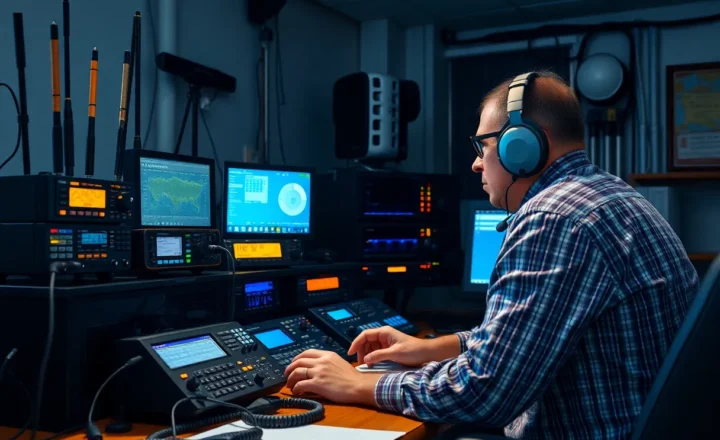
Visual spectrum analysis. SDR software like SDR# (SDRSharp), GQRX, and SDR++ displays the radio spectrum in real time as a waterfall and power spectral density plot. You can see all signals present in a frequency range simultaneously—which signals are transmitting, their bandwidth, their relative power, and their modulation characteristics—before even attempting to decode them. Commercial scanners step through frequencies sequentially; an SDR shows you everything in its bandwidth at once.
Signal recording and replay. SDR software can record raw IQ samples from the radio frontend, capturing everything the receiver is processing in a frequency range. These recordings can be replayed, analysed, and demodulated with different software later. This is invaluable for capturing transient signals for later analysis, for building datasets for machine learning-based signal classification, and for sharing signals with others for collaborative reverse engineering.
What People Actually Use SDR For
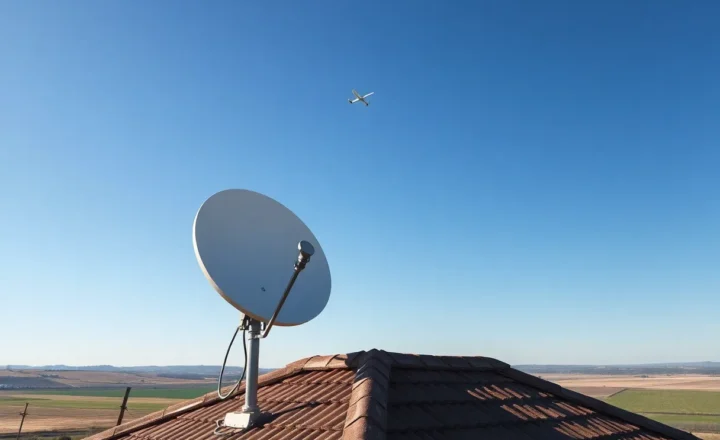
Aircraft tracking (ADS-B). Commercial aircraft broadcast their position, altitude, speed, and identification using ADS-B on 1090 MHz. RTL-SDR receivers with appropriate software (dump1090, readsb) can receive and decode these transmissions, feeding into local aircraft position displays or aggregators like FlightAware and FlightRadar24. Running your own ADS-B receiver and feeding data to an aggregator typically earns free premium access to the aggregator’s services—a direct material benefit from a £25 investment.
Weather satellite imagery. NOAA and Meteor-M weather satellites transmit live imagery in APT (Analogue Picture Transmission) and LRPT formats as they pass overhead. An SDR with a suitable antenna can receive these transmissions during orbital passes (typically 10–15 minutes of receivable signal twice per day per satellite), and software like WXtoImg, SatDump, or Orbitron decodes the imagery in real time. Producing your own satellite weather images from raw radio reception is one of the more satisfying applications of SDR for hobbyists.
Marine AIS. Vessels transmit their position, speed, course, and identification on VHF Maritime band using AIS protocol. An SDR can receive and decode this, producing a local vessel tracking display similar to commercial marine radar without the expensive hardware.
Weather balloon tracking. Meteorological organisations launch radiosonde weather balloons carrying sensors and radio transmitters that broadcast atmospheric data as they ascend. The Radiosonde Autopilot (RS41) and similar sondes transmit on standard frequencies; software like radiosonde_auto_rx can decode the telemetry, track the balloon’s position in real time, and sometimes allow recovery of landed sondes.
Security research and protocol reverse engineering. RF-based devices—key fobs, garage door openers, smart meters, IoT sensors, wireless alarm systems—communicate over radio using protocols that are sometimes proprietary and undocumented. SDR provides the ability to capture these transmissions for analysis. The open-source tool inspectrum visualises captured signals for manual analysis; Universal Radio Hacker (URH) provides a workflow for reverse engineering unknown protocols. This is a significant tool for IoT security researchers and radio protocol enthusiasts.
WSPR and weak-signal propagation research. WSPR (Weak Signal Propagation Reporter) is a digital amateur radio mode used to map radio propagation. SDR receivers distributed globally receive WSPR transmissions, report decoded spots to a central database, and collectively map how HF radio waves travel around the globe in real time. Contributing a SDR receiver to the WSPR network requires modest hardware and provides interesting propagation data.

The Hardware Landscape
SDR hardware ranges from the entry-level RTL-SDR to professional research-grade hardware:
RTL-SDR Blog V4 (£30). The definitive cheap entry point. Covers approximately 500 kHz to 1.75 GHz receive only. Sufficient for ADS-B, FM broadcast, weather satellites, AIS, and most common applications. The V4 variant improved noise performance and added a bias tee for powering active antennas. The limitations are receive-only, relatively noisy front end at HF frequencies, and a 3.2 MHz maximum bandwidth.
Airspy Mini/R2 (£100–£120). Significantly better performance than RTL-SDR—lower noise figure, higher dynamic range, better ADC—in the 24 MHz to 1.8 GHz range. Suitable for serious HF through microwave receiving with better sensitivity for weak signals.
HackRF One (£250). Covers 1 MHz to 6 GHz with both receive and transmit capability. The entry point for SDR transmission, allowing exploration of transmission applications that receive-only hardware can’t support. Lower performance than specialist receivers but wide coverage and transmit capability.
KiwiSDR (£250+). A web-accessible HF SDR (0–32 MHz) with GPS-disciplined clock, primarily used as a networked receiver accessible over the internet. Many KiwiSDR owners make their receiver publicly accessible, allowing users worldwide to tune to their local HF spectrum without local hardware.
What SDR Reveals About the Radio Spectrum
Perhaps the most unexpected aspect of spending time with SDR is what it reveals about how densely used the radio spectrum is. The waterfall display showing a slice of spectrum presents dozens of transmissions simultaneously—aircraft transponders, vehicle tire pressure sensors, weather balloons, GPS disciplined timing references, IoT device telemetry, pager traffic, satellite downlinks—that have always been there, invisible to anyone without the right receiver.
The accessibility that SDR provides to this environment—with hardware that costs less than a moderately good dinner—has changed how many technically curious people understand wireless communication. The spectrum is a shared, continuously used resource; SDR makes that usage visible in a way that nothing else does affordably. For anyone interested in how the wireless world works, SDR is the most informative tool available at its price point.