Why Satellite Internet Will Never Fully Replace Fiber—And Where It Wins

Halima Okafor
July 7, 2026
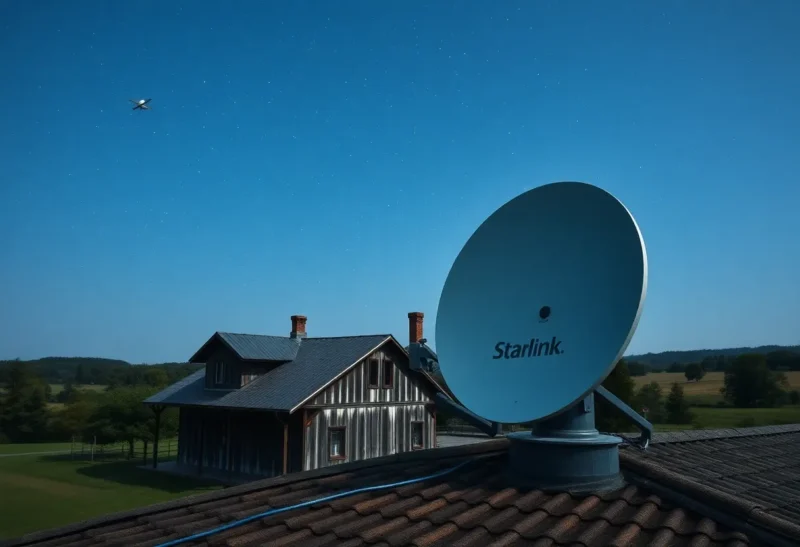
Starlink’s emergence as a genuine consumer internet service—not a niche government contract product—changed the practical options for rural and remote connectivity in a way that nothing had since cellular data. In 2026, SpaceX’s constellation delivers hundreds of megabits per second download speeds and functional latency to locations where the only prior options were geostationary satellite with 600ms ping times, mobile hotspot throttled at 50GB, or no broadband at all. This is a meaningful improvement for tens of millions of people globally.
The coverage of Starlink and its low Earth orbit (LEO) competitors (Amazon’s Kuiper, OneWeb, Telesat Lightspeed) often frames them as a potential replacement for terrestrial broadband—fiber and cable—across the board. That framing is wrong in specific and consequential ways, and understanding the physics and economics of each technology clarifies what satellite internet actually is: the best option where fiber doesn’t exist, and a genuinely inferior option where it does.
The Physics of Latency: Why This Isn’t Solvable
Speed of light latency is the irreducible floor on satellite internet’s responsiveness, and it’s higher than it looks from the constellation altitude numbers.
Starlink satellites orbit at approximately 550 km altitude (some shells are higher). The round-trip signal path goes: your dish → satellite → ground station → internet backbone → destination server → same path back. The one-way distance for the user-to-satellite leg alone is at minimum 550 km (directly overhead) and typically 600–900 km when the satellite is at an angle. A single leg from dish to satellite and back to ground takes roughly 3.5–5 ms at the speed of light.
In practice, Starlink latency runs 20–60 ms under normal conditions—good enough for video calls, streaming, gaming (most), and general web browsing. It’s not good enough for the specific applications that require sub-10ms latency: high-frequency trading, certain real-time industrial control systems, and competitive gaming where milliseconds produce measurable competitive disadvantage.
Fiber latency between nearby points is typically 5–15ms for a full round trip to a distant server, and sub-5ms within a metro region. The physics of light travelling in glass (slightly slower than vacuum) and the route length determine fiber latency; within a metro area, a fiber connection to a well-connected ISP genuinely operates at different latency than any satellite solution.
No amount of engineering can make a satellite at 550km orbit have the same round-trip time as a fiber connection whose physical path is 10km. The speed of light is a constant; the satellite’s altitude creates an irreducible latency floor that fiber doesn’t share.

Capacity and Spectrum: The Shared Medium Problem
Fiber delivers bandwidth to your home that is essentially dedicated. The fiber strands running to your premises are not shared with neighbours in the way that coaxial cable systems are; your 1 Gbps fiber connection is 1 Gbps regardless of what your neighbours are doing. (The aggregation happens further upstream, but the local loop is unshared.)
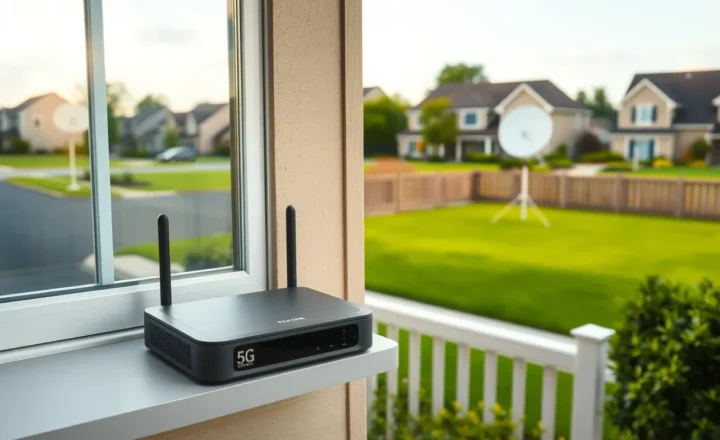
Satellite internet, like any wireless medium, operates in licensed spectrum. Each satellite has a fixed capacity—the total bandwidth it can deliver to all users it’s serving simultaneously. As more users in a coverage area subscribe, bandwidth is divided among them. Starlink has not published its per-satellite capacity figures, but independent analysis suggests each satellite delivers something in the range of 10–20 Gbps total. With thousands of subscribers per satellite coverage area, the per-user allocation at peak demand is significantly less than the headline speeds.
This is why Starlink’s terms of service include a “Priority Access” tier (commercial, which gets prioritised allocation) and a “Best Effort” tier (residential, which gets remaining capacity). In dense suburban areas where Starlink has grown subscriber counts significantly, users report meaningful speed degradation during peak hours—exactly the behaviour expected from a shared medium with fixed capacity per satellite.
Adding more satellites adds capacity to rural and underserved areas (more satellites mean more coverage cells over those areas). It doesn’t solve urban capacity constraints because urban areas already have satellite coverage—the constraint is bandwidth per user, which requires either more satellites or more spectrum, both of which have practical limits.
Reliability and Weather
Starlink requires a clear line of sight to the sky. Heavy rain, thick clouds, and precipitation affect signal, particularly at the higher frequency Ka-band that Starlink uses. Rain fade is a real phenomenon that degrades signal in severe weather—precisely when reliable connectivity may matter most for rural users (emergency communications, home-based work during poor travel conditions).
Fiber, once deployed, is affected by weather only in as far as the physical cable is damaged (by digging, flooding, or ice loading on aerial cables). A fiber connection in a storm is unaffected as long as the infrastructure is intact; a Starlink connection in the same storm may experience signal degradation or outage. For most use cases this difference is inconsequential; for emergency communications or mission-critical work, it matters.
The physical dish also requires power and has occasional obstruction issues—trees growing into the field of view, snow accumulation on the dish (Starlink dishes heat themselves to melt snow, but heavy accumulation can still cause outages). Fiber requires power only at the ONT (optical network terminal) at your home; the fiber itself is passive.
Cost: The Per-Subscriber Economics Are Very Different
Starlink residential service is priced at $120–$150/month in the US, with a $499 hardware cost for the dish (or $599 for the high-performance dish). The economics reflect the capital cost of the constellation: SpaceX has spent billions of dollars on satellite manufacturing, launch, and ground infrastructure, and the per-user revenue needs to amortise that over the subscriber base.
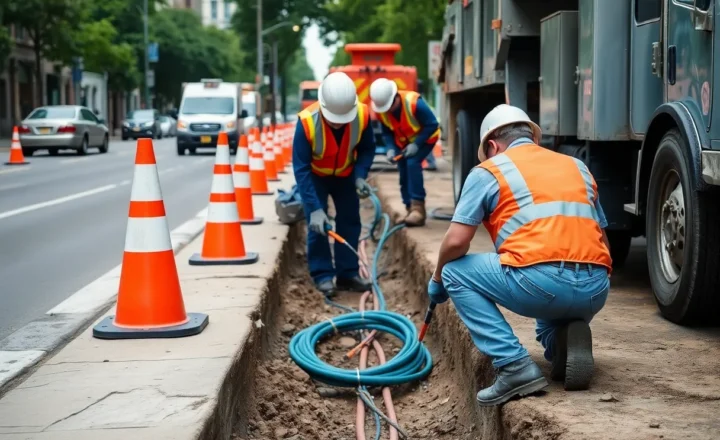
Fiber installation cost varies enormously by density: in dense urban and suburban areas, fiber costs $500–$2,000 per home to pass and connect; in rural areas with low take rates (few homes per mile of cable), costs can reach $10,000–$40,000 per home. This cost structure is why rural fiber is rarely deployed economically without government subsidy—the per-home economics don’t work at any commercially viable price point.
Where fiber exists, consumer pricing is typically $50–$80/month for 1 Gbps service with no hardware cost beyond a router. The fiber ISP’s infrastructure amortises over decades (fiber cables last 20+ years with minimal maintenance), while satellite hardware depreciates faster (satellite replacement cycles of 5–7 years as orbital debris limits and technology advances drive refreshes).
For a rural household where the choice is Starlink at $150/month versus no broadband at all (or geostationary satellite at $150/month with 600ms latency), Starlink is clearly superior. For an urban household where the choice is Starlink at $150/month versus fiber at $60/month with better latency and higher sustained speeds, the economics strongly favour fiber.
Where Satellite Internet Genuinely Wins
The case for satellite internet is most compelling in specific contexts where the alternative is no good option:
Rural and remote areas without fiber or cable. This is the core use case for Starlink and its competitors, and it’s a large and genuine gap in coverage that satellite LEO systems can fill economically in ways terrestrial infrastructure can’t. The USDA estimates that approximately 19 million Americans lack access to fixed broadband meeting the FCC’s minimum speed definition; globally, the rural connectivity gap is several hundred million people. Satellite connectivity addresses this gap at lower infrastructure cost than rural fiber build-out.
Maritime, aviation, and vehicle connectivity. Starlink Maritime and aviation terminals have been significant commercial deployments. Ships, aircraft, and mobile platforms are exactly the scenario where terrestrial infrastructure doesn’t exist, and the competition is geostationary satellite service with worse performance. Starlink’s vessel terminal pricing and performance have been competitive enough to see adoption across commercial shipping, private aviation, and military applications.
Disaster response and infrastructure failure. When terrestrial infrastructure is damaged by natural disasters, satellite connectivity can be deployed quickly. Starlink’s role in Ukraine following the 2022 invasion—providing connectivity when terrestrial networks were damaged or disrupted—demonstrated its value as a resilient alternative in conflict or disaster contexts where terrestrial networks fail.
Backup connectivity. For households and businesses in areas with cable or DSL (but not fiber), Starlink as a backup connection—available immediately if the primary fails—has a use case that its latency and shared-capacity limitations don’t undermine.
The Competition With Fiber Doesn’t Really Exist
The technology that satellite internet actually competes with—and is meaningfully better than—is geostationary satellite (HughesNet, Viasat) and rural fixed wireless with limited range and capacity. Against those alternatives, LEO satellite is transformatively better: 20–60ms vs 600ms latency, hundreds of Mbps vs 25 Mbps, no hard data caps vs aggressive throttling.
Against fiber, satellite doesn’t compete on the dimensions that matter at scale: latency, sustained throughput under load, capacity per user, cost per Mbps, or reliability. Fiber networks are being deployed with 10 Gbps or higher residential capability using technology that doesn’t fundamentally constrain the physical medium the way orbital mechanics constrain satellite.
The narrative of satellite internet disrupting fiber is partly driven by SpaceX’s aggressive marketing, partly by the genuine disruption of geostationary satellite (which Starlink has clearly outcompeted), and partly by the hope that a technology with global reach can substitute for the politically difficult, expensive, and time-consuming work of deploying fiber in underserved areas. The better framing: satellite is the right solution where fiber doesn’t exist, and the goal of public broadband policy should be ensuring that fiber eventually reaches most of the remaining unserved areas—not accepting satellite as a permanent substitute for the terrestrial infrastructure that delivers better service at lower ongoing cost.