What the Undersea Internet Cable Map Reveals About Global Power

Nadia Hartmann
July 7, 2026
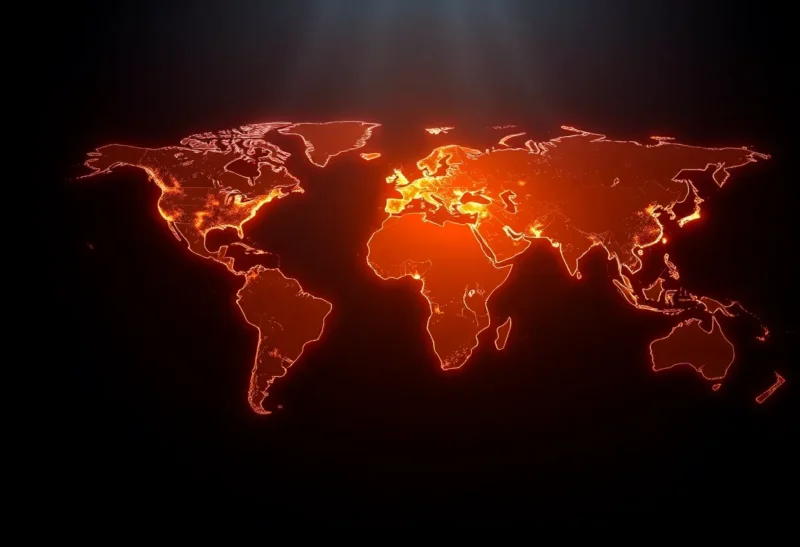
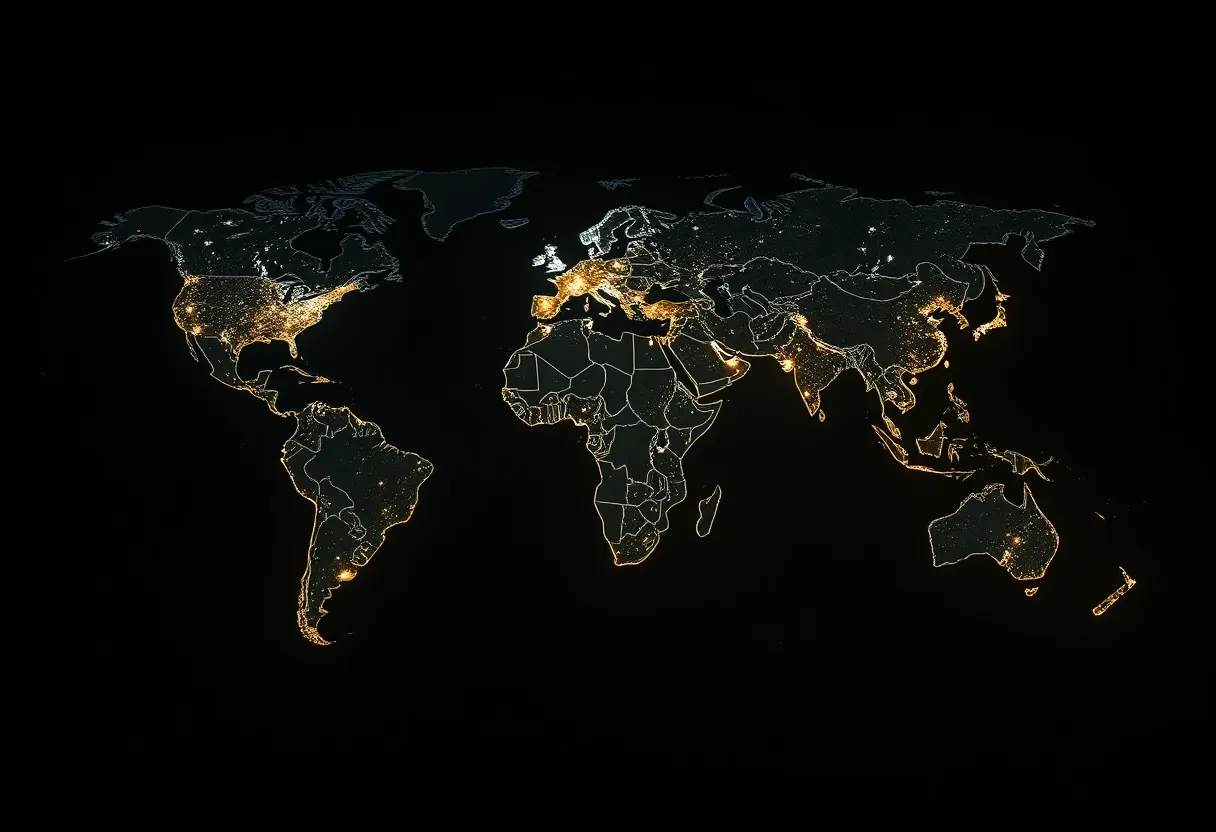
Spend ten minutes with the TeleGeography submarine cable map and you’ll start to see the internet differently. The familiar Mercator projection of the world, overlaid with hundreds of lines connecting continents across ocean floors, makes something abstract suddenly concrete: the internet is a physical thing, with physical vulnerabilities, owned by specific organisations with specific interests, running through specific territorial waters that specific governments claim jurisdiction over.
The map is also a power map. How cables are routed, who owns them, which countries are well-connected and which are dependent on single cable systems, and who controls the chokepoints where cables converge—these are questions of real geopolitical consequence, not just telecommunications trivia.
The Physical Reality First
There are approximately 500 active undersea cable systems in 2026, carrying roughly 95% of all transoceanic internet traffic. This is often quoted as a surprising statistic, but it makes sense when you understand that satellite communication—despite Starlink’s growth—is still limited in total bandwidth compared to fibre optic cable, which can carry terabits per second per fibre pair and runs across oceans in bundles of many pairs.
These cables are not the thick, armoured cylinders you might imagine. In deep water (most of the ocean), they’re roughly the diameter of a garden hose—a few centimetres across—relying on depth and the absence of human activity for protection. Near coasts, where fishing trawls and anchors pose threats, cables are buried under the seabed or armoured with steel wire. The transition from armoured near-shore cable to slender deep-water cable happens at the continental shelf.
Cable landing stations—the points where cables come ashore—are critical infrastructure, often housed in nondescript buildings near coastal ports. They’re staffed, monitored, and in most countries considered critical national infrastructure with varying levels of security. They’re also points of legal jurisdiction—the cable system under the Pacific is subject to international maritime law, but the moment it comes ashore in California or the Philippines, it falls under domestic law and domestic regulatory access.
Who Actually Owns the Cables
Cable ownership has changed dramatically in the last decade, and the shift is politically significant.
Historically, undersea cables were owned by telecommunications consortia—groups of carriers pooling capital to build shared infrastructure. AT&T, BT, NTT, Deutsche Telekom—the legacy carriers were the dominant cable owners, and cables were built to serve carrier-to-carrier interconnection needs.
Since roughly 2012, the dominant investors have been hyperscalers: Google, Meta, Amazon, and Microsoft. These companies needed transoceanic bandwidth at scales that consortium cables couldn’t provide economically, and they had the capital to fund their own. Google alone has invested in more than a dozen cable systems in recent years—its Dunant cable (US to France), Equiano (US to South Africa via Nigeria and Portugal), Firmina (US to South America), and Grace Hopper (US to UK and Spain) are just the major ones.
This ownership shift has several implications. First, capacity decisions are now driven by the needs of a handful of US companies rather than by a consortium of carriers representing diverse national interests. A country’s connectivity to the global internet increasingly runs through infrastructure that Google and Meta built to serve their own requirements—which happen to align with general internet connectivity but weren’t designed for that purpose.
Second, these cables are subject to US law and US regulatory access at their US landing points, regardless of where else they terminate. The NSA’s PRISM revelations in 2013 showed that intelligence agencies had exploited cable landing points for surveillance. Private ownership by US companies doesn’t eliminate that access point—it may simplify it.
Third, other governments have noticed and are responding. China’s PEACE cable system (running from China through Pakistan, the Middle East, and Africa to France) and HMN Technologies (formerly Huawei Marine Networks) have been building Chinese-financed cable infrastructure at scale, creating a parallel cable architecture that raises the same concerns for Western governments that Western-owned cables raise for China.
The Chokepoints
The geography of cable routes creates inevitable chokepoints where many cable systems converge, creating vulnerabilities that are disproportionate to the physical size of the location.
The Red Sea and Suez Canal corridor. Cables connecting Europe to Asia must route either around Africa (very long) or through the Red Sea and the Suez Canal corridor. The Bab-el-Mandeb strait, between Yemen and Djibouti, is one of the densest cable chokepoints on the planet. Multiple major cable systems run through this corridor. In early 2024, Houthi attacks on shipping in the region also damaged undersea cables—a rare but significant example of cable infrastructure being affected by active conflict. The disruption rerouted traffic and created latency spikes across systems that depend on the affected routes.
The Strait of Malacca. The primary sea lane between the Indian Ocean and the Pacific, and correspondingly a major cable corridor. Cables connecting Southeast Asia, Japan, and Australia to Europe and the US converge through this narrow waterway.
The Luzon Strait. Between Taiwan and the Philippines. A dense concentration of cables connecting Northeast Asia (Japan, South Korea, China) to Southeast Asia and beyond. Taiwan has been explicit about the strategic significance of this corridor in the context of cross-strait tensions—cable cuts around Taiwan would significantly degrade regional connectivity.
Cornwall and the Azores. The UK’s Cornwall peninsula has been a major transatlantic cable landing point since the earliest telegraph cables. Multiple transatlantic systems still land there, making it a significant concentration point for US-Europe traffic. The Azores, mid-Atlantic, serve as a repeater and branching point for multiple Atlantic systems.
The Deliberate Sabotage Question
Undersea cable damage is not rare—there are around 100 incidents per year globally, the vast majority from fishing vessel anchors and trawls. What’s increasingly discussed is deliberate sabotage by state actors.
The Baltic Sea incidents of 2023–2024, where multiple cables and pipelines were damaged in circumstances that were diplomatically murky, focused attention on the vulnerability of undersea infrastructure to state-sponsored interference that can be implausibly denied. Dropping an anchor “accidentally” on a cable at a specific location requires knowledge of where the cable is (available from public databases) and a vessel willing to do it.
The technical barrier to cable sabotage is much lower than the political barrier. Any vessel with an anchor and cable location data can cause damage. The deterrent is not technical difficulty but attribution difficulty: state actors can plausibly deny accidents at sea in ways that are very difficult to disprove.
This has created genuine concern in NATO and allied defence planning circles about the vulnerability of cable infrastructure to grey-zone operations—actions below the threshold of conventional warfare that can cause significant disruption with deniable attribution.
The Countries Left Out
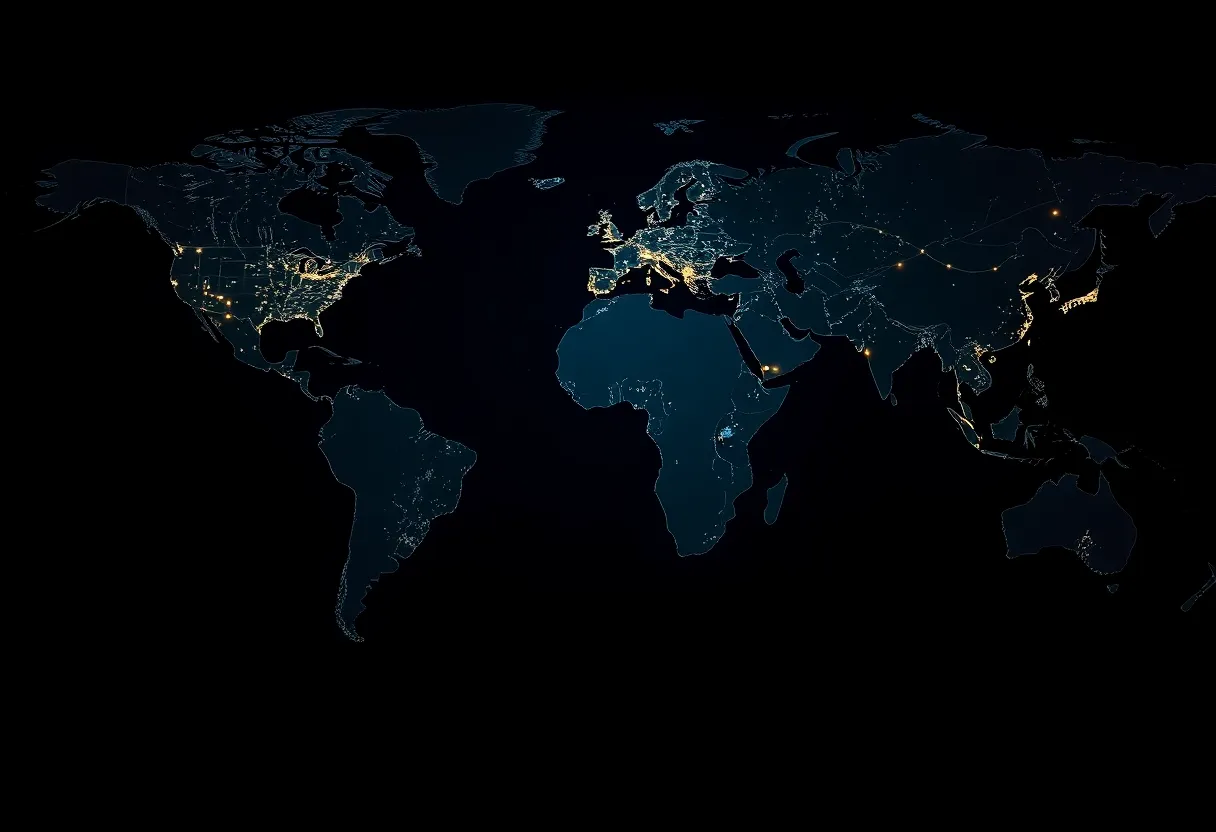
The power map isn’t just about who controls cables—it’s also about who depends on them with little redundancy.
Island nations and developing countries often have limited cable access—sometimes a single cable system connecting them to the global internet. When that cable is cut (by fishing, anchor, earthquake, or deliberate action), they effectively lose international internet connectivity until a repair ship can be dispatched. Repair ships are slow—transiting to a mid-ocean damage location, making repairs, and returning typically takes weeks. The 2022 Hunga Tonga volcanic eruption demonstrated this starkly: the cable connecting Tonga to the global internet was destroyed, leaving the country with severely degraded connectivity for weeks during an active emergency.
Africa presents a more complex picture. The continent has historically been underserved by cable infrastructure—many African countries depended on older, lower-capacity systems with limited redundancy. This is changing rapidly: the 2Africa cable system (a Meta-led consortium), Equiano (Google), and several other recent systems have substantially increased African cable capacity. But the distribution is uneven, and landlocked African countries remain dependent on expensive overland fibre connections to coastal landing points.
The Pacific island region has similar structural vulnerability. Small island nations scattered across the Pacific are expensive to connect with cables, and many have had to rely on satellite connections for international traffic. Starlink has meaningfully improved this situation for some countries, but bandwidth constraints remain compared to fibre.
What This Means for the Internet’s Future
Several trends are reshaping the cable map over the next decade.
More cables are being built, by more owners, with more diverse routes. The total number of cable systems has roughly tripled in fifteen years, and the trend continues. More cable systems mean more redundancy for routes that have them, though the chokepoint problem doesn’t go away—you can add many cables through the Red Sea corridor and still have a single geographic vulnerability.
Cable diversity is becoming a policy priority. Following the Baltic incidents and growing awareness of cable vulnerability in defence planning, several governments have begun requiring diverse cable routes for critical services and investing in cable repair capability. The EU’s submarine cable protection policy has been strengthened. NATO has created dedicated structures for protecting undersea infrastructure.
The geopolitics of cable ownership are intensifying. The US has moved to restrict Chinese involvement in cable systems landing in the US and its territories. Australia and other US-aligned Pacific nations have similarly pushed back on Chinese-financed cable systems in the Pacific. This is creating a partial bifurcation of cable infrastructure along geopolitical lines—not a complete split, but a trend toward Western-aligned and Chinese-aligned cable ecosystems that are increasingly distinct.
The physical infrastructure of the internet is not neutral. It reflects investment decisions, geopolitical alignments, geography, and the concentrated capital of a handful of technology companies. The cable map is a map of power—who has reliable connectivity, who can be denied it, who controls the physical substrate through which most human digital communication travels. It’s worth looking at and understanding, because this infrastructure shapes everything that runs on top of it.