What Happens When You Run a Home Lab Purely on Renewable Energy

Tom Gallagher
July 7, 2026
Running a home lab is already a niche hobby. Running one purely on solar and battery storage is a niche within a niche—and for a long time I assumed it was mostly a thought experiment for people who lived off-grid or had unusually generous roof space. Then I actually tried it, and the experience taught me more about both energy systems and homelab design than I expected.
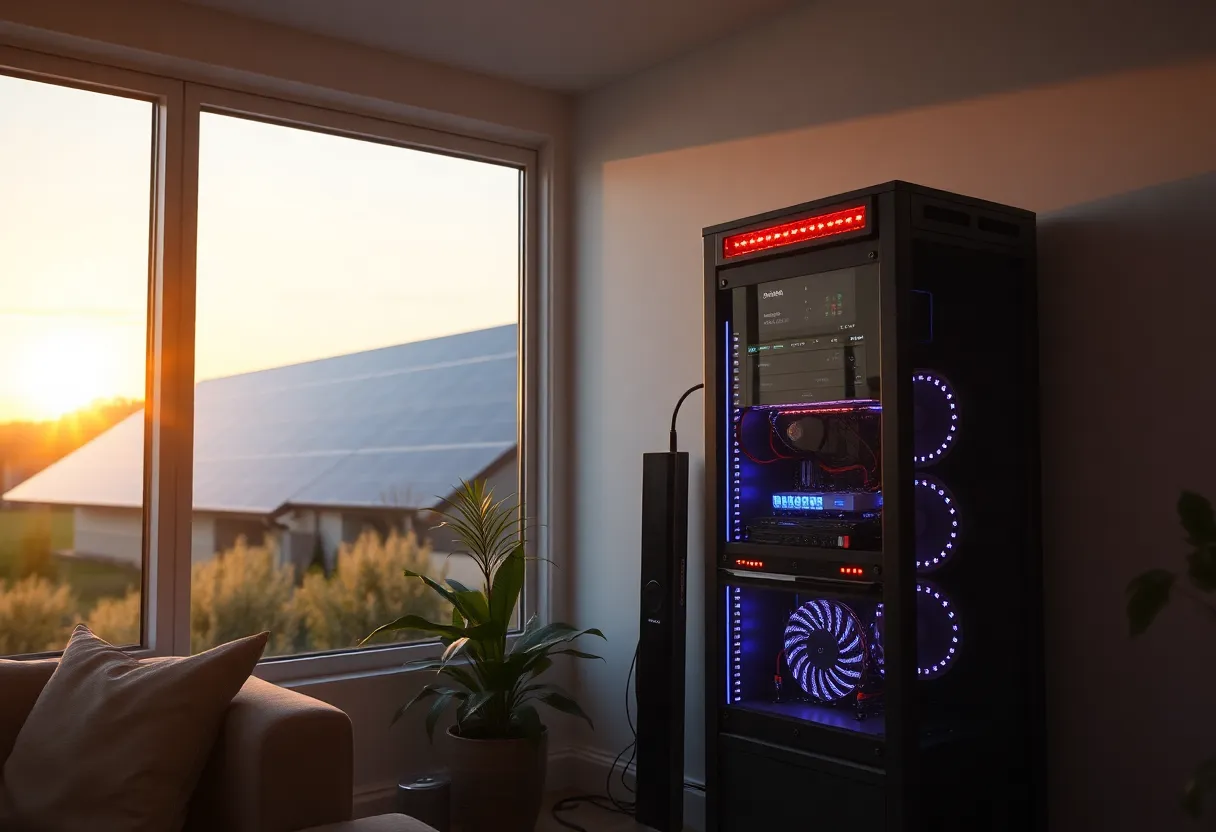
This isn’t a story about going off-grid entirely. My house is still grid-connected. But for the better part of eight months, I ran the lab—a NAS, a mini-PC cluster, some networking gear, and a few always-on monitoring devices—on a solar-plus-battery setup, using the grid only when the batteries couldn’t handle overnight draw or cloudy stretches. Here’s what actually happened.
What a Homelab Actually Draws
The first thing renewable power forces you to do is actually measure your gear’s consumption, which most homelab enthusiasts have never done with any precision.
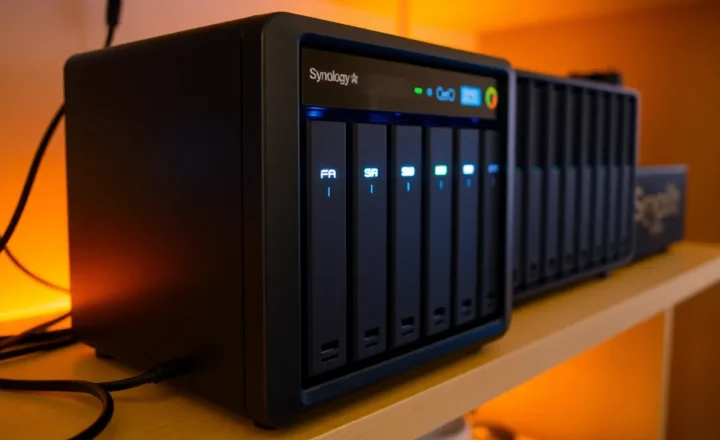
I picked up a smart plug with energy monitoring and ran each device through it for a few days before switching to solar. The results were educational in a slightly uncomfortable way. My TrueNAS box—a repurposed desktop with four spinning drives—averaged 48 watts at idle. Not terrible, but not nothing. The mini-PC cluster (three Intel NUC-style machines running Proxmox) pulled about 22 watts total at idle, spiking to around 75 watts during backups or compute-heavy jobs. The Unifi switch and access point together sat at a steady 12 watts. A few Raspberry Pis and monitoring devices added another 8 watts.
Total idle draw: roughly 90 watts. During active use: 120–160 watts. Over a 24-hour period, that’s between 2.2 and 3.8 kilowatt-hours per day just for the lab—before any workstation load.
This is important context for what follows. A 90-watt continuous draw sounds modest on paper. Against a solar setup, it’s genuinely demanding—solar panels don’t produce at rated output for most of the day, and battery storage has real capacity limits.
The Setup: What I Actually Used
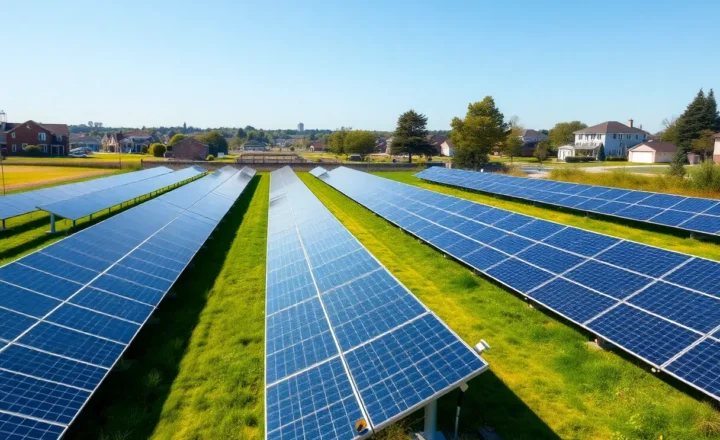
I started with a 400-watt rooftop panel array—two 200W panels on a south-facing pitched section of my garage roof. These fed a MPPT charge controller into a 24V lithium iron phosphate (LiFePO4) battery bank: two 100Ah batteries in parallel, giving me 200Ah at 24V, or about 4.8kWh of usable capacity (I was comfortable drawing down to 20% state of charge on LiFePO4, so effective usable was closer to 3.8kWh).
That theoretical 3.8kWh versus a 90W continuous draw means I had roughly 42 hours of runtime from a full charge—but that’s in an ideal world. In practice, overnight draw, partial charging days, and efficiency losses in the inverter reduced that considerably.
The inverter I used was a pure sine wave unit rated at 1000W continuous—overkill for the lab’s steady draw but necessary because some of the NAS drives don’t like modified sine wave on startup.
What Actually Goes Wrong
The theory worked. The reality had more texture.
Cloudy week cascades. My biggest miscalculation was underestimating multi-day cloudy periods. A single cloudy day is fine—panels still produce 10–30% of rated output under heavy overcast. Two consecutive heavily clouded days, however, combined with my lab running through the night, could bring the bank down to 30–40% state of charge before I started drawing from the grid. Three consecutive cloudy days happened twice over winter, and both times I had to manually switch to grid power. If you want true independence, you need either a much larger battery bank or significantly smaller loads.
Seasonal swing is steeper than you think. At my latitude (roughly 51°N), summer production and winter production differ by a factor of three or more. In July, the panels often hit 350–380W at peak and accumulated enough daily to more than cover the lab’s draw, leaving surplus charging time. In December, production regularly dropped below 100W on overcast days, and peak hours were short. Planning a renewable homelab on summer performance and then hitting December is a rude awakening.
Inrush on drive spin-up. This surprised me. When my NAS was powering on from cold and spinning up four drives simultaneously, the inrush current caused momentary voltage sag on the battery bank’s output. The inverter handled it without dropping, but it was visible on the monitoring data and added meaningful stress to the system. If I were building this again, I’d configure the NAS to stagger drive spin-up with a small delay, which most NAS operating systems support.
Temperature and battery performance. LiFePO4 is better than lithium cobalt in cold temperatures, but it still degrades in performance below about 5°C. My batteries were in an unheated garage, and I started noticing measurable capacity reduction in late autumn. I ended up wrapping them in an insulating enclosure with a small reptile heating mat on a thermostat—inelegant but effective. If your lab is in a heated space, this won’t matter.
The Upside: What Renewable Power Teaches You
The constraints are instructive, and not in a frustrating way. Running on a finite, variable energy source forces a kind of discipline that just doesn’t exist when you’re drawing from an unlimited grid connection.
I became much more deliberate about what I actually needed to run continuously. The NAS needed to stay on for backups and monitoring. The Proxmox cluster—did I really need three nodes running 24/7, or could one be in a low-power suspend state until needed? I reduced my cluster to one always-on node and two that I woke on LAN when I needed them. That dropped my constant draw by about 14 watts, which sounds trivial until you run the numbers over a month.
I also got serious about backup schedules. Rather than running backups throughout the night when solar input was zero, I shifted everything to run between 10am and 3pm—peak solar hours. CPU-intensive jobs, rsync operations, update runs, anything with significant computational cost, got scheduled during daylight. This is actually a sensible practice regardless of energy source, since it means your heaviest workloads run when the power supply is most abundant.
Energy monitoring became something I actually checked. My setup fed into Home Assistant via a current monitoring clamp on the solar circuit, and I had a dashboard showing real-time consumption, battery state, and solar production. Watching the production curve against consumption made me understand energy in a way that reading about it doesn’t achieve. There’s something clarifying about seeing a beefy backup job show up as a consumption spike on a graph that’s also showing you how much solar you have left for the day.
The Numbers Over Eight Months
I tracked grid import carefully across the experiment. In the five summer months, I imported essentially no grid power for the lab—the solar setup handled it entirely, with occasional surplus being exported. In the three winter months, I imported about 45kWh for the lab specifically, mostly during cloudy stretches.
Total grid import for the lab over the eight-month period: roughly 52kWh. My local electricity rate at the time was about £0.28/kWh, so that’s about £14.56 in grid import for eight months of lab operation. For context, without the solar setup, running the lab at average 100W continuous draw for those eight months would have cost roughly £215 at the same rate. The solar-plus-battery system handled about 93% of the load.
The hardware cost of the setup was around £600—panels, controller, batteries, inverter, and miscellaneous wiring and mounting. At the energy savings rate, payback purely on lab electricity is around 2.5 years. That’s before accounting for other household loads I also shifted to the solar circuit during peak hours, and before accounting for rising electricity prices.
What It Takes to Actually Succeed
If you want to try this, here’s what I’d tell you honestly:
First, measure before you plan. Don’t estimate your lab’s power draw—measure it with a smart plug or a clamp meter. The difference between what you think something draws and what it actually draws at idle is often significant.
Second, right-size your battery bank for winter, not summer. This is counterintuitive because solar numbers are most appealing in summer. But if you want the system to actually handle your load year-round, your battery bank needs to cover two to three days of consumption with minimal solar input. For a 90W continuous load, that’s 6–7kWh of usable capacity minimum.
Third, use LiFePO4 rather than older lead-acid chemistry. The usable depth of discharge, cycle life, and temperature performance difference is large enough that lead-acid isn’t worth considering for this application in 2026. LiFePO4 prices have come down significantly.
Fourth, design for load shifting. Don’t fight the solar curve—use it. Schedule heavy jobs during peak production hours. Use Home Assistant or any other home automation layer to start energy-intensive workloads when solar production is above a threshold.
And fifth: make peace with grid backup. Unless you’re willing to spend significantly more on battery capacity, you’ll need grid backup for winter cloudy stretches. That’s not a failure—it’s a sensible hybrid approach. Even running 90% of your lab from renewable energy is a meaningful outcome.
The Broader Point
What struck me most about this experiment wasn’t the financial calculation or even the environmental one. It was how much richer my understanding of energy systems became after actually working with one.
Most of us interact with electricity as an infinite, cost-free resource (within reason). We plug things in and they work. Adding a production and storage layer between the plug and the power source makes every watt visible and meaningful. You start asking questions about your gear—what’s drawing what, when, and why—that you’d never ask otherwise.
For anyone who already builds and tinkers with technology, that kind of informed curiosity is genuinely rewarding. The fact that it can also make a dent in your electricity bill and your carbon footprint is a reasonable bonus. Whether you go all-in or just try a modest solar charging setup for a subset of your gear, the learning curve is worth it.