What It Takes to Land a Spacecraft in Permanent Shadow: Lunar South Pole Engineering

Marcus Oduya
July 7, 2026
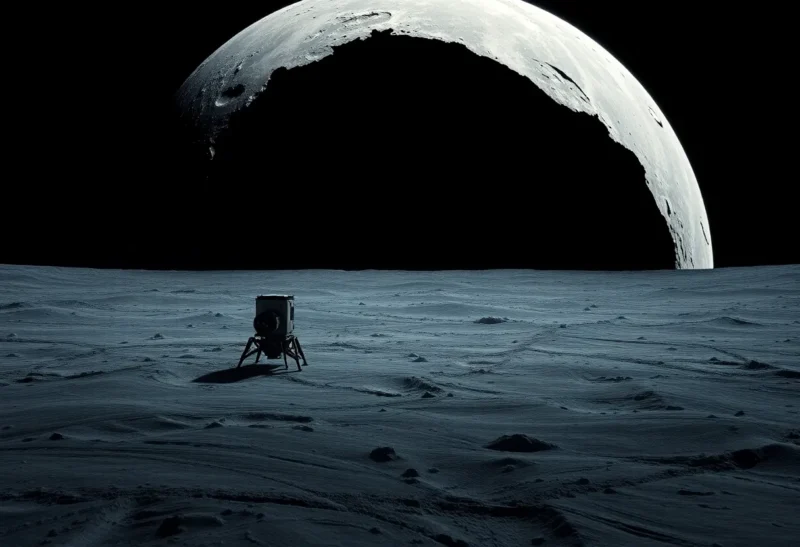
The lunar south pole is perhaps the most coveted real estate in the solar system right now — and also one of the most hostile places we’ve ever tried to land a machine. Not because it’s far away, or because the terrain is especially jagged (though it is), but because of light. Or rather, the permanent absence of it.
In the craters near the south pole, sunlight never reaches the floor. Some of these craters haven’t seen direct illumination in billions of years. They’re cold enough — temperatures can drop below -230°C — that water ice deposited by ancient comets has simply stayed put, unvaporized, waiting. That ice is one of the most strategically valuable resources humanity has located off Earth. It’s rocket propellant, drinking water, and radiation shielding all in one place. Which is why Artemis, JAXA, ESA, and a growing list of commercial players are all pointing their ambitions at the same shadowed craters — and why the engineering challenges of actually landing there are unlike anything we’ve solved before.
Why Landing Here Is Fundamentally Different
Most of our lunar landing experience — Apollo, the Soviet Luna program, and recent missions like Chandrayaan-3 and Intuitive Machines’ IM-1 — happened at mid-latitudes. Those sites have one enormous advantage: they get sunlight. Solar panels work. The thermal environment is manageable. And while none of it is easy, the basic engineering framework is predictable.
Permanently shadowed regions (PSRs) break nearly every assumption in that framework.
The first problem is power. A lander sitting in permanent darkness can’t use solar panels. Full stop. That immediately limits your options to three: batteries alone (which are finite and cold-sensitive), radioisotope thermoelectric generators (RTGs, which produce heat and electricity from decaying nuclear material), or some combination. RTGs are the most reliable option for long-duration surface operations in the dark — they’re what kept the Apollo lunar surface experiments running for years, and what NASA used on Voyager — but they are expensive, politically complicated to certify, and exist in very limited supply. NASA’s Kilopower project (now KRUSTY, or Kilopower Reactor Using Stirling Technology) is developing a fission surface power system meant to produce 10 kilowatts continuously, which would be transformative. But it hasn’t yet flown.
For the descent itself, some missions are designing to land in or near the shadow rather than fully within it. Permanently shadowed craters are often near permanently illuminated ridges — Nobile, Shackleton, and Haworth are all close to elevated terrain that sees near-continuous sunlight. A lander can touch down at the lit edge, deploy instruments into the shadowed zone, or drive a rover into the dark. That’s the architecture NASA’s VIPER rover was designed around before its cancellation in 2024. It’s also how the upcoming CLPS landers are approaching the problem: get close, but don’t necessarily commit to full darkness if you can help it.
GNC Without GPS — Navigating to a Crater Floor
Guidance, navigation, and control (GNC) for a powered descent is already a hard problem. You’re decelerating from orbital velocity to a near-zero vertical speed, often over just a few minutes, while simultaneously navigating to a specific landing site. On Mars, Curiosity and Perseverance used terrain relative navigation (TRN) — a system that compares camera imagery of the ground below to stored maps and uses the match to determine position in real time. The technique works well, and NASA has spent years refining it for the Moon.
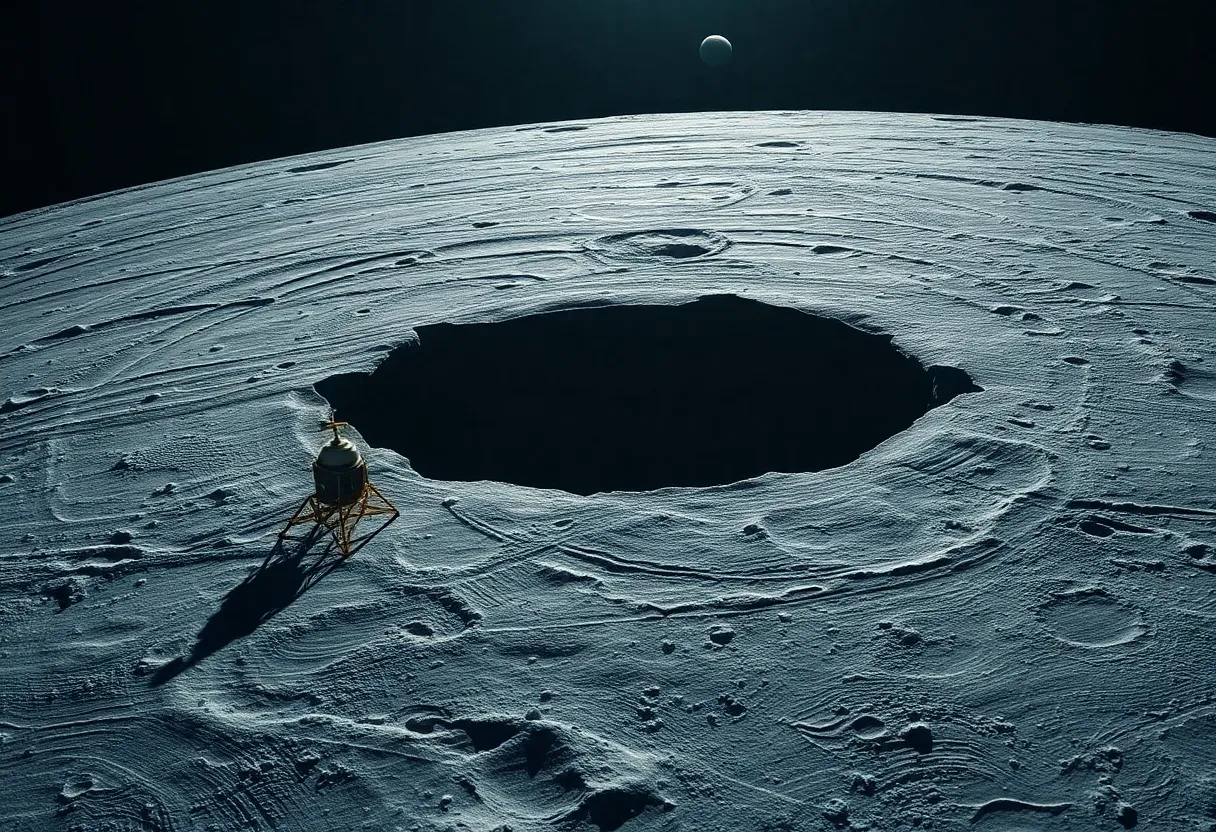
But PSR landings add a wrinkle TRN wasn’t designed for: there are no landmarks in the dark. The crater floors are featureless under visible light. You can build a map from orbital radar altimetry (LRO’s LOLA instrument has produced remarkably detailed polar topography), but the camera-based navigation that TRN relies on simply doesn’t function without light.
The solutions being developed are genuinely interesting. LIDAR-based navigation can work in total darkness — you’re building a real-time map of the terrain using laser pulses rather than reflected visible light. Astrobotic’s Peregrine and Griffin missions, as well as Intuitive Machines’ upcoming IM-3, are all incorporating LIDAR as part of their descent sensor suite. The challenge is processing speed — you need to reconstruct enough of the terrain in real time to detect hazards and confirm you’re heading to the intended site, all during a fast, irreversible descent sequence.
Star trackers are another piece of the puzzle. A spacecraft descending toward the lunar south pole can maintain absolute orientation by tracking the star field above — which is always visible from the Moon’s airless surface. Combined with inertial measurement units (IMUs) and altimetry, you can build a reasonably accurate state vector even in the dark. It’s not as elegant as GPS, but it works, and it’s what many landers are relying on.
There’s also a longer-term infrastructure solution: a lunar navigation constellation. ESA has studied what a set of relay and navigation satellites in lunar orbit would look like. NASA’s Lunar Gateway, when it eventually flies in the late 2020s or 2030s, includes provisions for this kind of support. But for missions landing at the south pole in the next few years, that infrastructure doesn’t exist yet. Every lander going into the dark right now is navigating on its own.
Thermal Management in the Extreme Cold
The temperatures in permanently shadowed craters are extreme enough to affect materials in ways that test designers rarely have to think about. Most spacecraft are designed to manage heat — keeping electronics warm enough to function during transit from the Sun — but a PSR environment pushes the problem into a different category entirely. Standard lubricants become too viscous to flow. Battery performance degrades sharply below -20°C and fails entirely at the temperatures found in deep PSRs. Electronic components have rated operating ranges that simply don’t extend to -200°C.
Thermal management for these missions involves a combination of strategies. Radioisotope heater units (RHUs) — small capsules of plutonium that produce a few watts of heat passively — are standard equipment for cold-environment missions. They don’t generate electricity, just warmth, but even a few watts in the right place can keep a critical component above its minimum operating temperature. Multi-layer insulation blankets trap what little heat the spacecraft generates internally. Heater circuits protect batteries and propellant lines during dormancy.
The VIPER rover’s thermal design was notably complicated precisely because of the south pole environment. Unlike the relatively benign equatorial sites where Yutu and Pragyan roamed, VIPER’s designers had to plan for a rover that might spend extended time in the dark — either because it drove into a PSR to sample, or because it got caught out by the lunar night, which lasts about two weeks everywhere on the Moon. The solution involved phase-change materials and careful power budgeting to ensure the rover could survive cold periods without continuous battery drain.
Communication in the Shadow
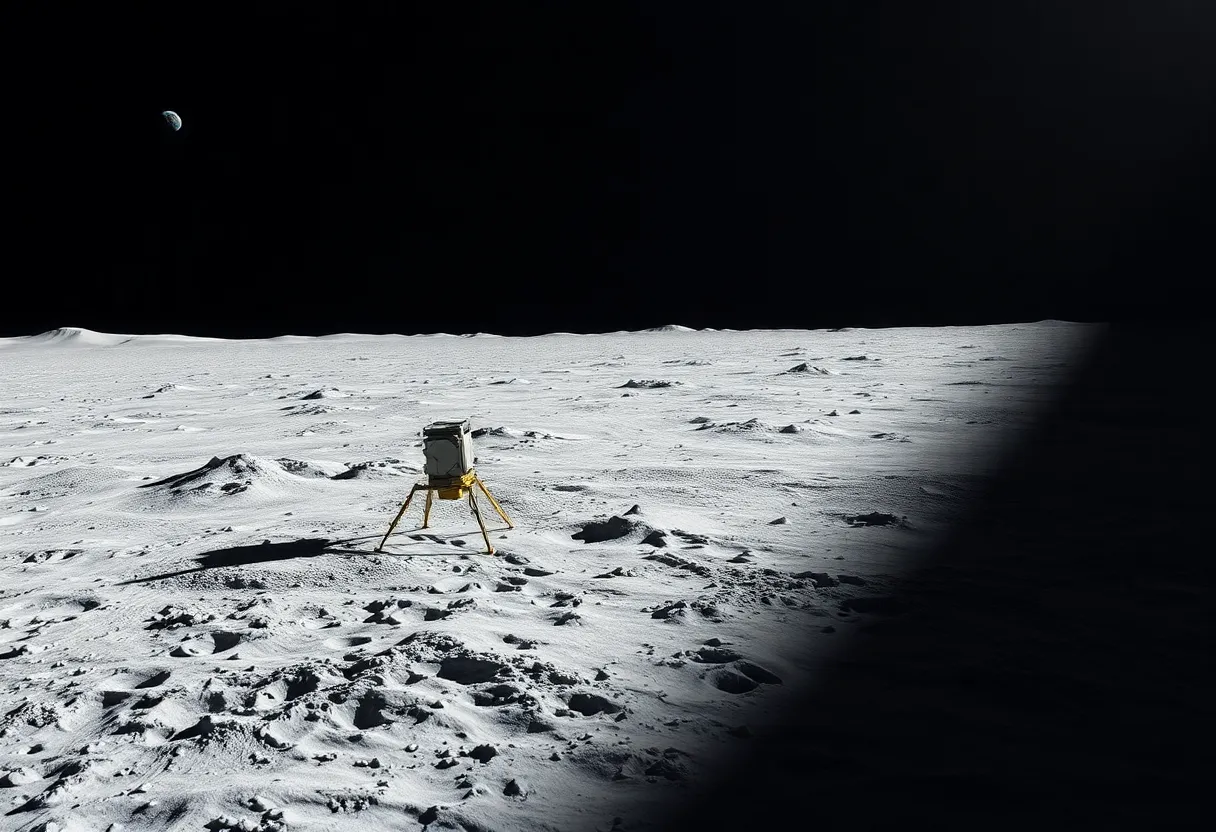
Getting data back from the crater floor is another unsolved problem that sounds simple until you map it out. Radio communication with Earth requires line of sight — or at least a relay in line of sight. The south pole is near the lunar limb from Earth’s perspective, which means the geometry of direct Earth contact is awkward. Antennas pointing at Earth from the south pole are looking at a low elevation angle, and the surrounding crater walls can block that view entirely depending on where you’ve landed.
Relay orbiters help. LRO has served as a relay asset for some missions. The Lunar Gateway, once in its near-rectilinear halo orbit, will provide excellent coverage of the south pole — it’s one of the reasons that unusual orbit was chosen. But until the Gateway is operational, missions going into the deep south pole terrain are essentially on their own for periods when the geometry isn’t favorable. That creates requirements for data buffering and mission-critical command sequencing that add complexity to an already demanding design.
There’s also the question of how you communicate from the surface to a relay satellite that may only be over the horizon for part of each orbit. Ka-band systems with directional antennas can track an orbiting relay, but you need to know where that relay is precisely enough to point at it, and you need to have enough power on the surface to run the transmitter. Both of those constraints tie back to the power problem.
What’s Actually Flying, and When
The current landscape of south pole missions is a mix of ambition and sobering failure rates. IM-1, Intuitive Machines’ first lunar lander, reached the surface in February 2024 — the first American-built spacecraft to land softly on the Moon since Apollo 17 in 1972. It tipped over on landing due to a combination of navigation error and terrain, losing its solar panels to an awkward angle, but it returned data. Astrobotic’s Peregrine failed before reaching the Moon at all. Japan’s SLIM landed successfully, if sideways.
The broader lesson from recent years is that landing on the Moon is genuinely hard, and landing near the south pole is harder still. The technical margin is thin. Missions that work are the ones where the engineering has been done carefully, tested extensively, and designed with fault tolerance in mind rather than optimized purely for launch mass or cost.
NASA’s Artemis III mission, if it flies as currently planned, will be the first crewed landing at the south pole — targeting a site near the Shackleton Crater rim that stays illuminated while being within driving distance of PSR ice deposits. That mission depends on the SpaceX Starship HLS system, which adds its own set of unresolved engineering questions. But the site selection itself reflects exactly the compromise that most near-term south pole missions are making: get close to the shadow, close enough to sample and study it, without committing to the full darkness until the technology to survive there is more mature.
The Engineering That Still Needs to Happen
A fully capable south pole landing — one that can operate continuously in permanent shadow, not just at the lit edge of it — requires a solved power problem. That means either flight-proven RTGs in sufficient quantity, or a demonstrated surface nuclear reactor. Both exist in some form, but neither is ready to fly on a landing mission in the next two or three years. The ice we’re trying to reach may be stratigraphy-accessible from the surface, or it may be several meters down; extraction methods haven’t been tested at lunar scale. And the infrastructure that would make it routinely accessible — relay satellites, power beaming from lit ridges to shadowed floors, surface networking — is years away from deployment.
What we have right now is a generation of missions doing the hard reconnaissance work: proving landing GNC in polar terrain, characterizing the thermal and radiation environment, and identifying exactly where the ice is and how accessible it is. That science and that experience is genuinely valuable — not as a prelude to science papers, but as the essential basis for designing the systems that will eventually operate in the dark reliably.
The south pole craters have been cold and dark for billions of years. The ice has been patient. The engineering still has some catching up to do.