A Dumbphone Sidekick: Two-Device Boundaries Without Deleting Your Smartphone

Rachel Stein
April 8, 2026
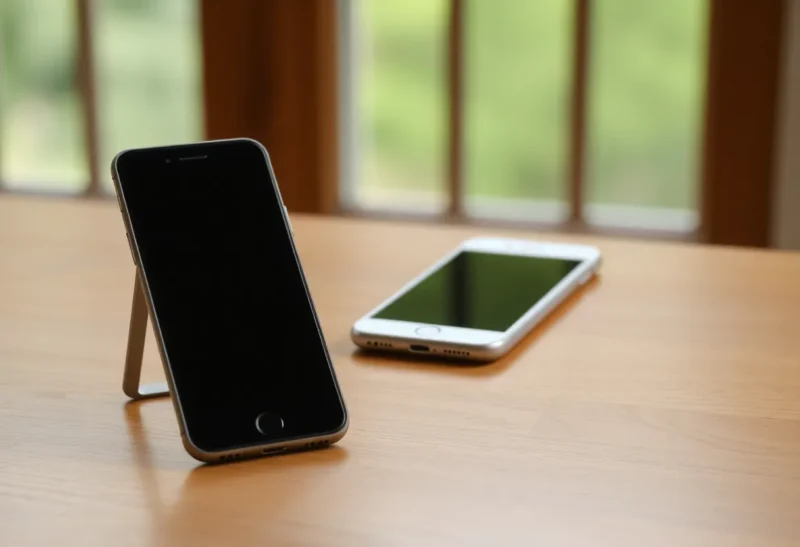
Digital minimalism content loves the dramatic flourish: torch your smartphone, buy a flip phone, become a woodland creature who only speaks in IMAP. Real life rarely cooperates. Work apps, banking, two-factor codes, and family group chats all assume you carry a capable pocket computer. A softer pattern is gaining traction: keep the smartphone for what it must do, and add a dumbphone sidekick for walks, evenings, or weekends when you want friction between you and infinity scroll.
This is not moral purity—it is role separation. Two numbers, two rhythms, two social contracts with yourself.
Why two devices beat one heroic app block
Screen-time limits and focus modes help until willpower fatigues or a meeting link needs Slack. A second device changes the physics: the distracting apps literally live on another object you left in a drawer. Friction is honest. You can still emergency-grab the smartphone; you are not cosplaying survivalism—you are buying attention back at retail prices.
Choosing the sidekick
Look for week-long battery, durable buttons, clear call audio, and LTE where you need SMS. KaiOS and basic Android feature phones differ; some support WhatsApp or maps, which may help or sabotage your intent. If the goal is less, prefer models that cannot casually reinstall your whole social graph.
Number strategy: SIM, eSIM, and forwarding
Some carriers tolerate dual-SIM setups; others make you dance. Options include:
- Dedicated prepaid SIM for the dumbphone with selective call forwarding from the smartphone.
- eSIM on smartphone + physical SIM in sidekick for clean separation.
- VoIP or Wi-Fi–only sidekick if you only need it around the house—cheap, but know the limits.
Test emergency calls and SMS codes before you rely on the setup during travel.
Social expectations and polite boundaries
Tell close contacts which number is “slow.” Otherwise people assume ghosting. Autoresponders on the smart line can reduce anxiety: “If urgent, call; otherwise I answer evenings.” The sidekick works best when your network understands it as a presence choice, not a personal slight.
Costs beyond hardware
Second lines add monthly fees; cheap phones still need chargers and maybe a rugged case. Weigh that against therapy bills for notification rage—only half joking. For some knowledge workers, the sidekick pays for itself in recovered deep work hours.
Security and 2FA hygiene
Moving SIMs can collide with SMS-based two-factor authentication. Prefer app-based or hardware keys for accounts that matter, and update recovery codes before you swap cards on a weekend trip. The sidekick should simplify your life, not lock you out of payroll.
Kids, parents, and the “reach me” contract
Families sometimes adopt a shared rule: the dumbphone is the walk device; the smartphone stays for homework help and logistics. Clarity beats stealth. If caregivers know which number reaches you fastest, the experiment survives school pickup chaos.
When this pattern fails
If your job mandates MDM on one device, if you parent solo with unpredictable emergencies, or if you live in areas with patchy voice coverage, carry the smartphone anyway—logistics beat aesthetics. The sidekick is a tool, not a covenant.
Why it still matters in 2026
Algorithms grew sharper; attention did not. A two-device boundary admits that software defaults are hostile to calm. You are not “going backward”—you are designing a small offline republic inside a connected life. Keep the smartphone for maps and mercy; let the sidekick hold the parts of you that still remember how to walk without documenting it.