Zapier Looping Limits vs Recursive Webhooks: Where No-Code Hits Computer Science

Naomi Brooks
April 8, 2026
Zapier’s visual editor makes branching feel easy: if this, then that, maybe loop over these rows. Then your workflow needs to walk a graph, paginate until empty, or retry with backoff until a remote system agrees—and suddenly you are sketching recursion on a whiteboard while your Zap hums along happily on the first page of results. Loops in Zapier (and cousins) are powerful; they are also bounded. Recursive webhooks—having a Zap call itself via HTTP—are a folk pattern that can work and can also invent infinite bills. The tension between them is where no-code meets sophomore computer science.
This article clarifies what each approach actually buys you, where limits bite, and how to graduate without shame.
We will not chase version-specific feature names that change quarterly; instead you get durable concepts—termination, state, and cost—that stay relevant even when the UI moves a button.
What Zapier-style loops are good at
Built-in looping is ideal when you have a finite list produced inside the same run: spreadsheet rows, line items, API records returned in one response. You can transform each element, branch on fields, and fan out actions. The mental model is “for each item in this array,” which is most of business automation.
Loops pair well with Formatter steps, filters, and human-readable error handling. For non-developers maintaining the Zap, this is gold—your future self included.
Where loops stop being enough
Real systems often require pagination: “call me again with the next cursor until has_more is false.” You can sometimes simulate that with a loop if you know the maximum number of pages in advance, but that is a hack, not a plan. Unknown-depth iteration is recursion-shaped, not loop-shaped.
Similarly, retry until condition patterns—wait for a background job to finish—look like loops but need state between attempts. Zapier can schedule delays, yet each re-entry is a new run with new billing and new failure modes.

Recursive webhooks: the clever hack
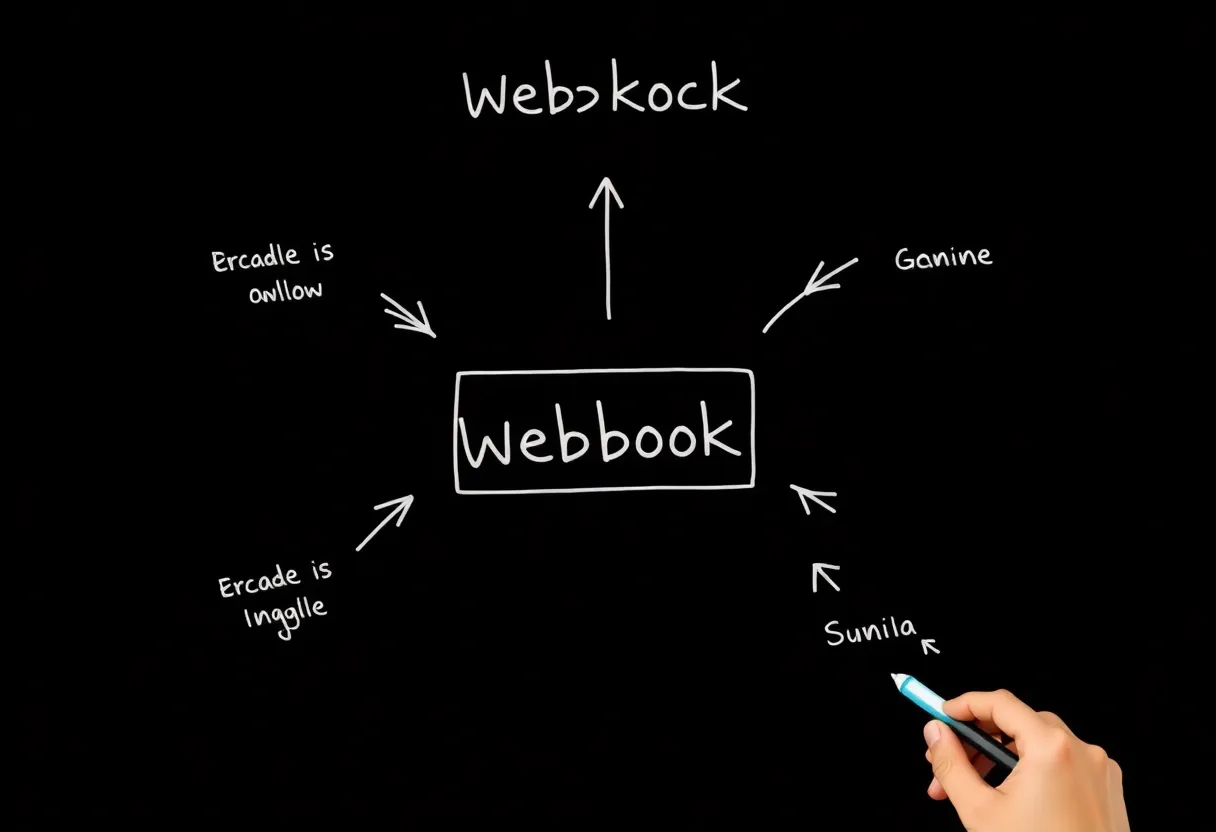
The pattern: a Zap finishes a chunk of work, then POSTs to a Catch Hook URL that triggers the same Zap (or a sibling) with updated state in the payload. In effect you hand-roll tail recursion with HTTP. It can work around pagination boundaries and keep each run short enough to avoid timeouts.
People reach for recursion when the platform’s native iterator cannot express “keep going until done” without hard caps. That is a legitimate engineering trigger. It is also how teams accidentally build accidental fork bombs: one miscounted empty page and your hooks chain forever—or until your wallet intervenes.
Termination conditions: the only part that matters
Every recursive pattern needs a base case: “stop when cursor is null,” “stop when processed_count equals total,” “stop when API returns zero rows.” Encode that condition twice—once as logic, once as a safety fuse (max iterations). The fuse saves you when vendors change response shapes on a holiday weekend.
Document the stop condition where operators will see it. “It works” is not documentation; “stops when next_page is absent OR iteration > 50” is.
Cost modeling: tasks, time, and surprise bills
Loops multiply work inside a run; recursive webhooks multiply runs. Your accounting should include both. A “cheap” webhook might be expensive at volume if each hop triggers premium apps. Map worst-case monthly volume before you promise finance a fixed automation budget.
It also introduces new failure modes: duplicate deliveries, partial progress, and exponential task growth if you misconfigure a termination condition. You have reintroduced distributed systems without the observability stack that usually comes with them.
Platform limits that matter
Zapier tasks, runtime limits, and plan tiers cap how much work a single automation can do. Loops multiply tasks; recursion multiplies runs. Either can hit ceilings unexpectedly when data volume spikes. Before you design around recursion, read current limits—numbers change.
Also watch per-step timeouts. A long-running HTTP call inside a loop can exhaust the whole run, leaving partial writes unless you design compensating steps. Sometimes splitting work across recursive runs is not cleverness—it is meeting the runtime box the platform gives you.
Debugging recursive Zaps: where the pain concentrates
Traditional Zaps fail in one place; recursive chains fail across time. Logs become non-linear: step six on run A triggers run B which triggers run C. Use consistent external IDs in payloads, mirror critical state to a spreadsheet or database, and resist the urge to “just add another path” when debugging at midnight. The fix is almost always tighter state, not more branches.
Security: signing your callbacks
A public webhook endpoint that retriggers work is attractive to bots. Protect Catch Hook URLs like secrets—rotate if leaked, consider IP allowlists where feasible, and sign payloads when your platform supports it. Abuse is rare until it is suddenly expensive.
Idempotency: the word no one wants until money is involved
If your recursive webhook retries, you may process the same logical item twice. Engineering teams solve this with idempotency keys and deduplication tables. No-code stacks often skip that until Stripe complains. If your pattern touches payments, inventory, or irreversible writes, invest in dedupe before cleverness.
Storage steps: memory without a real database
Zapier Storage and similar key-value tools let you stash cursors between runs—sometimes enough to fake civilized pagination without recursion. The trade-off is clarity: your state lives in a side channel not visible in the graph unless you document it. For teams, prefer naming conventions and a short README in the team wiki; future maintainers will not intuit your cursor key.
When to graduate to code
Consider a tiny worker (Cloudflare Worker, Lambda, small VPS) when you need:
- Deterministic pagination with backoff.
- Strong guarantees about exactly-once processing.
- Stateful machines that survive restarts.
Zapier can remain the trigger or the notifier—your orchestration does not need to be all-or-nothing.
Operational hygiene either way
Log correlation IDs across recursive calls. Add a max depth counter in the payload. Alert when depth crosses a threshold—usually a bug, not a feature. Test with tiny datasets before you unleash production traffic.
Compare to Sub-Zaps and “split” patterns
Zapier’s own abstractions—Sub-Zaps, paths, storage—exist partly to keep people from building unsafe recursion. A Sub-Zap can centralize repeated logic, but it does not magically add transactional semantics. If you find yourself chaining Sub-Zaps with increasingly clever payloads, pause and ask whether you are encoding a state machine in JSON strings. Sometimes that is fine; sometimes it is a signal to migrate.
Rate limits and polite API citizenship
Loops and recursive calls both stress upstream APIs. Pagination loops that fire fast can trip 429s; recursive webhooks that retry aggressively can amplify load. Bake in sleeps, respect Retry-After headers where possible, and coordinate with your API provider if you are moving serious volume. Getting banned is an expensive form of observability.
Testing: table-driven examples beat hope
Build a tiny fixture dataset: empty results, single page, multi-page, intermittent 500s. Run each through your pattern in a sandbox. Record task counts. If you cannot predict tasks before production, you do not understand the automation yet.
How Make.com and n8n change the picture (briefly)
Other platforms expose iterators, routers, and server-hosted queues with different limits. The conceptual split remains: native constructs for bounded iteration versus hand-rolled cycles for open-ended work. n8n self-hosters might reach for Bull queues; Make users might lean on scenario-wide error handling. The discipline—idempotency, backoff, max depth—is the same even when the logos change.
When loops are the right abstraction
Stay with first-class loops when your data is already materialized, transformations are row-local, and you can bound the worst case. Examples: enriching a CSV export, tagging CRM records, or generating one email per invoice line. If you can describe the job as “for each X do Y” with X fully present in memory, you probably do not need recursion.
When recursion becomes unavoidable
Reach for recursion-shaped patterns when the stopping condition depends on external state you only learn after each call—classic pagination, cursor-based exports, or polling APIs that tell you “come back later.” If you pretend you know the depth in advance, you will eventually be wrong.
Closing
Loops are for lists; recursion is for unknown depth; Zapier is for shipping. Mix patterns deliberately, respect platform limits, and remember that every webhook call is money and time. When the whiteboard wins over the canvas, that is not failure—it is the stack telling you the truth.
If you remember one rule: never recurse without a proven base case—in code or in Zaps—or you will discover infinite tasks the expensive way.
Ship the boring thing first—bounded loops and clear stops—then add cleverness only when the data proves you need it. Computer science professors agree; your finance team will too.