Rare Earth Elements: Why Your Gadgets Depend on a Handful of Mines

Jordan Lee
March 15, 2026
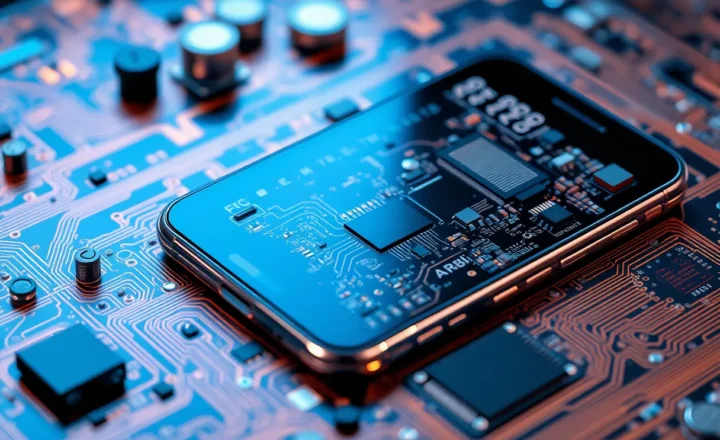
Your phone, your laptop, your EV motor, and your wind turbine have something in common: they rely on a group of elements that are neither especially rare nor evenly distributed. “Rare earths” is a catch-all for 17 elements—lanthanides plus scandium and yttrium—that show up in magnets, screens, batteries, and catalysts. The name is misleading; the dependency is real. Here’s why your gadgets depend on a handful of mines and what that means for the tech you use every day.
What Rare Earths Actually Are
Rare earth elements (REEs) aren’t rare in the sense of being scarce in the Earth’s crust. Some are more abundant than lead or tin. What’s rare is finding them in concentrations high enough to mine economically, and in forms that are relatively easy to separate and refine. They tend to occur together, and the chemistry of separating them is messy and often environmentally heavy. So production has historically clustered in a few places that had the right geology, the right infrastructure, and the willingness to deal with the waste. For decades, that meant China. China still dominates supply and refining; other countries have started to develop or reopen mines and processing, but the concentration of production is still the defining feature of the market.
Why do they matter for tech? Because they have properties that are hard to match with other materials. Neodymium and other rare earths go into the strongest permanent magnets we know—the kind that go into hard drives, headphones, and electric vehicle motors. Europium and terbium are used in phosphors for displays. Lanthanum and cerium show up in catalysts and in some battery chemistries. So when you hear about “rare earths,” think: small amounts per device, but critical function. You can’t easily swap them out without losing performance or increasing cost. That’s why supply chain and geopolitics around rare earths have become a recurring theme in tech and energy policy. A single smartphone might contain only a few grams of rare earths in total, but those grams are what make the speakers small and powerful, the screen bright and colour-accurate, and the vibration motor compact. Scale that across billions of devices and the demand adds up.

The Geography of Supply
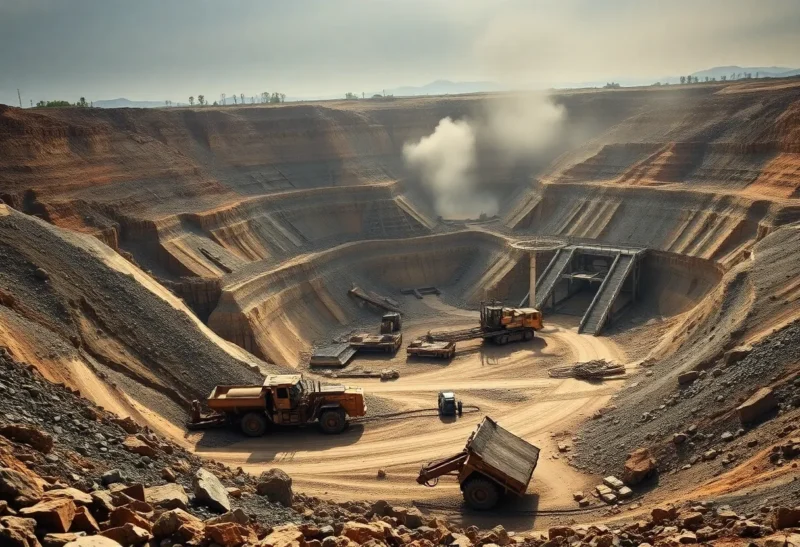
Today, the majority of rare earth mining and refining happens in China. That’s the result of decades of investment, relatively permissive environmental regulation in some regions, and the fact that China had the ore bodies and chose to build the processing capacity. Other countries have deposits: the U.S. has Mountain Pass in California; Australia, Myanmar, and others have significant reserves. But refining—turning ore into the pure compounds that industry needs—is still concentrated. So even if the ore is dug elsewhere, it often gets sent to China for processing. That creates a single point of failure: disruption there—whether from policy, trade, or environmental crackdowns—ripples through the whole supply chain.
In response, governments and companies have started to diversify. New mines and processing facilities are being planned or built in the U.S., Australia, and Europe. Recycling and recovery of rare earths from e-waste are also getting more attention, though recycling is still a small fraction of supply. The goal isn’t to make rare earths “common” in the sense of abundant everywhere, but to reduce the risk of depending on one dominant producer. That takes time and capital; in the meantime, your gadgets still depend on that concentrated supply. Past supply shocks—for example, export restrictions or environmental crackdowns that limited Chinese output—have sent prices spiking and reminded the industry how thin the margin is when one region does most of the work.
The Environmental Cost of Getting Them Out
Mining and refining rare earths is chemically intensive. The ores often contain radioactive thorium and uranium, and the separation process can produce large volumes of tailings and wastewater. That’s one reason production has concentrated in places where regulation was historically looser or where the economic incentive was high enough to absorb the cost. As other countries build or expand their own capacity, they face the same trade-off: rare earths are essential for clean tech (EVs, wind turbines) and consumer electronics, but getting them out of the ground and into usable form has a real environmental footprint. There’s no free lunch—either we accept that footprint somewhere, or we reduce demand through efficiency and recycling. So far, efficiency gains and recycling have only partly offset growing demand.
Why Substitution Is Hard
Engineers have looked for ways to use less rare earth content or to substitute other materials. In some applications, progress has been made: for example, some magnets use less neodymium or different formulations. But in many cases, rare earths offer a combination of magnetic strength, temperature stability, or optical properties that alternatives can’t match at the same cost and size. So we’re not about to stop using them; we’re trying to use them more efficiently and to secure supply from more places. Your next phone and your next EV will almost certainly still contain rare earths. The question is where they’ll come from and how much we’re willing to pay—in money and in environmental cost—to get them. Demand is also shifting: as the energy transition accelerates, EVs and wind turbines are consuming a growing share of rare earth supply. The same elements that go into your earbuds also go into the motor of an electric car. So the competition for supply isn’t just between gadget makers; it’s between entire industries that are all betting on the same small set of elements and the same small set of mines.
The Takeaway
Rare earth elements aren’t rare in the ground, but they’re rare in the sense that only a few places produce them at scale. Your gadgets depend on that production. Understanding that dependency doesn’t change the device in your hand, but it does explain why supply chain and policy discussions about “critical minerals” and “strategic materials” keep coming back to a handful of elements and a handful of mines. The tech we rely on is literally built on dirt from specific places—and that’s worth remembering the next time someone talks about where our stuff comes from.