Why Data Center Cooling Is the Next Energy Bottleneck

Halima Okafor
March 15, 2026
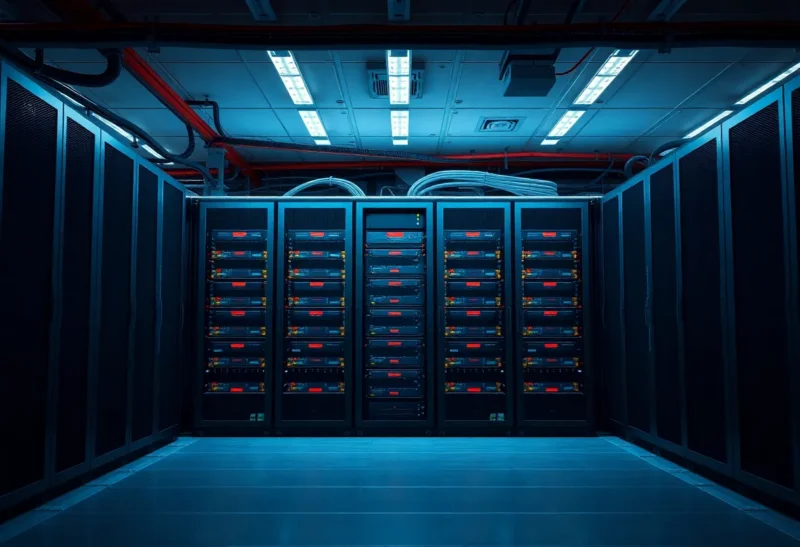
Data centers already use a huge share of the world’s electricity—and that share is growing. AI training, cloud workloads, and the sheer scale of digital infrastructure are pushing demand up. But the conversation often stops at “more compute, more power.” The next bottleneck isn’t just how much electricity data centers use; it’s how much they need to get rid of. Cooling is the hidden cost. As chips get denser and hotter, moving that heat away becomes harder, more expensive, and more energy-intensive. Data center cooling is quietly becoming the next energy bottleneck—and it’s not getting enough attention.
Why Cooling Matters More Than Ever
Modern server chips can draw hundreds of watts in a small footprint. Pack them into a rack, and you’re dealing with tens of kilowatts of heat in a small space. That heat has to go somewhere. Traditional air cooling—fans, chilled air, hot/cold aisles—has limits. As power density per rack increases, you need more airflow, bigger chillers, or both. Both cost money and energy. In many facilities, the “power usage effectiveness” (PUE)—total facility energy divided by IT energy—is still above 1.3 or 1.4, meaning a significant chunk of the electricity bill goes to cooling and other overhead, not to the servers themselves. Push the chips harder, and that overhead grows. So the real constraint isn’t just “can we get enough megawatts to the building?” It’s “can we cool what we’re putting in there?”
The Water Question
Liquid cooling—whether direct-to-chip, immersion, or hybrid—is more efficient at moving heat than air. It’s also more complex and, in many designs, water-hungry. Data centers in water-stressed regions are already under scrutiny for their use of water for cooling towers and evaporative systems. As demand for compute grows and climate pressure increases, the question isn’t just “how much electricity does this facility use?” but “how much water, and where?” Cooling choices are becoming a sustainability and siting issue. Facilities that rely on evaporative cooling may face limits in drought-prone areas. Those that switch to closed-loop or alternative cooling face higher capital cost and design complexity. So the “next bottleneck” isn’t only energy—it’s the combination of energy, water, and the physical ability to reject heat at scale.
What Happens When Cooling Can’t Keep Up
When cooling can’t keep up, you hit thermal limits. Servers throttle, or you can’t deploy the next generation of hotter, denser hardware without a facility redesign. That slows the rollout of more powerful chips and pushes operators toward building new facilities rather than retrofitting old ones. So the bottleneck shows up as capital cost, delay, and geographic constraint—not just a higher electric bill. Regions with cheap power but limited water or cooling capacity may not be able to host the next wave of data centers. The industry is already looking at colder climates, seawater cooling, and more efficient designs. But each of those has trade-offs. Cooling isn’t a solved problem; it’s a moving target that gets harder as compute density rises.
Efficiency Gains and Their Limits
Data center operators have spent years driving down PUE through better airflow design, free cooling (using outside air when it’s cold enough), and more efficient chillers. Those gains are real—many modern facilities run at or below 1.2 PUE. But the gains are getting harder. As chip power density rises, air cooling hits physical limits in more places. Liquid cooling can help, but it requires different building design, different server form factors, and often more water or more complex heat rejection. So the “next” improvement isn’t just tuning the same system; it’s a step change in how we cool. That step change is where the bottleneck shows up: in capital, in siting, and in the pace at which new designs can be deployed.
What to Watch
For anyone watching the infrastructure side of tech, cooling is worth paying attention to. PUE improvements have slowed in many regions. New builds are investing in liquid cooling and better design, but retrofits are expensive. The next few years will show whether cooling becomes a real constraint on where and how fast data centers can grow—and whether the industry can innovate fast enough to stay ahead of the heat. Data center cooling isn’t the only bottleneck, but it’s the one that’s still under-discussed. As chips get hotter and demand grows, it won’t stay that way for long.