The Case for Repair Cafés in Your Local Tech Community

Rita Okon
March 7, 2026
Your laptop’s fan is grinding. Your toaster won’t heat. Your wireless earbuds are dead and out of warranty. Most people throw them away. A growing number are walking into a Repair Café instead—and walking out with working devices, new skills, and a different relationship with the stuff they own.
Repair Cafés are community spaces where volunteers help people fix broken electronics, appliances, and other goods. They’re free, drop-in events: bring your broken thing, sit down with someone who knows their way around a soldering iron, and learn by doing. The model started in Amsterdam in 2009 and has spread to over two thousand locations worldwide. If you care about right-to-repair, sustainability, or just want to build a more resilient local tech community, starting or supporting one is one of the most tangible things you can do.
Why Repair Cafés Matter Now
The case for repair has never been stronger. Electronics waste is the fastest-growing waste stream globally. Devices are designed to be replaced, not fixed: glued-in batteries, proprietary screws, firmware that bricks after unauthorized repairs. Legislation is slowly shifting—right-to-repair laws are landing in Europe and some U.S. states—but laws alone won’t change behavior. People need places to learn, tools to use, and others to help them.
Repair Cafés fill that gap. They’re not professional repair shops; they’re community learning spaces. Volunteers share knowledge. Participants leave with working gear and the confidence to try fixing the next thing. The impact is local, visible, and cumulative.

What Actually Happens at a Repair Café
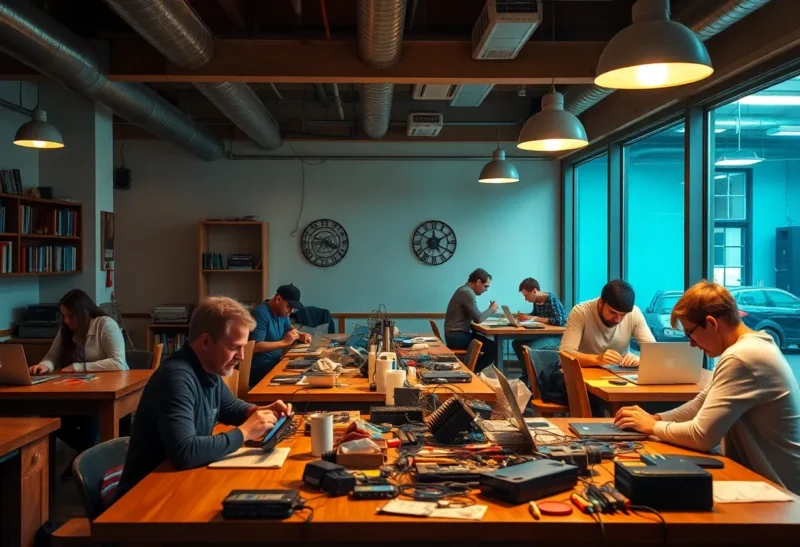
Typical events run for a few hours, often monthly, in libraries, community centres, or maker spaces. People bring broken items: laptops, phones, lamps, vacuums, blenders, headphones. Volunteers—repair techs, hobbyists, engineers—assess each item, explain what’s wrong, and guide the owner through the fix. Success rate varies: some things are dead beyond repair, some fixes take minutes, some turn into teaching sessions that last an hour.
The ethos is collaborative. Owners do the work; volunteers advise. You’re not dropping off your laptop and picking it up fixed. You’re learning why the fan failed, how to open the case safely, and what replacement part to order. That knowledge travels. Next time something similar breaks, you might fix it yourself.
The Tech Community Angle
If you’re a developer, an IT professional, or a maker, Repair Cafés are a natural fit. You already understand how devices work. You’ve debugged systems, read schematics, and wrestled with undocumented hardware. That expertise is rare and valuable. Many repair volunteers are retirees, hobbyists, or former repair techs—not necessarily software people. The tech community can bring skills in diagnostics, firmware, and systematic troubleshooting that complement the mechanical and electrical knowledge already in the room.
You also get something back. Repair Cafés are excellent places to meet people who think differently about technology. You’ll see devices you’ve never opened, learn about failure modes you didn’t know existed, and hear stories about how people actually use—and abuse—their gear. That context improves your work, whether you’re building products, writing documentation, or advocating for better design.
How to Start or Find One
The Repair Café Foundation maintains a global directory of events. Search for your city or region; if one exists nearby, show up. Bring something to fix, or offer to volunteer. No experience required—many first-timers help with intake, logging, or cleanup while learning from volunteers.
If nothing exists locally, starting one is achievable. You need: a venue (library, community centre, maker space), volunteers with repair skills, and basic tools. Many cafés share tools; volunteers often bring their own. The Repair Café Foundation offers starter guides, liability templates, and branding. The hardest part is finding the first few volunteers and a recurring space. Reach out to maker spaces, hackspaces, and sustainability groups. Post in local tech and community forums. One person can catalyze; sustaining one takes a small team.
What You Need to Get Going
Tools depend on what you’re repairing. A basic electronics kit includes: screwdrivers (including tri-wing and pentalobe for Apple gear), spudgers, multimeter, soldering iron, and tweezers. For appliances: pliers, wire cutters, continuity tester. Many cafés focus on small electronics and small appliances; larger items like washing machines or TVs require more space and expertise.
Parts are trickier. Repair Cafés typically don’t stock parts; owners buy what they need. Volunteers help identify part numbers and sources. Some cafés partner with local electronics shops or maintain a small stash of common items—capacitors, fuses, belts—funded by donations. Crowdfunding and grants can cover tools and venue costs.
The Right-to-Repair Connection
Repair Cafés and right-to-repair advocacy are complementary. Cafés create demand: people who’ve fixed something once want to fix more, and they start asking why their new device is harder to open than the old one. Advocacy creates supply: better documentation, spare parts, and design changes that make repair feasible. Neither works alone. Cafés build the community and the skills; advocacy changes the rules.
If you volunteer at a Repair Café, you’ll quickly develop opinions about which brands are repair-friendly and which are hostile. Share those experiences. Write reviews. Support repair scores and repairability indices. The companies that make fixable products deserve to be rewarded; the ones that glue batteries and lock firmware deserve to be called out.
The Ripple Effects
Repair Cafés don’t just fix things. They teach skills, reduce waste, and build community. Participants leave with working gear and the confidence to try again. Volunteers stay sharp, learn new failure modes, and meet people they wouldn’t otherwise encounter. Venues—libraries, community centres—gain a visible, positive use of space. The impact compounds: someone who fixes their laptop at a Repair Café might later help a neighbour, teach a kid, or advocate for better design.
If you care about tech that lasts, communities that share knowledge, or just want to spend a Saturday doing something tangible—find a Repair Café, or start one. The model works. The movement is growing. The rest is logistics.