Why Micro-LED Displays Are Taking Longer Than Anyone Expected

Ian Cross
March 1, 2026
Micro-LED was supposed to be the next big thing in displays. Brighter than OLED, more durable, no burn-in, infinite contrast—the tech press has been hyping it for years. Samsung showed a wall-sized Micro-LED TV in 2018. Apple has been rumored to be working on Micro-LED for the Watch and eventually the iPhone. Yet in 2026, Micro-LED is still a niche, premium technology. TVs cost six figures. Watches are just starting to ship. Phones are nowhere in sight. What’s taking so long?
The Physics Problem
Micro-LED isn’t just a smaller LED. It’s a fundamentally different manufacturing challenge. Each pixel is a microscopic LED—red, green, and blue—that emits its own light. No backlight, no OLED’s organic materials. The result: brighter, more efficient, longer-lasting displays. The catch: you have to place millions of these tiny LEDs on a substrate with sub-micron precision, and you have to do it in a way that’s cost-effective enough for consumer devices.
OLED panels are printed. LCDs use established photolithography. Micro-LED requires a different approach: “pick and place” or mass transfer. You grow LEDs on a wafer, then move them—millions at a time—onto the display substrate. The transfer yield has to be near-perfect. A single dead pixel in a consumer product is unacceptable; in a 4K display, that’s 8 million potential failure points. Scaling that process to high volume while keeping yields high and costs low has proven far harder than anyone anticipated.
The complexity compounds at smaller sizes. Micro-LEDs for a phone need to be tens of micrometers across. At that scale, handling, aligning, and bonding become extraordinarily difficult. A single dust particle can ruin a transfer. Thermal expansion mismatches can cause misalignment. The equipment needed—laser transfer, stamp transfer, or roll-to-roll—is still evolving. What works in a pilot line doesn’t always scale to a fab. The industry has been iterating on transfer techniques for years, and progress is real—but slow.
Color Is the Hard Part
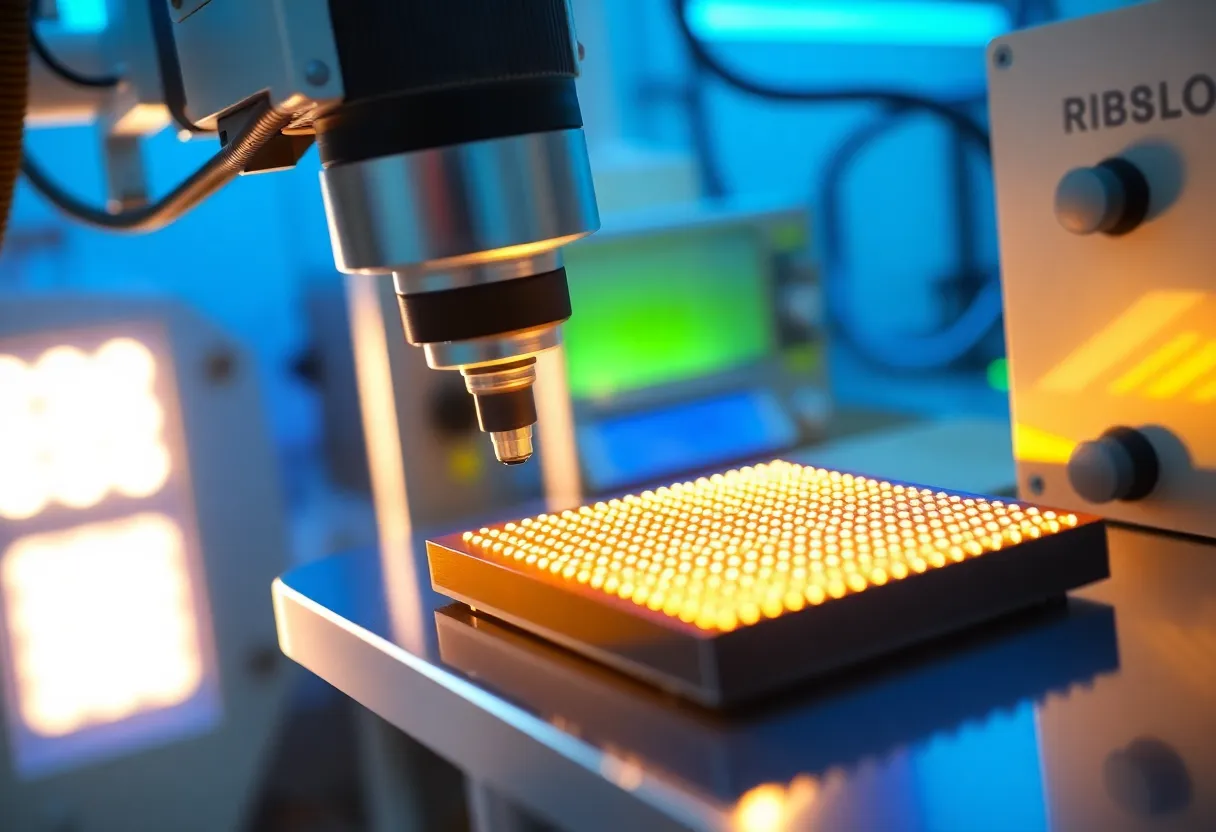
Red, green, and blue LEDs are made from different materials. Red uses indium gallium phosphide (InGaP). Blue and green use gallium nitride (GaN). They have different growth conditions, different efficiencies, and different aging curves. To make a Micro-LED display, you need to either grow all three on the same wafer—hard—or grow them separately and combine them in a way that preserves alignment and yield. The industry has tried both. Neither has reached the cost curve needed for mass-market phones or laptops.
Apple’s approach for the Apple Watch Ultra 2’s Micro-LED module involves growing LEDs on sapphire, then using a proprietary transfer process. It’s a massive R&D investment for a single product. Samsung’s wall-sized TVs use a different approach—larger LEDs, less precision—which is why they’re viable for giant displays but not for pocket-sized ones. The path from “we can do it in the lab” to “we can do it at scale for $500” is long and expensive.
OLED Keeps Getting Better
While Micro-LED has stalled, OLED has improved. Burn-in mitigation is better. Lifespan has increased. Costs have come down. For phones and laptops, OLED is “good enough” for most people, and the supply chain is mature. There’s no urgent pressure to switch to Micro-LED when OLED keeps delivering. That reduces the incentive for manufacturers to pour billions into solving Micro-LED’s production challenges. The tech is coming—Samsung, LG, and Apple are all investing—but the timeline keeps slipping because the incumbent keeps improving.
Where Micro-LED Will Land First
Micro-LED will likely reach consumers in stages. Wearables first—smaller displays, higher ASP, and a user base willing to pay for the best. Apple’s Watch is the obvious beachhead. AR glasses could follow, where brightness and efficiency matter even more. TVs will stay premium for years; wall-sized Micro-LED is a luxury product. Phones and laptops will be last—they need the highest volume, the lowest cost, and the most brutal competition on price. Don’t expect a Micro-LED iPhone before 2028 at the earliest, and even that might slip.
For now, Micro-LED is a reminder that display technology advances in fits and starts. The lab demos look amazing. The engineering to get there at scale is brutal.
The upside: once the production challenges are solved, Micro-LED offers real advantages. Brighter displays for outdoor use. No burn-in—crucial for always-on smartwatches and AR glasses. Lower power for the same brightness. Longer lifespans. These aren’t marginal gains; they enable product categories that OLED struggles with. The question isn’t whether Micro-LED will matter—it’s when. In 2026, we’re closer than we were. But “five years away” has been the refrain for a decade. Micro-LED will arrive. It’s just taking longer than anyone expected.